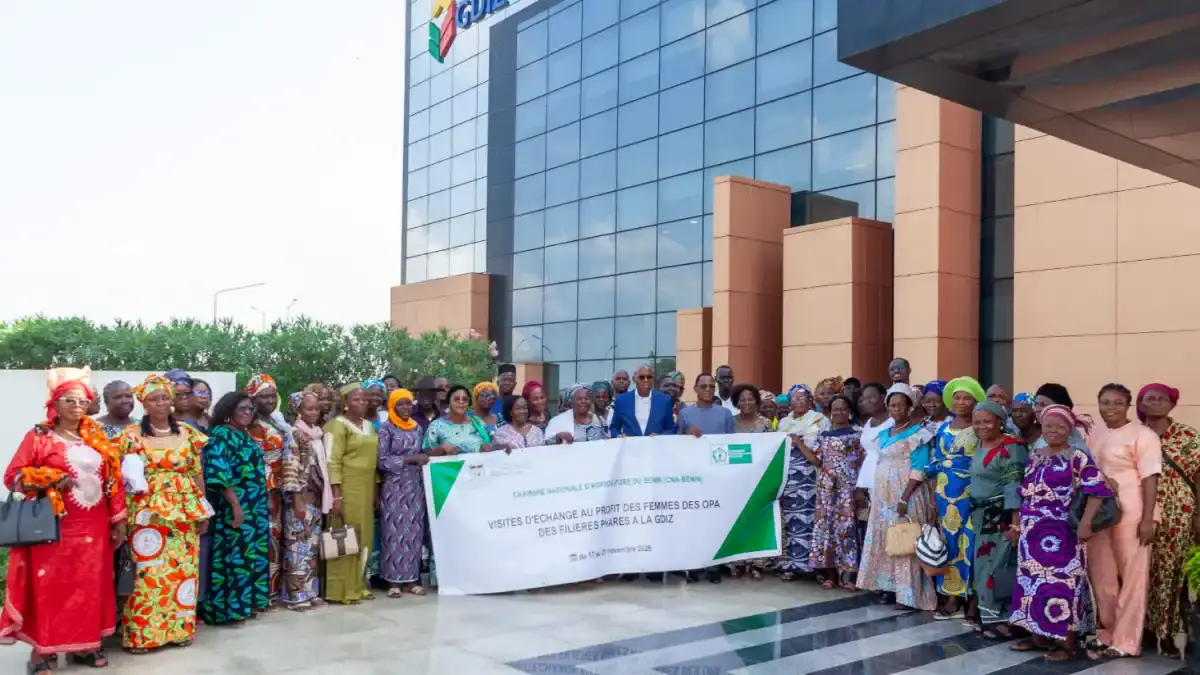
A group of female farmers from various Benin departments recently visited industrial units at the Glo-Djigbé Industrial Zone (GDIZ). Organized by the National Chamber of Agriculture of Benin (CNA-Bénin), the initiative allowed them to learn about the different stages of processing their raw materials and the resulting economic opportunities. They were welcomed by SIPI-Bénin S.A. general director Létondji Béhéton.
The GDIZ, created by the Beninese government in 2020, hosts specialized units processing cotton, soybeans, cashews, shea nuts, and other agricultural products. According to Létondji Béhéton, the zone now employs thousands of workers, with cotton processing units alone employing over 15,000 people and cashew units employing more than 4,000 workers. This visit responds to a request from agricultural actors after a similar experience in 2024.
The CNA-Bénin chose to focus on female farmers this time, with president Imali Hermann Djetta explaining that this aims to recognize their contribution to agricultural production and food security. He also wants to give them access to information on economic opportunities offered by local processing. The initiative allows female farmers to see firsthand what happens to their crops and discover investments made in the industrial zone.
Atta Kakayatchi Sahadatou, president of the National Federation of Beninese Cashew Producers (FENAPAB), emphasized the importance of this initiative for women in various agricultural sectors. She believes the visit enables them to see where their products end up and learn about investments in the industrial zone. Sahadatou highlighted women's significant role in all stages of the agricultural chain, from planting to marketing.
Sahadatou encouraged participants to inform other producers in their areas about the benefits of local processing, urging them to promote transforming raw materials in Benin so that the economic benefits stay within the country. She stressed that the wealth generated should remain in Benin, rather than being processed by others abroad.
During discussions, officials also addressed incentive measures for producers in certain sectors, including a 10 FCFA per kilogram refund for soybeans, cotton, cashews, and rice, provided the required tonnages are met. Létondji Béhéton stated that GDIZ officials will ensure this system is effectively implemented so that female producers directly benefit from their work's returns.
The visit enables female farmers to understand the local processing of their products and explore economic opportunities. Key points include:
Key points
- The GDIZ has created thousands of jobs, particularly in cotton and cashew processing.
- The initiative aims to recognize and support female farmers' contributions to agricultural production and food security.
- Officials are promoting local processing to keep economic benefits within Benin.
Reporting sources
- Bénin : les femmes agricultrices découvrent ce que deviennent leurs récoltes à la GDIZ · lanouvelletribune.info