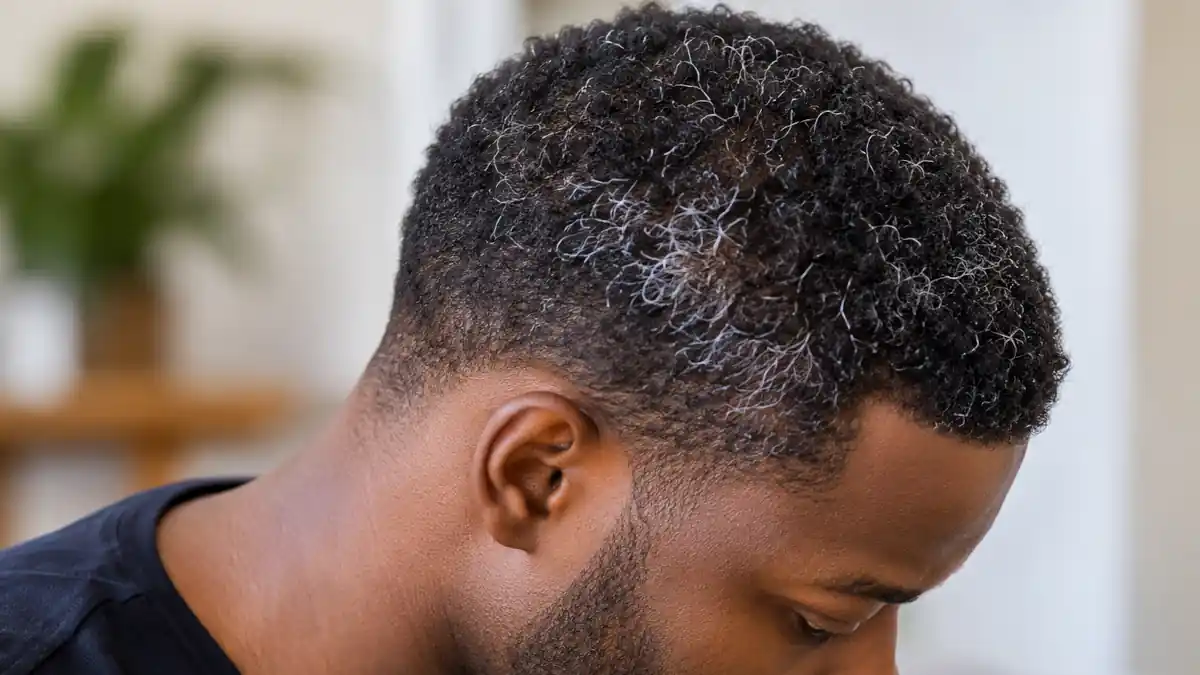
Premature graying, also known as canitie précoce, affects thousands of young adults in Benin. At just 25 or 30 years old, seeing the first white hairs appear can be surprising. When the entire hair turns white rapidly, the shock is both aesthetic and psychological. Marc, a 28-year-old commercial engineer, shares his experience. He started noticing white hairs at 20, and within four years, his hair turned almost entirely gray.
According to the American Academy of Dermatology, approximately 25% of individuals under 30 have some white hair. The phenomenon is linked to genetic factors, stress, and a deep alteration of self-confidence. Dr. Jean-Marc Kaboré, a dermatologist specializing in trichology, explains that premature graying occurs when melanocytes, cells responsible for producing melanin, stop producing pigment or are destroyed. This results in hair growing without pigment, giving it a white or gray appearance.
Genetics play a significant role in premature graying. If parents or grandparents had white hair early, the chances of inheriting this characteristic are high. However, other factors come into play. A study of 207 people found that smokers have a 2.5 times higher risk of graying before 30. While the role of tobacco is not clearly established, stress can trigger or worsen premature graying. An overactive sympathetic nervous system can lead to the exhaustion of melanocyte stem cells, causing the disappearance of melanocytes.
Premature graying can have significant psychological effects. In a society where youth and vitality are highly valued, white hair is often perceived as a symbol of decline or premature aging. Marc shares his struggles with self-esteem, having started to avoid taking photos and dyeing his hair every three weeks in secret. The financial burden and feeling of wearing a mask exhausted him, leading to anxiety. Dr. Kaboré confirms that receiving a diagnosis of premature graying can create a narcissistic shock.
The impact of premature graying on daily life should not be underestimated. Marc's experience is not isolated, and many young adults face similar challenges. The societal pressure to conform to traditional beauty standards can exacerbate the issue. However, a growing movement encourages young people to accept and even celebrate their gray hair as a mark of distinction and character.
While there is no miracle cure for repigmenting hair that has turned white due to genetics, Dr. Kaboré emphasizes the importance of acceptance and support. In some cases, medical treatment can slow down the progression of premature graying if it is linked to a thyroid disorder. Marc has come to terms with his gray hair, stating that he has finally learned to look at himself without feeling old before his time.
The story of Marc and many others highlights the need for greater awareness and understanding of premature graying. By sharing their experiences, young adults can help reduce the stigma associated with this phenomenon and promote self-acceptance. As Dr. Kaboré notes, hair is a strong marker of identity, and its alteration can have significant psychological effects. By embracing their gray hair, individuals can take the first step towards self-acceptance and a more positive self-image.
Key points
- Premature graying affects 25% of individuals under 30, with genetic factors, stress, and self-confidence playing a significant role.
- The phenomenon can have significant psychological effects, including anxiety and a decline in self-esteem.
- A growing movement encourages young people to accept and celebrate their gray hair as a mark of distinction and character.