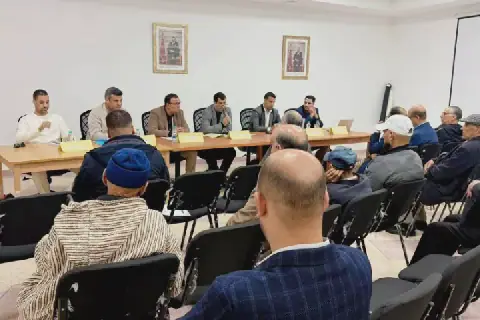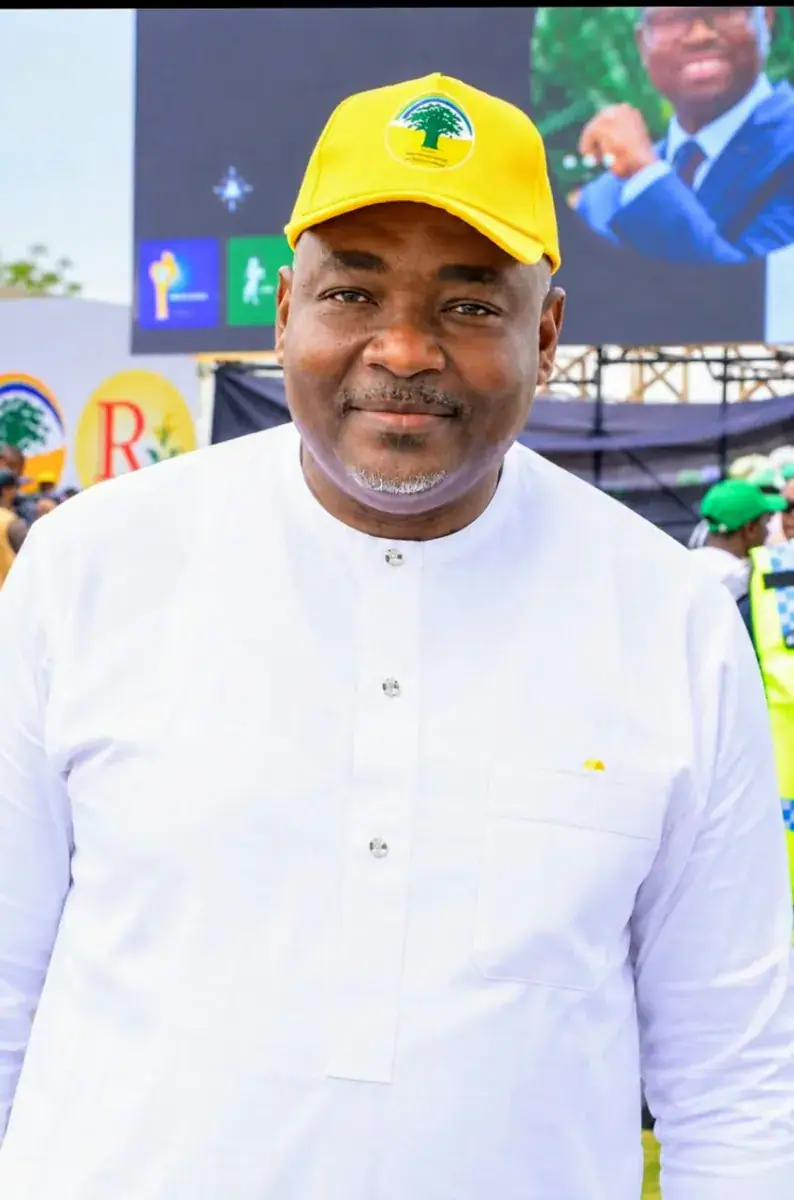
Benin's ruling party, Union Progressiste le Renouveau (Up-R), is set to hold its next congress in the first quarter of 2027. The party's Bureau politique and Conseil national met on November 14 to discuss preparations for the event, which will see the renewal of its leadership and the outlining of new party orientations. According to Deputy Didier Maixent Djeigo, a member of the party's Direction exécutive nationale, the congress will follow a procedure defined by the party's statutes.
The party's congress will focus on several key issues, including the examination and validation of projects submitted by the Bureau politique, as well as reports on the party's moral, activities, and financial performance. The party's statutes and internal regulations may also be subject to modifications, which will be put to a vote by congress delegates. Didier Maixent Djeigo explained that the Bureau politique will formulate recommendations, convene the Conseil national, and propose an agenda for the event.
While the party has announced that the congress will take place in 2027, no specific date has been set. Deputy Didier Maixent Djeigo attributed this to the party's cautious approach, following eight years of transitional periods. The party wants to take into account the difficulties encountered before setting a definitive date, rather than risking a date that may not be met. This decision comes amid speculation about the potential candidacy of Joseph Djogbénou, who currently serves as both president of the Up-R and the National Assembly.
The possibility of Joseph Djogbénou seeking re-election as party president has sparked interest, given his current roles. However, Didier Maixent Djeigo emphasized that the party's statutes do not prohibit the accumulation of these positions. He also assured that the process of designating the next president will follow internal rules, allowing all eligible individuals to submit their candidatures. This means that Djogbénou's potential candidacy is not excluded, and if elected, he would retain his party presidency.
Didier Maixent Djeigo also addressed concerns about the party's past difficulties, assuring that measures will be taken to prevent their recurrence. He noted that the party now has a structured territorial organization, spanning from local cells to communal sections, which should enable militants to participate in the selection of future leaders. This development is expected to enhance the party's internal democracy and ensure a smooth transition of leadership.
The upcoming congress is seen as a critical event for the Up-R party, which has been in power in Benin since 2015. The party's ability to manage its internal affairs and ensure a peaceful transfer of power will be closely watched by both national and international observers. As the party prepares for this significant event, it faces challenges in balancing its internal dynamics with the demands of a rapidly changing political landscape.
As the congress approaches, the party's leadership and internal processes will be under scrutiny. With the party's structures in place, the focus will shift to the election of new leaders and the outlining of a new vision for the party. The participation of militants in the selection process and the transparency of the electoral process will be crucial in ensuring the legitimacy of the party's new leadership.
Key points
- Up-R party to hold congress in 2027, amid leadership renewal and speculation about Joseph Djogbénou's candidacy.
- Party's statutes do not prohibit accumulation of president and National Assembly roles.
- Measures to be taken to prevent recurrence of past difficulties, enhance internal democracy.