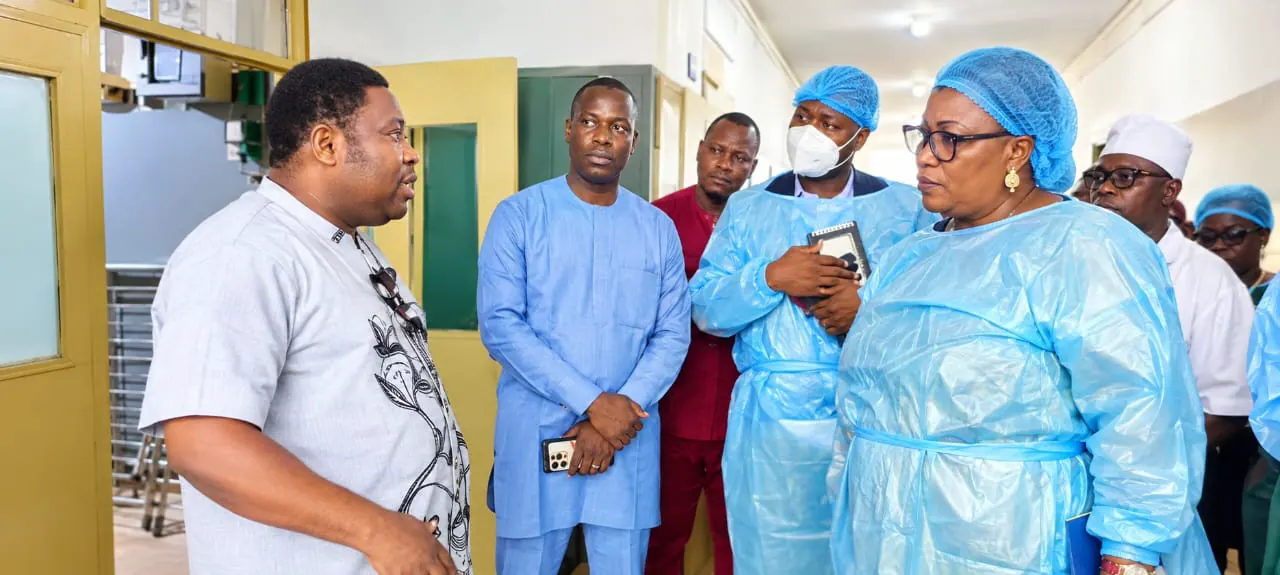
Since September 2026, Benin's Minister Conseillère à la Santé, Rosine Dagniho, has been conducting field visits to evaluate the effectiveness of emergency care without advance payment. Her tour, which includes stops in Aplahoué, Malanville, Klouékanmè, Lokossa, Comè, and Kandi, aims to assess the implementation of this measure, listen to healthcare professionals, and gather patient and family experiences. This approach allows her to verify the conditions of the measure's implementation.
In the Mono-Couffo region, Dagniho visited several healthcare facilities. At Aplahoué, 264 emergency cases were treated. Klouékanmè reported 1,424 cases, with 42% related to gynecology-obstetrics. Lokossa's hospital department recorded 775 cases, while the zone hospital recorded 243. Comè reported 1,123 cases, including 234 pediatric cases. These numbers demonstrate the significance of the program. However, Dagniho's evaluation goes beyond statistics.
During her visits, Dagniho met with patients, their families, and healthcare teams. Discussions focused on human resources, equipment, accommodation capacity, and sustainable financing for the measure. Her goal is to understand the challenges and successes of the program. By engaging with stakeholders, she aims to identify areas for improvement and ensure the measure's effectiveness.
In the Alibori region, Dagniho continued her evaluation in Kandi and Malanville. The feedback from these visits highlights the measure's impact on prompt medical care without requiring upfront payment. A patient's family member in Malanville shared a testimonial, illustrating the human aspect of the program in critical situations. This firsthand account underscores the importance of timely care.
Dagniho's approach involves observing, listening, and gathering concerns. She assured stakeholders that their concerns would be transmitted to President Romuald Wadagni to contribute to the program's improvement. Her presence on the ground reflects a commitment to bringing policy evaluation closer to the reality experienced in healthcare facilities.
The tour showcases the results of the initial phase of on-the-ground observation. It highlights that the challenge now lies not only in adopting the measure but also in its ability to function effectively. By engaging with stakeholders and gathering feedback, Dagniho aims to ensure the program's success and identify areas for improvement.
Ultimately, Dagniho's evaluation tour demonstrates her commitment to improving emergency care in Benin. Her efforts focus on ensuring that the measure is implemented effectively and that patients receive timely, quality care. The tour's findings will likely inform future policy decisions and program enhancements.
Key points
- - The Minister Conseillère à la Santé, Rosine Dagniho, is evaluating the implementation of emergency care without advance payment across Benin. - The evaluation tour includes visits to various healthcare facilities, where Dagniho engages with patients, families, and healthcare professionals. - The program aims to provide prompt medical care without requiring upfront payment, with a focus on improving healthcare outcomes.