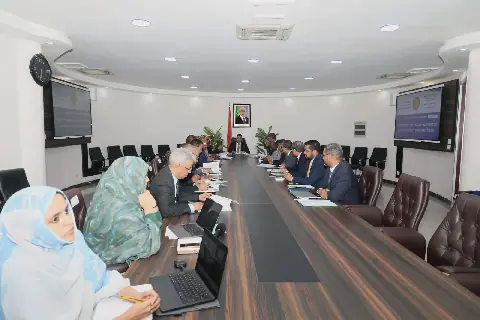
The Fiselae project, which aimed to support the development of legume value chains and seed systems for agroecological transition, has completed its 30-month implementation in Benin. The project, coordinated by the Centre de coopération internationale en recherche agronomique pour le développement (Cirad), brought together a consortium of institutions, including the Institut national des recherches agricoles du Bénin (Inrab) and the Association nationale des femmes agricultrices du Bénin (ANaF-Bénin). The project's primary objective was to contribute to the structuring of legume value chains and the strengthening of seed systems.
During its implementation, the Fiselae project achieved several milestones, including the establishment of 40 farmer field schools in five communes, which trained over 1,000 producers, with a majority of women participating. The project also developed a collection of 400 characterized legume accessions with the Inrab and proposed four new mungo varieties for inclusion in the national catalog. Additionally, the project supported women's groups in the production of high-quality seeds and developed a filter-press adapted to the needs of soybean processors.
According to Marc Chillet, representative of Cirad in Benin, one of the project's main strengths lies in its ability to bring together diverse skills and actors with complementary profiles around a common objective. The project has also left a lasting scientific and human legacy, with 113 people from eight institutions trained and mobilized. Furthermore, 12 master's students and one Ph.D. student benefited from support within the framework of research activities.
The Fiselae project's achievements have been hailed as a significant step towards sustainable agriculture in Benin. The project's focus on legume production, which includes crops such as soybeans, cowpeas, and peanuts, aims to improve food security, increase farmers' incomes, and promote soil conservation. The project's results have also been recognized as a valuable contribution to the country's agricultural development goals.
However, the project's closure has raised concerns about the sustainability of its achievements. Lionel Briand, representative of the project's donor, emphasized the need for stakeholders to take ownership of the project's results and ensure their continuation. He encouraged producers, scientists, and institutional partners to work together to build on the project's successes and address the challenges of sustainability.
Hervé Sossou Comlan, Director-General of Inrab, welcomed the project's achievements and emphasized the importance of building on its results. He noted that the project's focus on agroecology aligns with Benin's national agricultural development ambitions, particularly in the face of climate change, land degradation, and biodiversity loss. Comlan called for a new phase of consolidation and scaling up of the project's results.
As the Fiselae project comes to a close, its stakeholders are looking to the future, with a focus on sustaining and expanding its achievements. The project's legacy will depend on the continued collaboration and commitment of its partners, including producers, researchers, and institutional stakeholders. The project's impact on Benin's agricultural sector and food security will be closely watched in the coming years.
Key points
- The Fiselae project's achievements include the training of over 1,000 producers and the development of new legume varieties.
- The project's focus on agroecology aligns with Benin's national agricultural development ambitions.
- The project's sustainability will depend on the continued collaboration and commitment of its partners.