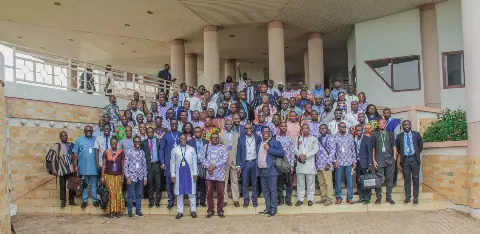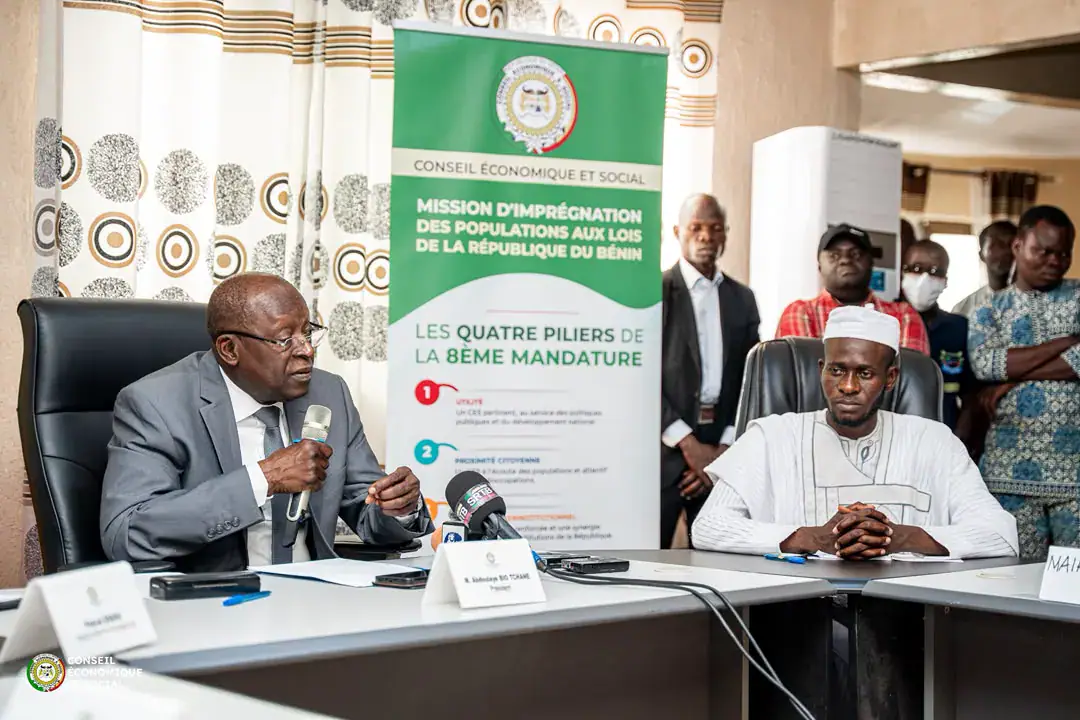
The CES, led by President Abdoulaye BIO TCHANÉ, visited Djougou in the Donga department on November 18, 2026, as part of its mission to educate populations on three key laws. The meeting brought together members of the departmental administrative conference, leaders of agricultural professional organizations, and several civil society actors. The event began with a welcome address by Dramane Ouolou, coordinator of the CES's Donga departmental council.
The meeting focused on three major laws: the law on agricultural orientation, food security, and nutrition; the pastoral code; and the road code. The laws aim to modernize the agricultural sector, strengthen food sovereignty, and improve road safety. Local authorities, including Djougou Mayor Yaya IDRISSOU, welcomed the CES's initiative, emphasizing the relevance of the laws to the daily concerns of the populations.
President BIO TCHANÉ highlighted the importance of citizen participation in the development and implementation of public policies. He stressed that the CES's mission is to make citizens aware of the laws, regulations, and decisions of the Republic's institutions. The president encouraged participants to ask questions and engage with CES advisors to better understand the laws and their implications.
Experts from relevant ministries presented the three laws, starting with the law on agricultural orientation, food security, and nutrition. This law, composed of 114 articles, aims to modernize the agricultural sector and strengthen food sovereignty. The second presentation covered the pastoral code, which establishes rules to prevent and manage conflicts between farmers and herders.
The third law presented was the road code, composed of 122 articles, which aims to strengthen road safety and reduce accidents and deaths. The law introduces several innovations, including the mandatory use of helmets for motorcycle drivers and passengers, seatbelts, and child restraint systems. Participants engaged in a question-and-answer session, allowing them to clarify their understanding of the laws and share their concerns.
The CES's mission in Djougou reflects its commitment to bringing institutions closer to citizens and promoting a better understanding of the laws of the Republic. The council aims to make information, dialogue, and citizen participation essential drivers of economic and social development. Through this approach, the CES seeks to consolidate the rule of law in Benin.
The visit to Djougou follows previous stops in Parakou and Kandi, demonstrating the CES's determination to reach various regions of the country. By educating populations on major laws, the CES hopes to foster a culture of awareness and participation in public life, ultimately contributing to the country's economic and social development.
Key points
- The CES's mission in Djougou focused on educating populations on three major laws related to agriculture, pastoralism, and road safety.
- The laws presented aim to modernize the agricultural sector, strengthen food sovereignty, and improve road safety.
- The CES's approach seeks to promote citizen participation in public life and consolidate the rule of law in Benin.