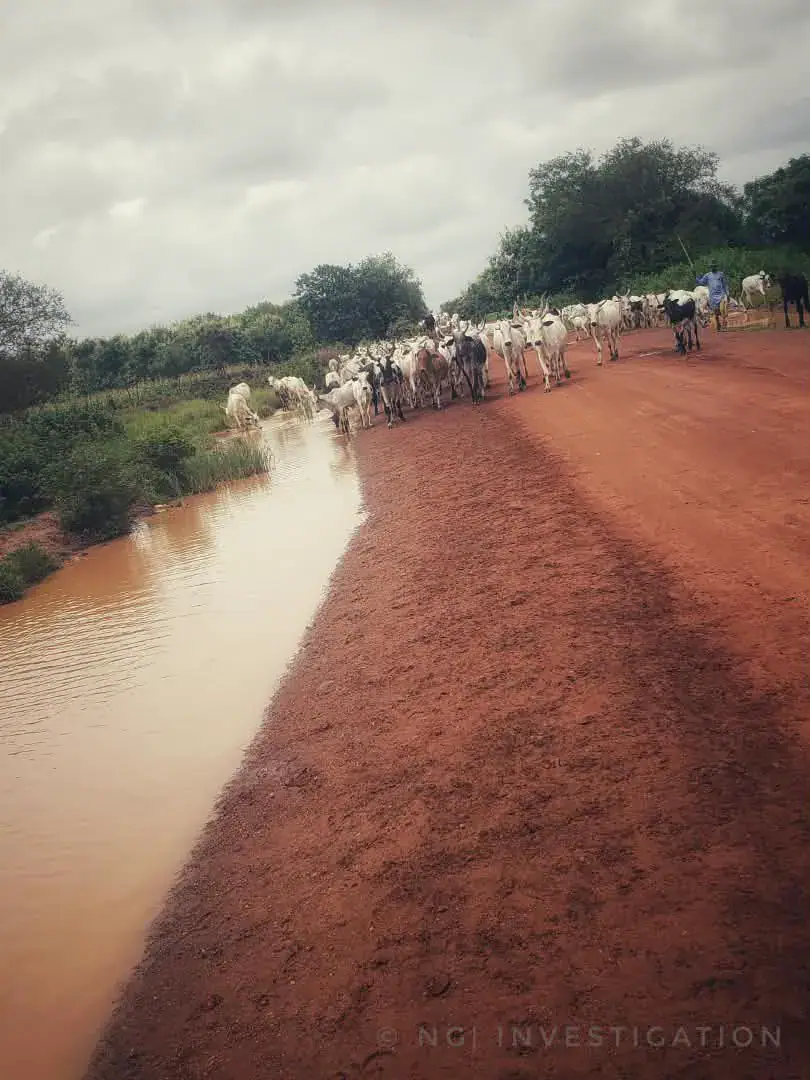
In the commune of Djidja, Benin, conflicts between farmers and herders have reached alarming levels, with over 103.78 hectares of crops damaged between January and September 2026, surpassing the total damage recorded in 2025. The situation has led to violent confrontations, including a recent incident in Ayiogbé, where a farmer and an herder clashed over a field, resulting in two injuries and the herder's imprisonment. This incident highlights the failure of the 2018 law aimed at establishing transhumance corridors to prevent such conflicts.
The incident in Ayiogbé occurred on August 28, 2026, when herder I.S., 23, led his cattle to a field also used by farmer N.H., 24. The two men had differing accounts of the events, each claiming the other initiated the violence. I.S. alleged that N.H. attacked him with a cutlass, severing his finger and injuring his thumb, while N.H. claimed that I.S. was the aggressor. The conflicting testimonies have made it challenging to determine the facts of the case.
A survey conducted after the incident found a broken cutlass handle near the scene, but no evidence of crop damage or cattle destruction. The investigation's findings have not been made public, and the case has been delayed, with the trial initially set for October 12, 2026, but ultimately rescheduled for October 26, 2026. I.S. remained in detention, despite his family's concerns about his health and well-being.
The case has exposed anomalies in the investigation and judicial process. I.S. was presented to the tribunal, but it was later discovered that a different individual with the same name, incarcerated in a separate case, had been presented instead. This mistake led to the postponement of the trial. The incident has raised concerns about the effectiveness of the justice system in addressing conflicts between farmers and herders.
The commune of Djidja has seen a significant increase in conflicts between farmers and herders, with many attributing this to the lack of effective transhumance corridors. The 2018 law aimed to establish designated areas for herders to graze their cattle, reducing conflicts with farmers. However, the law has not been effectively implemented, leading to continued violence and damage to crops.
The Benin Intelligent reported that the directorate department of agriculture, livestock, and fisheries in Zou had transmitted the investigation report to the commissariat, which had submitted it to the tribunal. However, the report's contents have not been made public. The case has sparked concerns about the need for greater transparency and accountability in addressing conflicts between farmers and herders.
The situation in Djidja commune highlights the need for urgent action to address the root causes of conflicts between farmers and herders. The failure to implement effective transhumance corridors has contributed to the escalation of violence, resulting in injuries, imprisonment, and damage to crops. Efforts to address these issues are crucial to preventing further conflicts and promoting peaceful coexistence between farmers and herders in the region.
Key points
- Conflicts between farmers and herders in Benin's Djidja commune have resulted in over 103.78 hectares of crops damaged between January and September 2026.
- A 2018 law established transhumance corridors to prevent conflicts, but its implementation has been ineffective.
- The situation in Djidja commune highlights the need for urgent action to address the root causes of conflicts between farmers and herders.
Reporting sources
- Commune de Djidja : L’échec des couloirs de transhumance · Bénin Intelligent