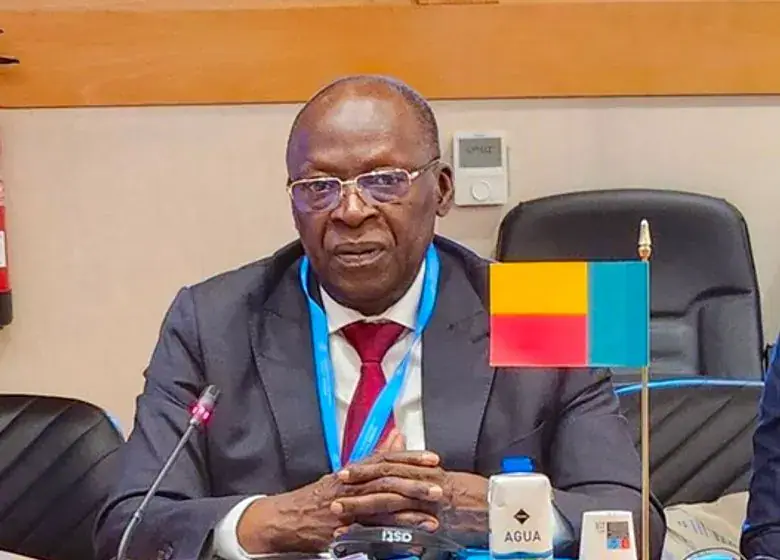
Abdoulaye Bio Tchané, President of Benin's Economic and Social Council (CES), led the country's delegation at the International Association of Economic and Social Councils and Similar Institutions (AICESIS) in Madrid. He emphasized that ecological transition must not harm vulnerable populations. This message was conveyed during the AICESIS works, where Bio Tchané participated in discussions on building bridges for a just transition and global social justice.
Bio Tchané championed an approach focusing on social dialogue, citizen participation, and territorial anchorage in public policies. He presented reforms undertaken by Benin's CES in 2024 and 2025, aimed at strengthening proximity to populations and enhancing contributions to economic and social debates. These reforms reflect efforts to make the institution more effective and responsive to citizens' needs.
During the event, Bio Tchané called for more experience sharing among AICESIS members, particularly regarding relations with parliaments, decentralization, and institutional mediation. He stressed the importance of dialogue at territorial levels and citizenship education. According to him, national and international orientations cannot be fully effective without considering grassroots concerns.
Bio Tchané reiterated Benin's willingness to contribute to AICESIS works in collaboration with the International Labour Organization (ILO) and the United Nations Economic and Social Council (ECOSOC). On ecological transition, he advocated for concrete measures to protect poor workers, vulnerable populations, and fragile territories during the gradual phase-out of fossil fuels and environmental preservation efforts.
The AICESIS Administrative Council meeting, held on October 29-30, reviewed the 2025 activity report, financial situation, and membership expansion prospects. Participants also discussed international forums organized in China, Russia, and Zimbabwe, focusing on climate change, technological mutations, and social dialogue. Despite a budget deficit, the association's overall treasury remains in surplus.
Bio Tchané's participation in AICESIS enables Benin to promote its conviction that a genuinely sustainable transition is built with territories, social actors, and populations, without leaving the most fragile behind. This aligns with efforts to ensure that the costs of transition are not borne primarily by those with limited means.
The event provided a platform for exchanging ideas on creating a just and sustainable future. Bio Tchané's advocacy for an inclusive approach to ecological transition resonated with AICESIS members, highlighting the need for collaborative efforts to address global challenges while protecting vulnerable populations and territories.
Key points
- Bio Tchané emphasizes social dialogue and territorial anchorage in public policies for a just transition.
- Benin's CES has undertaken reforms to strengthen proximity to populations and enhance contributions to economic and social debates.
- AICESIS members discuss ways to address global challenges, including climate change, technological mutations, and social dialogue.