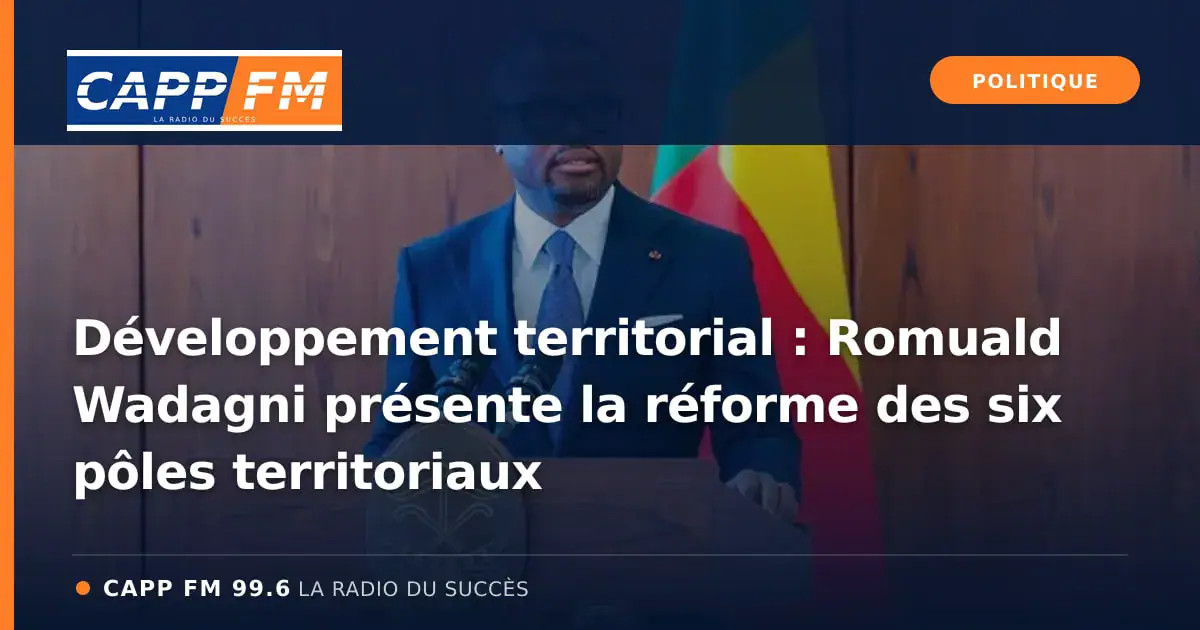
On September 23, 2026, Benin's President Romuald Wadagni unveiled a comprehensive territorial reform plan at the Palais de la Marina in Cotonou. The plan involves the creation of six territorial poles designed to bring public action closer to the population and enhance local development. According to the government, this initiative is a central axis of its program for the next seven years, aiming to strengthen the effectiveness of public action and accelerate territorial development.
The reform plan was presented in the presence of several high-ranking officials, including the President of the National Assembly, members of the Economic and Social Council (CES), 12 prefects, mayors of 77 communes, and government members. President Wadagni called on local authorities to mobilize and accelerate development at the grassroots level. The plan is expected to allow for better coordination of public interventions and more efficient use of resources.
The six territorial poles will be led by resident general delegates who will be responsible for overseeing the implementation of the reform. Each delegate will be required to reside in their area of intervention, conduct regular field visits, and report on progress and challenges to the central authorities. The delegates will be evaluated based on predefined performance indicators, and a first assessment of their action is expected after one year.
The reform aims to achieve three main objectives: reduce extreme poverty, consolidate human capital, and stimulate local wealth creation. Particular attention will be given to farmers, breeders, and fish farmers, who are considered the most vulnerable categories. President Wadagni also encouraged civil servants and officials from different regions to invest in the development of their localities of origin.
In addition to the creation of the territorial poles, President Wadagni urged local authorities to strengthen rules related to cleanliness, waste management, and public space maintenance. He emphasized the importance of exemplary behavior and pedagogy in promoting development, rather than relying on coercion. The President also called on local leaders to identify and address obstacles to development in their areas.
This reform is part of the decentralization process initiated in Benin with the laws of 1999 and the establishment of the first elected communal councils in 2002 and 2003. The six territorial poles will add an intermediate level of governance between the central state and local authorities, aiming to improve the effectiveness of public action and local development.
The implementation of the reform is expected to have a positive impact on the lives of Benin's citizens, particularly in rural areas. The government hopes that the creation of the territorial poles will help to reduce poverty, improve living standards, and promote sustainable development. The success of the reform will depend on the effective mobilization of local actors and the commitment of authorities to promote development at the grassroots level.
Key points
- The reform aims to reduce extreme poverty, consolidate human capital, and stimulate local wealth creation.
- The six territorial poles will be led by resident general delegates who will oversee the implementation of the reform.
- The reform is part of Benin's decentralization process initiated in 1999.