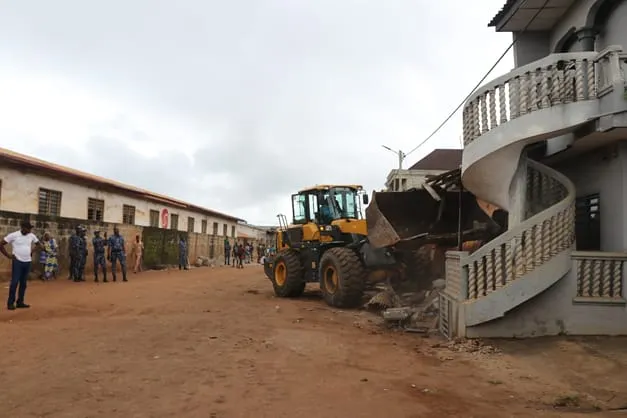
The municipality of Porto-Novo, Benin, has initiated a major operation to reclaim public spaces that have been illegally occupied by various businesses and vendors. This move comes after an ultimatum issued by the municipality expired. On October 8, 2026, heavy machinery was deployed to several areas around the Ouando modern market, including Klékanmè and Kpogbomè. The operation aimed to dismantle makeshift shops, kiosks, garages, and other structures built on sidewalks, central reservations, and roads.
The operation was led by the Technical Services Directorate (DST) of the municipality, under the supervision of Éric Dagba, and was secured by a significant police presence, headed by the Ouémé departmental police commissioner, André Dah Lokonon. The police commissioner stated that the goal of the operation was to eliminate pockets of resistance that hinder the functioning of the new Ouando market. He emphasized that the objective is to relocate all vendors to the new market, promoting a more organized and secure environment for commercial activities.
Commissioner André Dah Lokonon expressed frustration with some vendors who insist on maintaining their old habits, selling goods on the streets, and operating in deplorable conditions. He highlighted the benefits of the new market, which offers a cleaner and more attractive environment for vendors and customers alike. Additionally, the commissioner pointed out the security risks associated with the previous market conditions, where vendors lived and sold goods in the same area, making them vulnerable to nighttime attacks.
The new Ouando modern market provides a more suitable and appealing environment for commercial activities. However, the municipality's operation extends beyond the Ouando area, aiming to reclaim all public spaces that have been illegally occupied or recolonized across Porto-Novo. According to Éric Dagba, the DST, the municipality has observed a surge in the reoccupation of public spaces by garages, car wash stations, vendors, and private construction sites, despite laws and regulations prohibiting such activities.
The municipality claims to have exhausted all avenues of dialogue before launching the operation. This included issuing reminders, conducting awareness campaigns in the five districts of Porto-Novo, and providing a seven-day ultimatum, which has since expired. For the municipal authorities, the issue goes beyond maintaining public order; it is also about preserving the image of the capital city. The municipality argues that the illegal occupation of public spaces undermines the government's efforts to develop infrastructure and promote the city's attractiveness.
The operation is expected to continue without reprieve, with the municipality determined to use force to reclaim all recolonized public spaces. Éric Dagba emphasized that the goal is to ensure that all occupants of public spaces vacate the areas, and the operation will persist until this objective is achieved. The municipal authorities are committed to maintaining the momentum, with the aim of restoring public spaces to their intended use and promoting a more organized and secure environment in Porto-Novo.
The initiative has been welcomed by some, who see it as a necessary step to restore order and promote development in the capital city. Others, however, have expressed concerns about the impact on vendors and small business owners who may lose their livelihoods as a result of the operation. As the situation continues to unfold, it remains to be seen how the municipality will balance its goals with the needs of its citizens.
Key points
- The municipality of Porto-Novo has launched a large-scale operation to reclaim public spaces illegally occupied by vendors, garages, and other businesses.
- The operation aims to relocate vendors to the new Ouando market, promoting a more organized and secure environment for commercial activities.
- The initiative is part of a broader effort to restore order and promote development in the capital city, while also preserving its image.