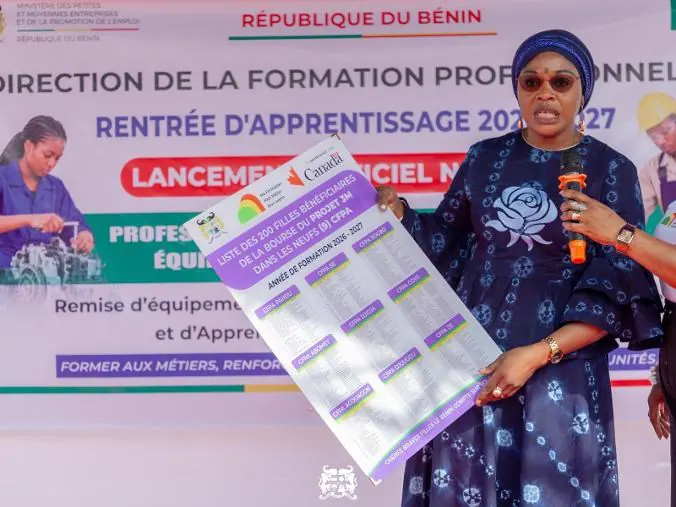
The government of Benin, in partnership with the Canadian government, has launched a new vocational training initiative, Project 3M, aimed at enhancing the employability and economic empowerment of young people. The project, which was officially launched on September 28, 2026, at the Centre de Formation Professionnelle et d'Apprentissage (CFPA) in Djougou, seeks to provide young people with the skills and competencies needed to access the job market and become economically independent. The initiative is part of a broader effort to transform the country's technical and vocational education system.
Project 3M, which stands for "Ma formation, mon métier, mon avenir" (My Training, My Job, My Future), is designed to address the needs of young people, particularly those who are vulnerable, including girls and women. The project aims to provide 6,000 direct beneficiaries, aged 12 to 30, with the skills and competencies needed to access the job market and become economically independent. The project will be implemented in nine CFPAs across several departments in Benin, in collaboration with national stakeholders in vocational training and insertion.
The project focuses on three key areas: improving access to vocational training, enhancing the quality of learning, and providing support for young people to access the job market. To achieve these objectives, the project will provide equipment and training for instructors, as well as support for young people to access apprenticeships and job placements. The project will also prioritize the needs of girls and women, who often face additional barriers in accessing vocational training and employment opportunities.
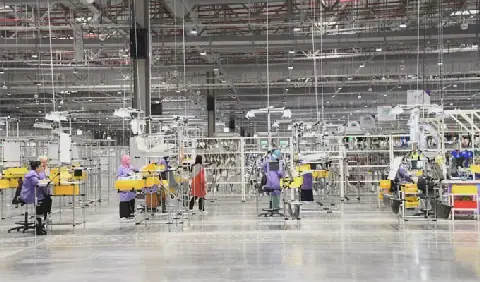
As part of the project, a significant investment has been made in equipment and infrastructure, including a delivery of equipment worth 241,412,138 francs CFA to the CFPA in Djougou. This investment aims to provide young people with hands-on training and practical skills in various trades and professions. The project has also identified 10 priority trades and has established 12 centers of reference to support the training of instructors and professionals.
The launch of Project 3M has been welcomed by stakeholders, who see it as an important step towards addressing the needs of young people in Benin. The project's focus on vocational training and job placement is seen as critical to addressing the country's youth unemployment challenge. According to Abdoulaye Zono, representative of the technical and financial partners, the project is part of a broader effort to support Benin in developing a more accessible, relevant, and inclusive vocational training system.
The project also aims to promote women's access to vocational training and technical trades. During the launch ceremony, 179 young women who had completed a certification program in various trades were awarded certificates, and 200 women were announced as beneficiaries of training bursaries in technical and professional trades. These initiatives reflect the project's commitment to promoting gender equality and empowering women through vocational training.
The success of Project 3M will depend on the collaboration of various stakeholders, including government agencies, vocational training institutions, and private sector partners. The project's impact will be closely monitored, and its outcomes will inform future efforts to develop vocational training programs in Benin. Ultimately, the goal of Project 3M is to provide young people with the skills and competencies needed to access the job market and become economically independent, thereby contributing to the country's economic development and growth.
Key points
- The project aims to provide 6,000 direct beneficiaries with the skills and competencies needed to access the job market and become economically independent.