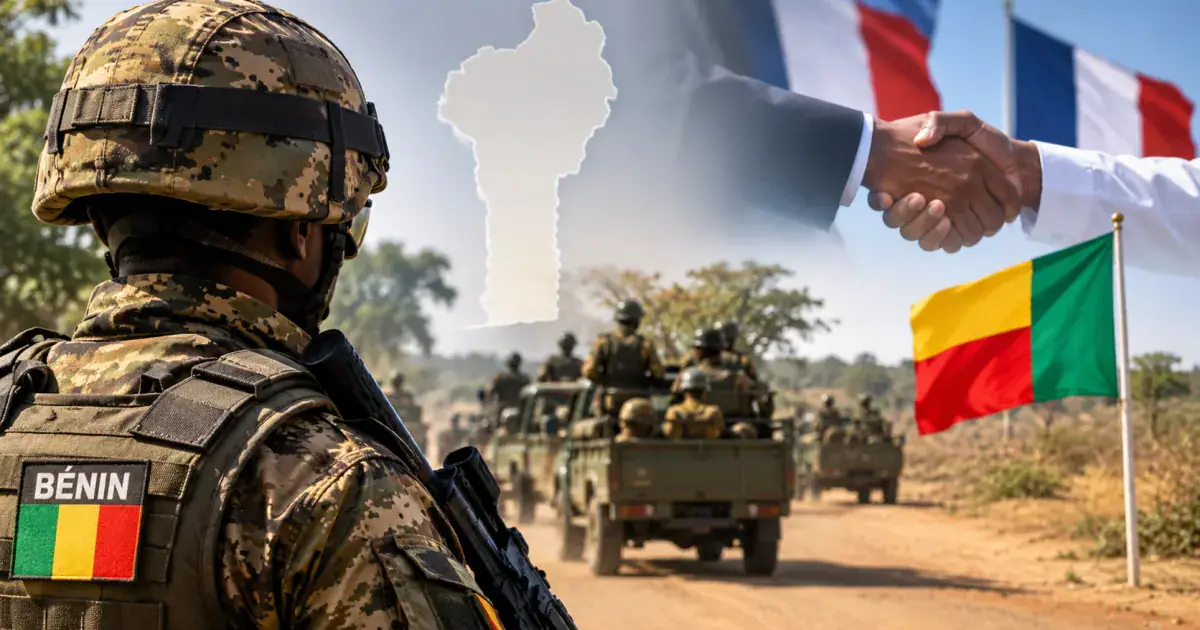
President Romuald Wadagni of Benin has announced plans to intensify the country's war against terrorism, focusing on the north where jihadist groups have established a presence. The strategy involves strengthening the military, enhancing surveillance, and securing border areas. This approach aims to address the growing threat of terrorism in the region, which has seen an increase in violent incidents. According to data from ACLED, 686 people were killed in violence between January 2024 and March 2026, with 674 of those deaths occurring in northern Benin.
The threat of jihadism has taken hold in northern Benin, particularly in the Alibori and Atacora regions, which border the Sahel. Armed groups exploit the area's difficult terrain, porous borders, and socio-economic vulnerabilities to expand their influence. To combat this, Wadagni's administration is prioritizing the modernization of the military, including the acquisition of armored vehicles, drones, and surveillance cameras. The goal is to improve the military's ability to anticipate and respond to threats, moving from a reactive to a preventive approach.
Wadagni's program for 2026-2033 includes a significant recruitment drive, with over 9,450 additional defense and security agents hired since 2016. Additionally, 5,600 agents have joined the Republican Police. The construction of eight advanced operational bases and 15 fortified outposts is part of this effort. The president aims to build on this foundation by enhancing surveillance, professionalizing units deployed in high-risk areas, and strengthening international partnerships, particularly with France.
France remains a strategic partner for Benin in the fight against terrorism. Despite changes in the geopolitical landscape in West Africa, Benin maintains a defense partnership with Paris, focusing on training, expertise, and equipment. The Center for Post-Conflict Decontamination and Demining (CPADD) in Ouidah exemplifies this cooperation, with France providing equipment to combat improvised explosive devices. This assistance aims to enhance Benin's ability to detect and neutralize such threats, which are particularly concerning in the north.
The cooperation with France extends beyond equipment to include training and capacity-building. Benin hosts several national schools with a regional vocation, supported by French cooperation, including CPADD and the Ouidah Logistics Academy. A Border Academy is also being established in Porto-Novo. These institutions contribute to the training of civilian and military personnel from several African countries. France also provides support in areas such as intelligence and equipment at the request of the Beninese authorities.
Wadagni's approach to combating terrorism involves not only military measures but also community engagement and local development. The operationalization of municipal police forces in border communes and a National Civic Engagement Program aim to strengthen the connection between the nation and its defense forces. The president also plans to launch a program to stabilize high-risk areas, supporting local economic activities, particularly for young people and women, and maintaining basic social services.
The strategy emphasizes the importance of balancing military action with development and community involvement. This approach aligns with recommendations from various security analyses on the Sahel and coastal countries, which suggest that a durable military response must be accompanied by preventive policies, local governance, and reducing vulnerabilities. However, the involvement of civilians in security raises concerns about protection, highlighting the need for shared responsibilities, training, control mechanisms, and the prevention of abuses.
Key points
- President Wadagni's administration is investing in military modernization, including drones and surveillance equipment, to combat terrorism in northern Benin.
Reporting sources
- Wadagni muscle sa guerre contre le terrorisme · 24 Heures au Bénin