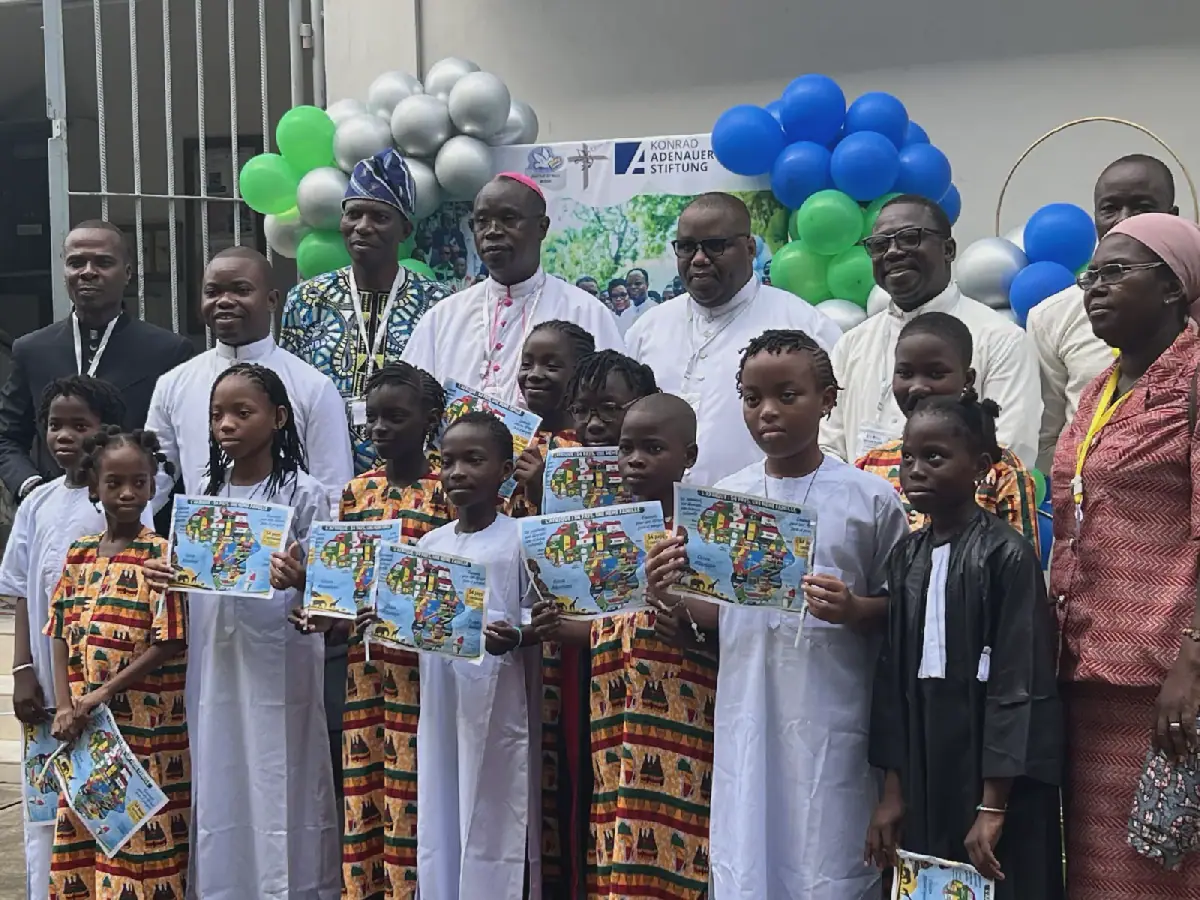
The Institute of Justice and Peace, in collaboration with the Konrad Adenauer Foundation, commenced its 29th annual symposium in Cotonou, Benin, on November 13, 2026. This year's theme, "Democracy and Development: Francophone Africa at the Crossroads," has drawn a diverse group of participants. They are engaging in discussions on governance, economic progress, and social development. A central question driving these exchanges is the actual impact of democracy on improving the living conditions of populations.
At the symposium's opening, Mgr Aristide Gonsallo, Bishop of Porto-Novo and President of the Justice and Peace Commission of the Beninese Episcopal Conference, emphasized that development should not be solely measured by economic growth. Citing Pope Paul VI's encyclical Populorum Progressio, he advocated for integral development that prioritizes the human person in public policies. According to Mgr Gonsallo, economic growth that does not tangibly benefit the population is incomplete prosperity. Similarly, proclaiming liberties is insufficient if citizens lack the means to fully exercise them.
Mgr Gonsallo highlighted the persistent gap between economic performances, ongoing inequalities, and the daily realities of populations in several African countries. He cautioned against narratives that pit economic development against political liberties. In his view, political alternation and citizen participation should not be seen as obstacles to prosperity. Instead, populations must be able to participate in decisions that affect their future. This perspective underscores the need for a more nuanced understanding of democracy and development.
Kevin Anvo, representing the Konrad Adenauer Foundation, also questioned the concrete impact of democracy on citizens' lives. He cited various indicators that reveal a mixed situation on the continent. According to Freedom House data, improvements have been noted in Benin, Liberia, and Sierra Leone. The Ibrahim Index of African Governance also reports progress in certain countries, including Benin and Côte d'Ivoire. However, these advances are not universal, with 23 of 54 evaluated African countries experiencing a decline in governance between 2016 and 2025.
Data from Afrobaromètre provides additional insights, showing that 64% of Africans prefer democracy over other regimes, but only 36% fully endorse it. Kevin Anvo interprets this as an expression of citizens' expectations, particularly among the youth, for democratic institutions to better address their aspirations. He drew parallels with post-World War II Germany, where economic reconstruction and democratic consolidation progressed complementarily. This experience suggests that democracy and development can advance together.
The symposium's discussions are timely, given the complexities of democracy and development in Francophone Africa. Participants are exploring ways to strengthen democratic institutions, promote economic growth, and address social inequalities. By examining the interplay between democracy and development, the symposium aims to identify practical solutions for improving the lives of populations in the region. The event provides a platform for stakeholders to share experiences and expertise.
As the symposium continues, its outcomes are expected to contribute to a deeper understanding of the challenges and opportunities facing Francophone Africa. The Institute of Justice and Peace, in collaboration with the Konrad Adenauer Foundation, is fostering a critical dialogue on democracy and development. By engaging academics, civil society actors, and institutional leaders, the symposium is helping to shape a more nuanced and effective approach to promoting progress in the region.
Key points
- The symposium highlights the need for integral development that prioritizes the human person in public policies.
- Democracy and development are interconnected and can progress together.
- Citizens' expectations for democratic institutions to address their aspirations are high, particularly among the youth.