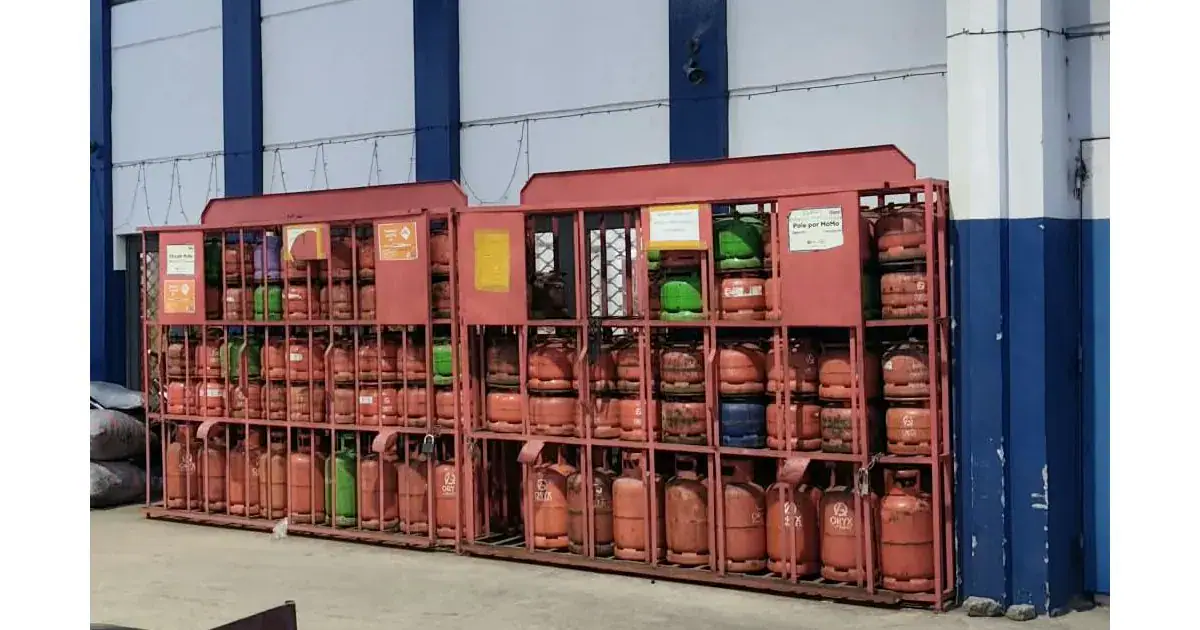
The Beninese government has implemented a reform allowing for the interchangeability of domestic gas cylinders, enabling consumers to exchange empty cylinders for full ones from different operators without additional fees. This move aims to increase flexibility and convenience for consumers. The reform, officialized by an inter-ministerial decree on September 30, 2026, applies to cylinders of 3 kg, 6 kg, and 12.5 kg.
While the interchangeability policy has been welcomed by consumers, it has not alleviated the issue of gas shortages in the country. In Cotonou and Abomey-Calavi, several users have reported difficulties in accessing gas due to recurrent stockouts. On November 5, an agent at a station in Houénoussou reported that 70 gas cylinders had been received the previous day, but the stock had been depleted by morning.
The shortage has forced some consumers to make multiple trips to find a gas cylinder. Solange Gudegbè, an entrepreneur, expressed frustration at having to search for gas across Abomey-Calavi, questioning whether the current supply meets demand. Similarly, Yolande Fagnon, who uses multiple gas cylinders for her restaurant, urged authorities to address the supply issue, highlighting the importance of gas in her business.
The price of gas also varies significantly across the West African Economic and Monetary Union (UEMOA) region. According to official prices, a 12.5 kg gas cylinder recharge costs 11,250 FCFA in Mali, 10,000 FCFA in Benin, and as low as 3,750 FCFA in Niger. In Benin, the government subsidizes smaller cylinders, but not the 12.5 kg ones, which are priced at 10,000 FCFA.
Analyst Loïc Vidégan attributes the price disparities to differences in subsidy levels, taxes, and supply costs across countries. He also notes that the margins of distributors and policy choices influence the final price paid by consumers. Meanwhile, consumers are calling for increased government support to make gas more affordable.
Many consumers, like Djawad Chidjou, suggest that further subsidies could encourage greater use of domestic gas, especially with charcoal prices rising. Others, who wish to remain anonymous, echo this sentiment, emphasizing that current prices are a burden on households.
While the interchangeability policy is seen as a positive step, its effectiveness hinges on ensuring a stable and affordable gas supply. Consumers stress that their primary expectation is to access gas when needed at a reasonable price. The government faces pressure to address these concerns and enhance support for households struggling with gas shortages and prices.
Key points
- The Beninese government implemented a policy allowing for the interchangeability of domestic gas cylinders to increase flexibility for consumers.
- Despite this reform, gas shortages persist in Cotonou and Abomey-Calavi, with consumers facing difficulties in accessing gas due to recurrent stockouts.
- The price of gas varies significantly across the UEMOA region, with Benin subsidizing smaller cylinders but not the 12.5 kg ones, which are priced at 10,000 FCFA.
Reporting sources
- Les usagers confrontés aux ruptures de stock de gaz domestique · 24 Heures au Bénin