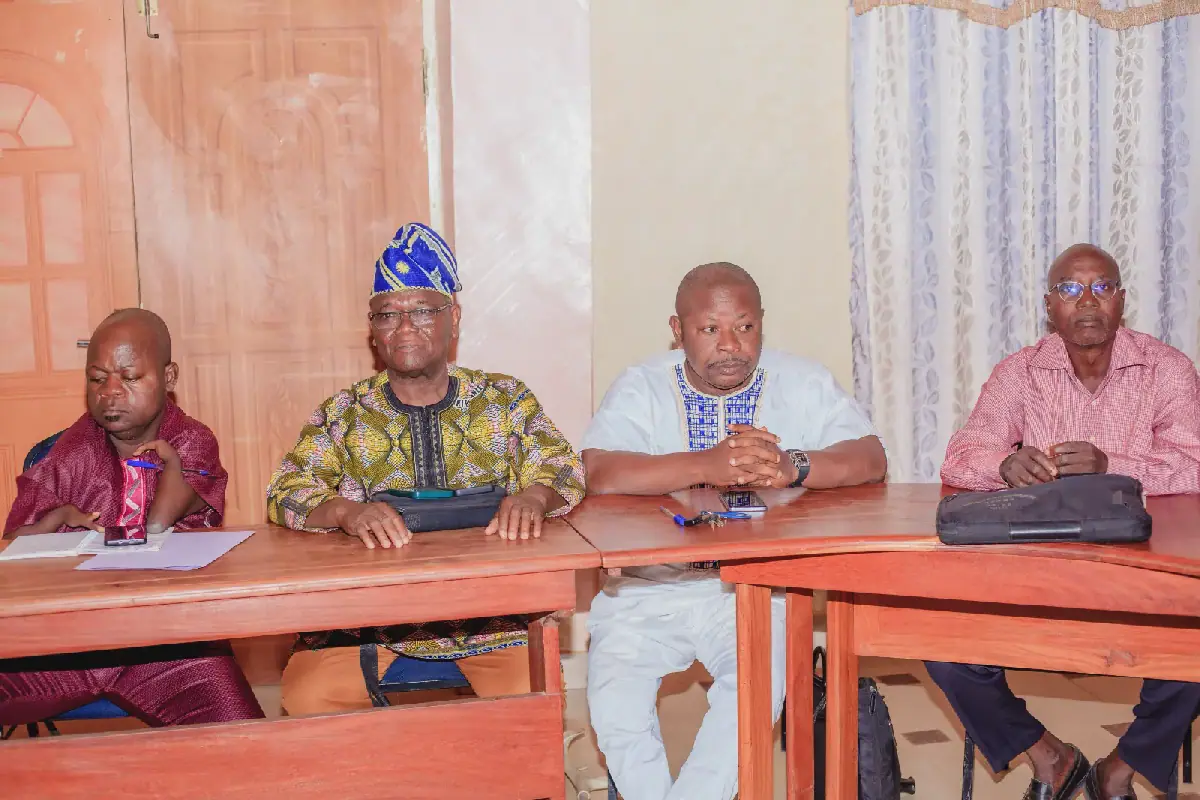
The Beninese government has launched a series of regional consultations to inform the development of the country's next National Employment Policy (PNE). The latest meeting took place in Bohicon, bringing together stakeholders from the Zou and Collines departments. The consultations, which began on November 23, 2026, aim to gather input from local actors to better tailor future employment initiatives. The Ministry of Small and Medium-sized Enterprises and Employment Promotion, in collaboration with German Cooperation (Giz), is organizing the events.
The consultations in Bohicon follow a similar meeting in Parakou, and more are planned for other regions. The goal is to ensure that the new PNE is developed in consultation with local populations, rather than being imposed upon them. Representing the Director of Employment Promotion, Hospice Jimaja emphasized the importance of involving all stakeholders in the process. He encouraged participants to advocate for the concerns of often-marginalized groups and not to shy away from disagreements.
A key challenge discussed during the consultations was the difficulty young people face in finding employment after completing their studies. Noël Agbohessou, president of the NGO Valeur Universelle, stressed the need for enhanced technical and vocational training. He argued that diplomas must be accompanied by practical skills that are in demand by employers. This view was shared by Dr. Alain Gbewedo, Director of Studies at Hecm, who called for more internships and professional experience to facilitate the transition of young graduates into the workforce.
Other stakeholders also presented their perspectives on the challenges facing young people in the job market. Emilienne Lassou, Managing Director of Pivena, advocated for increased financial support from the government to help businesses train and hire young people. Hilary Gbetoenonmon, first deputy mayor of young people in Bohicon, highlighted the need to improve access to employment for vulnerable groups, including young women, people with disabilities, and those living in rural areas.
The consultations also focused on the potential for local resources to generate more stable employment opportunities. Rodrigue Mitchowadou, representing the prefect of Zou, noted that the region's economic assets, such as agriculture, crafts, commerce, and culture, are not yet translating into sufficient job creation. Ferdinand Bokossa, mayor of Bohicon, discussed the challenges faced by people already in work, including access to financing, recognition of skills, and access to remunerative markets.
The contributions gathered during the consultations in Bohicon will be transmitted as part of the national reflection led by the National Employment Agency (Anpe). The goal is to develop a policy that addresses the concrete difficulties faced by workers, rather than simply meeting national ambitions. Marius Aina, facilitator of the workshop, emphasized that the next PNE must respond to several urgent challenges, including the massive arrival of young people on the labor market, their professional integration, and the improvement of agricultural productivity.
The consultations will continue in other regions, with the aim of shaping a comprehensive and inclusive National Employment Policy. The government hopes that this process will lead to the development of effective solutions to the country's employment challenges. The next PNE is expected to provide a framework for addressing the needs of various stakeholders, including young people, vulnerable groups, and local businesses.
Key points
- The Beninese government is gathering input from local stakeholders to inform the development of the country's next National Employment Policy.
- The consultations aim to address the challenges faced by young people in finding employment, including the need for enhanced technical and vocational training.
- The new PNE is expected to provide a framework for addressing the needs of various stakeholders, including young people, vulnerable groups, and local businesses.