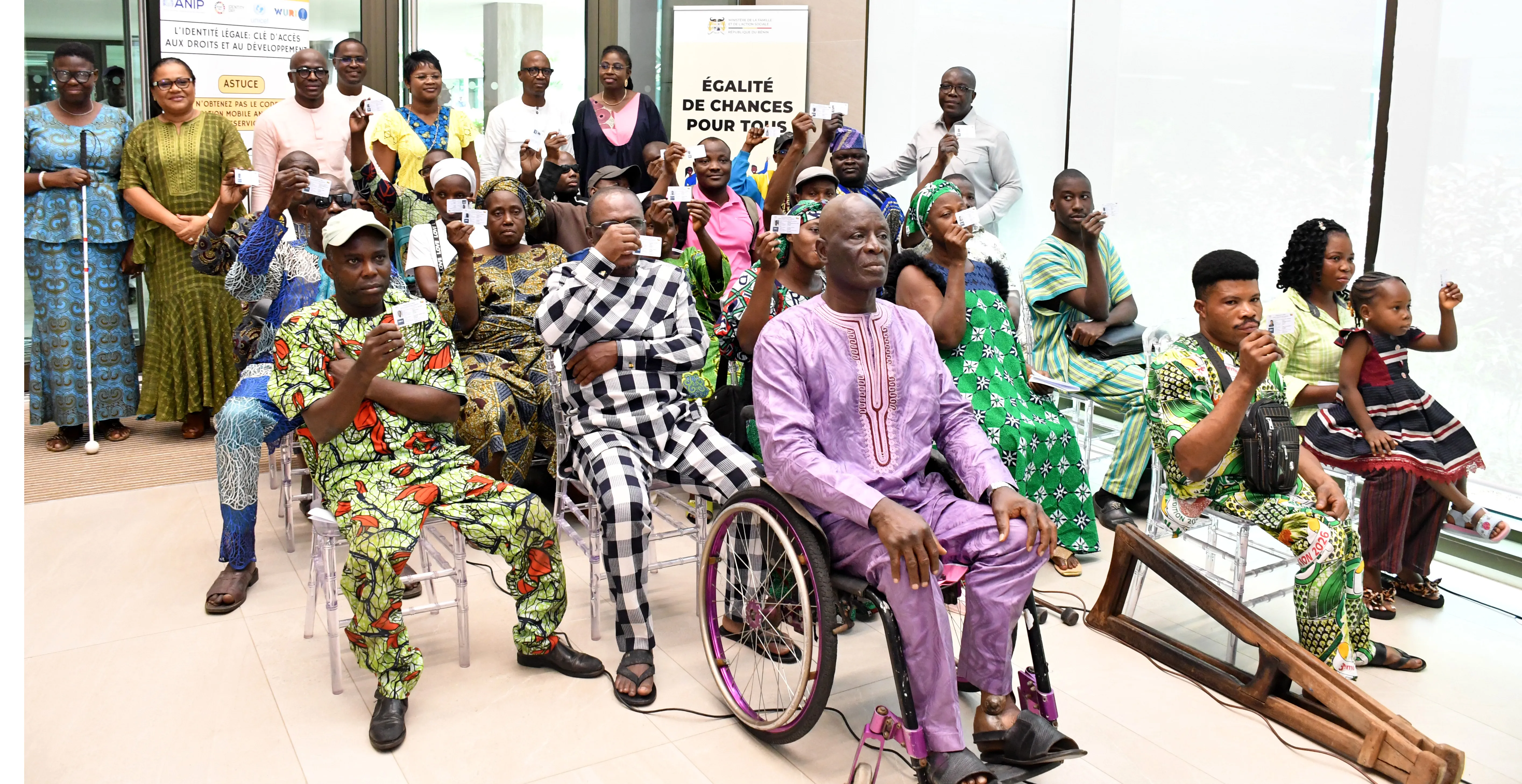
The Beninese government has taken a significant step towards promoting inclusivity and equality for people with disabilities. On September 18, the Ministry of Family and Social Action received 1,422 equality cards from the National Agency for Identification of Persons (ANIP). These cards are designed to provide people with disabilities with access to preferential measures and benefits, as stipulated by law. The distribution of these cards marks a new phase in the government's efforts to promote social inclusion.
The equality card is a crucial document that guarantees the rights of people with disabilities. According to the Minister of Family and Social Action, Veronique Tognifode, the card is not just an identification document but also a means for its holder to access benefits and advantages attached to their status. The law, which came into effect in 2017, provides for the issuance of these cards to people with disabilities, enabling them to access healthcare, education, employment, and other social services.
The distribution of the cards is part of the government's efforts to implement the Sustainable Development Goals (SDGs), specifically target 16.9, which aims to provide a legal identity for all. Benin has set a target to achieve this goal by 2028, ahead of the international deadline of 2030. The ANIP has emphasized its commitment to extending identification services to people with disabilities in remote areas, ensuring that they are not left behind.
The cards will be distributed in phases, starting with the Littoral department, followed by other departments. According to Minister Tognifode, 4,718 cards had already been distributed in 2024 and 2025. With the recent batch of 1,422 cards, the government aims to address the growing demand for these documents. In 2026, approximately 4,000 new requests have been submitted to the ministry, which will be examined by the Inter-ministerial Commission responsible for implementing measures for the inclusion of people with disabilities.
Despite the progress made, challenges persist. Some beneficiaries have faced difficulties in obtaining the necessary medical certificates to support their applications. Minister Tognifode has acknowledged these concerns and announced plans to work with the Ministry of Health to facilitate access to accredited medical professionals. Nassirou Domingo, President of the Federation of Associations of People with Disabilities in Benin, has also called for better implementation of the free medical certificate policy and easier access to healthcare professionals, particularly for those in remote areas.
The government has established a dedicated platform for social inclusion, providing information on the equality card, financial assistance for students with disabilities, and support for entrepreneurship. The ministry aims to continue working with stakeholders to address the challenges faced by people with disabilities and to promote their social inclusion. The distribution of the equality cards is a significant step towards achieving this goal.
The initiative has been welcomed by stakeholders, who see it as a crucial step towards promoting equality and inclusivity in Benin. As the government continues to work towards implementing the SDGs, the distribution of equality cards to people with disabilities is an important milestone. The cards are expected to enhance the access of people with disabilities to public services and benefits, promoting their social inclusion and equality.
Key points
- The Beninese government has distributed 1,422 equality cards to people with disabilities, aiming to enhance their access to public services and benefits.
- The cards are designed to provide people with disabilities with access to preferential measures and benefits, as stipulated by law.
- The distribution of the cards is part of the government's efforts to implement the Sustainable Development Goals (SDGs), specifically target 16.9, which aims to provide a legal identity for all.