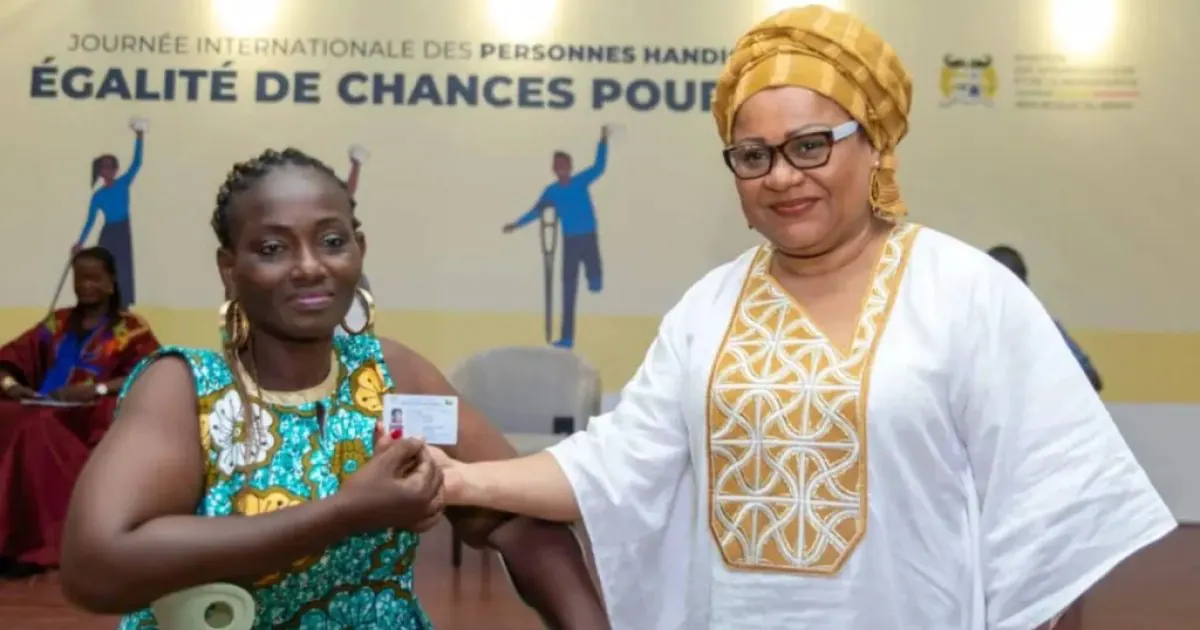
The Beninese government has taken a significant step towards promoting social inclusion by distributing 1,422 equality cards to people with disabilities. The ceremony, which took place on September 18, 2026, at the Ministry of Family and Social Action, was presided over by Minister Véronique Tognifodé. The event was attended by several authorities, officials from the National Identification Agency (Anip), and beneficiaries. This initiative is a result of a partnership between the Ministry of Family and Social Action and Anip.
The equality cards, which were distributed on the sidelines of the International Day of Identity, aim to provide people with disabilities with access to various social services. According to Anip Director-General Aristide Adjinacou, the initiative is in line with Sustainable Development Goal 16.9, which seeks to guarantee a legal identity for every individual. The Beninese government aims to achieve this objective by the end of 2028. Adjinacou expressed optimism that the initiative will help reach people in remote areas who face challenges accessing identification services.
The equality card is more than just an administrative document; it provides access to several social measures. The card identifies the type and rate of disability, facilitating access to support systems in education, training, employment, technical assistance, healthcare, transportation, and social integration. Beneficiaries can access exemptions for purchasing mobility equipment, technical assistance, and airport elevator fees. They are also entitled to free school fees at the college level and specific accommodations for school and sports exams.
The equality card offers numerous benefits to people with disabilities. It guarantees additional time for exams, a one-third increase in composition time, and a five-year age exemption for school enrollment, scholarships, and public service competitions. Five percent of public service positions are reserved for people with disabilities. Students and entrepreneurs can access specific scholarships, financial assistance, project support, and credit inclusion from the National Microfinance Fund.
Minister Véronique Tognifodé emphasized that disability should not be a barrier to equality, dignity, access to services, or full participation in national life. She encouraged people with disabilities who have not yet obtained the equality card to apply, assuring them that the process is simple and accessible. The government reiterated its commitment to supporting people with disabilities and promoting social inclusion.
The distribution of equality cards is a significant step towards promoting social inclusion in Benin. According to the government, the cards will help bridge the gap in access to social services for people with disabilities. The initiative is expected to improve the overall well-being and quality of life for people with disabilities in Benin.
The Beninese government has made significant progress in promoting social inclusion, but much work remains to be done. The government aims to continue working with stakeholders to ensure that people with disabilities have equal access to opportunities and services. The equality card is a crucial tool in achieving this goal, and its distribution is a step towards creating a more inclusive society.
Key points
- The Beninese government has distributed 1,422 equality cards to people with disabilities as part of its efforts to promote social inclusion.
- The equality card provides access to various social measures, including education, training, employment, and healthcare services.
- The government aims to achieve the Sustainable Development Goal of guaranteeing a legal identity for every individual by the end of 2028.