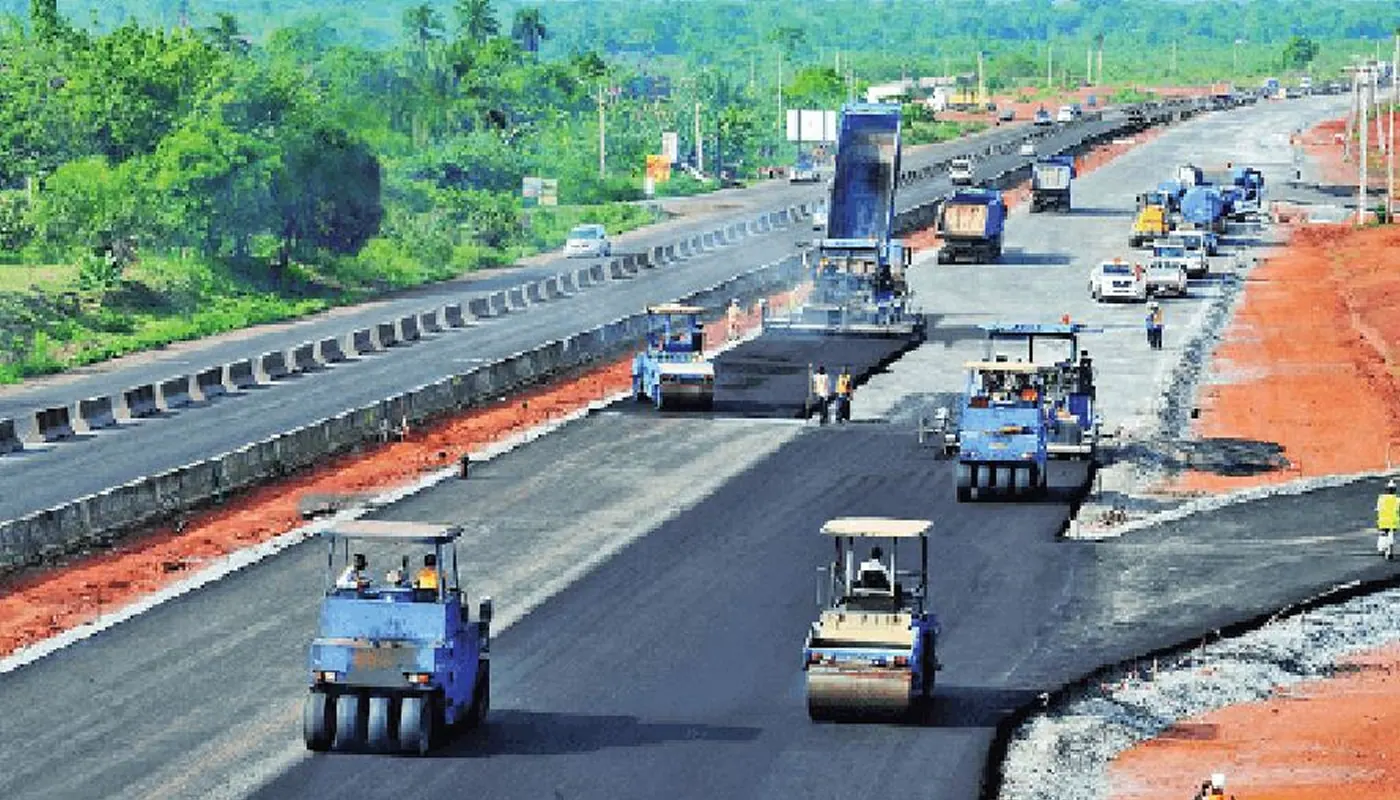
The Benin-Asaba Expressway, a 125-kilometre road construction project in Nigeria, has been plagued by difficulties, including failed portions of the road, congestion, and diversions. While motorists face frustrating travel experiences, concerns have been raised about the project's progress. However, experts argue that judging the project solely by its current state would be premature. The reconstruction and expansion programme involves site preparation, earthworks, drainage, and substantial engineering and technical preparation.
The project is a major undertaking that involves expanding parts of the urban corridor into a modern 10-lane carriageway. This scale of infrastructure development is built in stages, with the finished asphalt being one of the last visible stages of a much longer engineering process. Before the asphalt is laid, several activities must take place, including drainage, earthworks, subgrade preparation, pavement layers, culverts, and relocation of utilities where necessary.
According to project updates, various activities have been taking place, including earthworks and subgrade preparation, drainage and culvert construction, asphaltic concrete and binder-course development, and carriageway expansion. Work has been documented from Chainage 9+500 to Chainage 30 in Benin and towards the Delta State axis. The Benin-Asaba Expressway Construction Company (BAECC) has invested billions of naira in private-sector resources in construction equipment, materials, facilities, and logistics.
While motorists should not be expected to endure bad sections of the highway without efforts to improve conditions, the company reconstructing the road assumes two responsibilities: building tomorrow's road and making today's road reasonably passable. To address this, BAECC has carried out and continues to carry out palliative and rehabilitation interventions across the corridor. These measures aim to reduce hardship while the main engineering work continues.
However, palliatives can themselves become victims of the conditions they are meant to address. The rainy season has been particularly difficult, with persistent rainfall affecting earthworks, drainage, pavement stabilisation, and asphalt operations. When the ground becomes saturated, some construction activities have to be slowed or resequenced. Asphalt and pavement operations can also be impacted by the weather conditions.
Despite the challenges, it is essential to consider the project's progress and the efforts being made to complete it. The reconstruction and expansion of the Benin-Asaba Expressway are crucial for improving transportation infrastructure in the region. Once completed, the new highway will provide a smoother and safer travel experience for motorists.
In conclusion, while the current conditions on the Benin-Asaba Expressway may be challenging, it is essential to consider the project's progress and the efforts being made to complete it. The investment in the project and the work being done to address the difficulties faced by motorists demonstrate a commitment to delivering a high-quality infrastructure project.
Key points
- Billions of naira have been invested in the project.
- Palliative measures are being taken to reduce hardship.
- The project involves a major reconstruction and expansion programme.