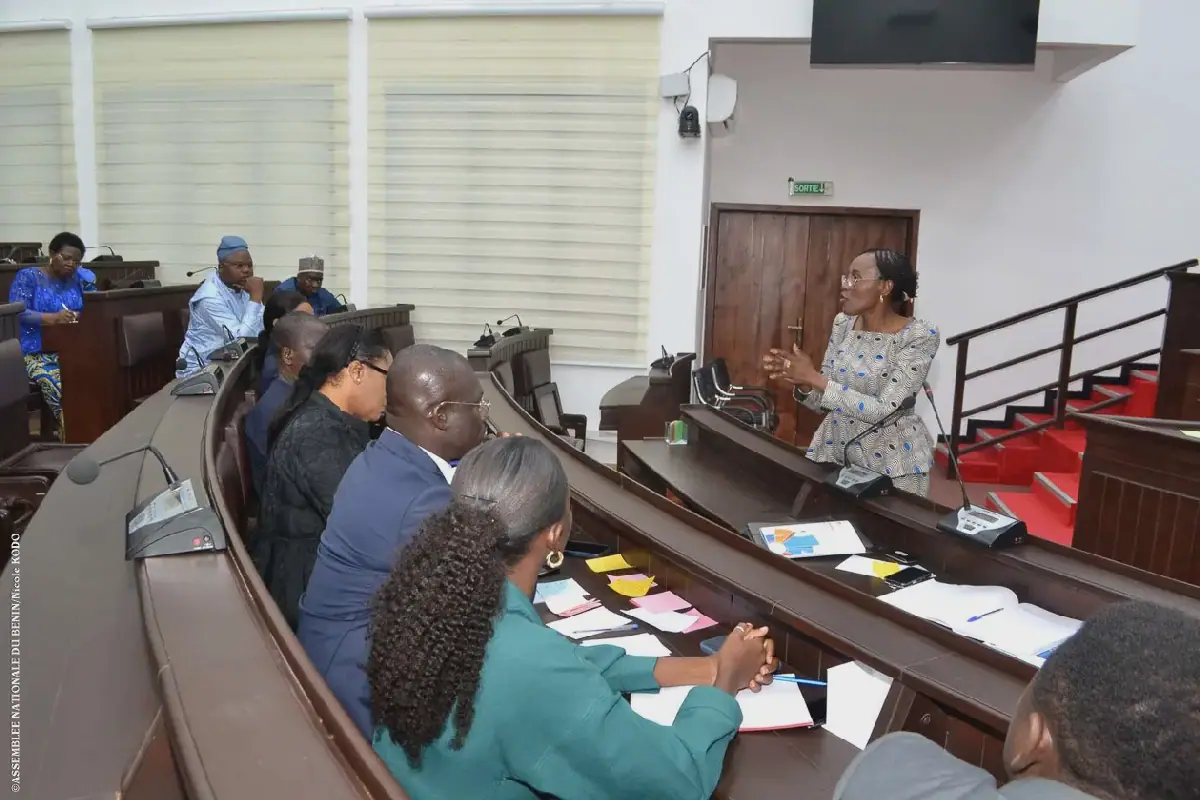
The Minister of Domestic Trade and Economy Formalization, Shadiya Alimatou Assouman, has presented the 2027 budget for her ministry to the National Assembly. The total budget is 7,396,851,357 FCFA. This budget is divided into two programs focused on sanitizing the domestic market, promoting local consumption, and sustainable formalization of Benin's economy. The presentation was made on November 25, 2026.
The budget is allocated to two main programs. The first program, Domestic Trade and Economy Formalization, receives 5,734,226,137 FCFA, accounting for 77.52% of the total budget. The second program, Steering and Support for Ministry Services, receives 1,662,625,220 FCFA, making up 22.48% of the total budget. This allocation aims to consolidate sectoral and institutional reforms.
The allocated funds will enable the ministry to strengthen human, material, and financial resource management. It will also improve planning, programming, and monitoring and evaluation systems. Furthermore, the ministry will enhance information and archive management. These efforts are part of a broader strategy to sanitize the domestic market and promote local product consumption.
Another key focus area is the acceleration of formalization for economic actors. The ministry's initiatives are designed to support the growth of a formal economy. By formalizing economic activities, the government aims to increase revenue and improve the business environment. This move is expected to have a positive impact on Benin's economic development.
The 2027 budget presentation is part of a larger process. Other ministers have also presented their budget proposals. For instance, the Minister of Interior and Public Security, Véronique Tognifodé, presented a budget of 90.73 billion FCFA. Similarly, the Minister of Communication and Media, Aurélie Adam Soulé, defended a budget of 12.4 billion FCFA for her sector.
The budget allocations reflect the government's priorities. The focus on domestic trade and economy formalization indicates a strategy to boost economic growth. By investing in these areas, the government aims to create a more favorable business environment. This, in turn, is expected to attract investment and stimulate economic activity.
The implementation of these budget plans will be closely monitored. The effectiveness of the ministry's initiatives will be evaluated based on their impact on the economy. The government aims to achieve tangible results, including increased formalization of economic activities and growth in local consumption.
Key points
- The 2027 budget for domestic trade and economy formalization is 7.39 billion FCFA.
- The budget is divided into two programs, with 77.52% allocated to Domestic Trade and Economy Formalization.
- The initiatives aim to sanitize the domestic market, promote local consumption, and accelerate economy formalization.