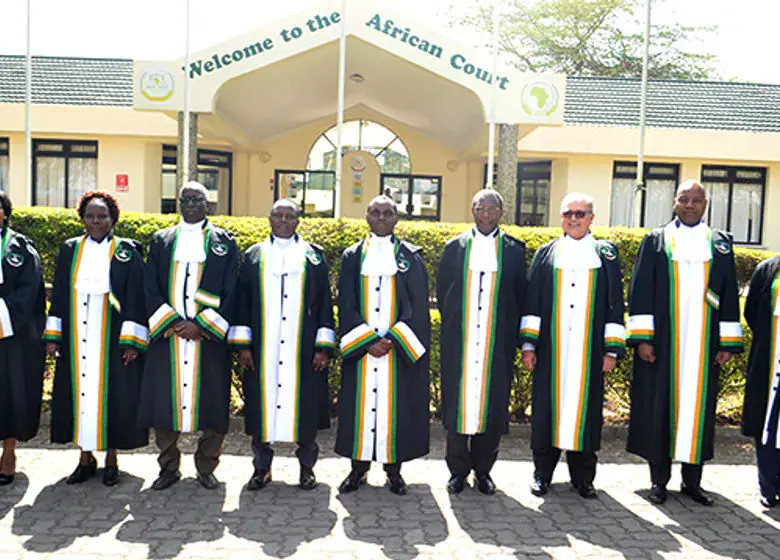
The African Court on Human and Peoples' Rights (CADHP) has rejected a complaint filed by the family of Sébastien Ajavon, a Beninese businessman, against the Beninese state. The family had appealed to the court, claiming that their rights had been violated following Ajavon's conviction to 20 years in prison in 2018 for drug trafficking. The family's complaint was based on the confiscation of Ajavon's assets, including those of his company COMON, and the alleged illegal seizure of their personal bank accounts.
The family, including Ajavon's wife and three other relatives, claimed that their right to property and to be heard were violated. They sought 170 billion FCFA each in damages from the Beninese state. The family argued that the execution of the CRIET court's decision had affected them as shareholders of COMON. They also claimed loss of opportunity in their partnership with Philia and loss of benefits due to the devaluation of their shares in COMON and Socotrac.
The Beninese state had argued that the court should declare itself incompetent and the complaint inadmissible. The state claimed that the complaint was incompatible with the African Union's constitutive act and the Charter on Human and Peoples' Rights. The state also argued that the family's detention of shares in a commercial company did not constitute a source of human rights violations imputable to the state.
The African Court rejected the Beninese state's exception of incompetence, citing its jurisprudence that it has material competence as long as the object of the complaint relates to rights guaranteed by the Charter or other human rights instruments ratified by the state. The court declared itself competent to hear the complaint. The court also rejected the state's exception of res judicata, as the indemnities awarded in a previous case were granted to Ajavon personally and did not cover the patrimonial prejudices of the other shareholders.
The court examined the availability and effectiveness of internal remedies for the two types of alleged injuries. The court found that the procedures provided by the OHADA uniform acts were integrated into the judicial system of the Beninese state and constituted internal remedies. However, the court noted that the family had not established the ineffectiveness of these remedies or demonstrated that they had exercised them.
The African Court ultimately ruled that the family's complaint was inadmissible. The court found that the family had not met the conditions for admissibility, including the exhaustion of internal remedies. The court's decision was based on a detailed analysis of the facts and the applicable law.
The case highlights the complexities of human rights complaints in Africa. The African Court's decision underscores the importance of exhausting internal remedies before filing a complaint with the court. The case also raises questions about the protection of shareholders' rights in Africa and the role of the African Court in enforcing human rights.
Key points
- The African Court on Human and Peoples' Rights has rejected a complaint by the family of Sébastien Ajavon against the Beninese state.
- The complaint was based on the confiscation of Ajavon's assets and the alleged illegal seizure of the family's personal bank accounts.
- The court's decision was based on the family's failure to exhaust internal remedies.