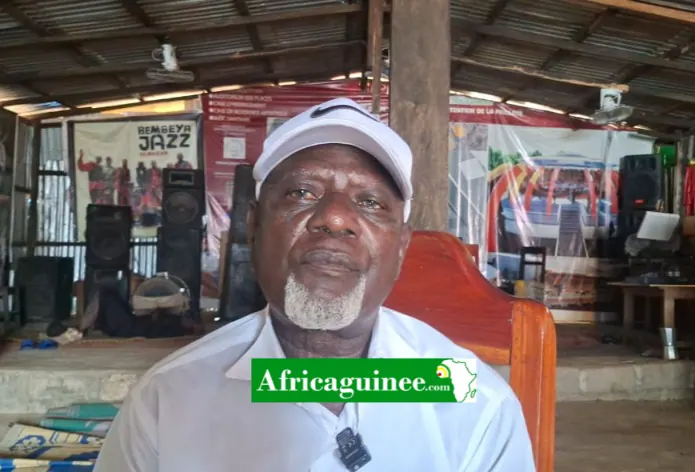
Ansoumane Kaloga, popularly known as Belmondo, is a renowned figure in Guinea's music industry and one of the heirs to the legacy of the Horoya Band National. Recruited in 1970, Belmondo lived through the rise of this emblematic orchestra, which has become a symbol of Haute-Guinée's folklore. As the current orchestra leader, he continues to defend a musical heritage he refuses to see relegated to the past.
In an interview with Africaguinee.com, Belmondo shared the story of the Horoya Band, its history, memorable performances, and the challenges the orchestra faces. He also expressed his expectations from the authorities, advocating for better programming of national orchestras, training of successors, and valorization of traditional Guinean music. The Horoya Band was formed from the evolution of the Milo Jazz between 1963-1964.
Belmondo joined the orchestra in 1970 during a renewal of members. One of his earliest notable performances was at the "Agression" concert in 1971, which earned the orchestra its first prize. This success led to their nationalization in November 1971. Belmondo fondly remembers his first evening with the orchestra, where he was tasked with playing the timbales, an instrument he had never played before.
The strength and originality of the Horoya Band, according to Belmondo, lay in its attachment to Manding folklore and Haute-Guinée's music. The orchestra played pieces like "Furu" and "Zoumana," from the Wassoulou repertoire, and adapted traditional pieces in their own style. President Sékou Touré had encouraged orchestras to prioritize Guinean folklore over foreign music, and the Horoya Band focused on Haute-Guinée's rhythms, including the dunumba and Wassoulou.
The Horoya Band played a significant role in major events of the time, often performing alongside the Bembeya Jazz. They participated in notable concerts like "Boulouba" and "Tuyen," which helped establish the orchestra nationally. Belmondo believes the Horoya Band has left a lasting legacy, as it continues to exist and perform.
Despite its rich history, the Horoya Band seems less prominent on major stages today. Belmondo attributes this to management issues, citing the need for a manager to promote the orchestra and secure performances. He notes that the orchestra is ready to perform but requires organizers to consider them for events.
The main challenges faced by the Horoya Band, according to Belmondo, include management issues and instability among musicians. When musicians have regular opportunities to perform and earn a living, they are more likely to remain with the orchestra. However, without consistent programming, it becomes difficult to retain them.
Key points
- The Horoya Band was formed from the evolution of the Milo Jazz between 1963-1964.
- Belmondo joined the orchestra in 1970 and was part of the "Agression" concert that earned the orchestra its first prize in 1971.
- The Horoya Band's strength lay in its attachment to Manding folklore and Haute-Guinée's music.