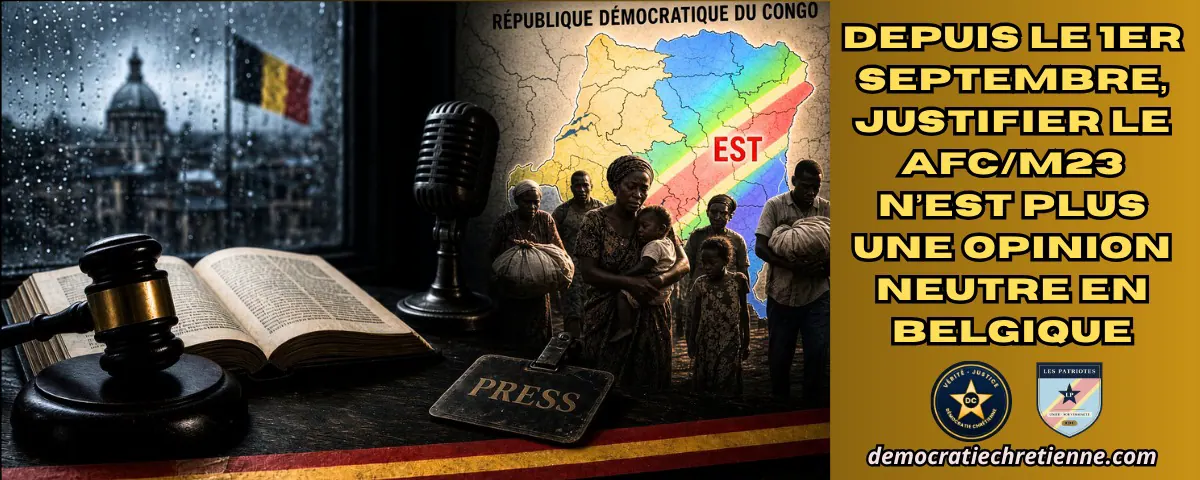
As of September 1, 2026, Belgium has implemented a new penal code that criminalizes the apologia of terrorism. The updated legislation aims to prevent the justification of terrorist groups and their actions. This change has significant implications for individuals, including refugees, who may face consequences for promoting or justifying armed groups. The new code has sparked discussions about the limits of freedom of expression and its application in cases involving terrorist groups.
The article 376 of the new penal code specifically incriminates the apologia of terrorism, which includes denying, minimizing, justifying, or approving publicly a terrorist offense. This provision targets not only direct calls to commit violent acts but also discourse that presents violence as acceptable or justifiable. The Belgian government aims to prevent the spread of ideologies that promote terrorism and to ensure that individuals who have sought refuge in the country comply with its laws.
A refugee political established in Belgium cannot, under the guise of journalism or spokesperson, present the actions of a rebellion accused of war crimes as legitimate. The M23, a rebel group operating in the Democratic Republic of Congo, has been accused of committing serious human rights abuses, including summary executions, torture, and forced disappearances. The group is considered a proxy rebellion supported by Rwanda, and its actions have been widely condemned by the international community.
The European Union has sanctioned several M23 leaders and the Alliance Fleuve Congo for grave human rights abuses and for maintaining the conflict. The United Nations reports from 2025 and 2026 document the group's atrocities, including massacres of civilians, forced recruitment, and sexual slavery. The M23's actions are not considered an abstract diplomatic issue but a concrete case of war crimes and possible crimes against humanity.
The new penal code does not automatically classify the M23 as a terrorist organization, but article 371 defines a terrorist offense by its intended effect: to intimidate a population, constrain a state, or destabilize its fundamental structures. Systematic acts against civilians may fall under this definition. Even outside article 376, incitement to violence, public order, and the risk of revocation of refugee status remain concerns for the Belgian authorities.
The Belgian authorities have previously revoked international protection for militants who, from Belgian soil, praised sanctioned armed groups. The Commissariat General for Refugees (CGRA) does not need to wait for a final conviction to assess whether an individual poses a danger to security or the community. Asylum is not a platform for propaganda; refugees can denounce their home country's regime but cannot justify or glorify armed groups accused of atrocities.
Diomi Ndongala, a refugee and spokesperson, has been critical of the new penal code's implications for freedom of expression. However, the Belgian government maintains that the legislation strikes a balance between protecting freedom of expression and preventing the promotion of terrorist ideologies. The new code has sparked a national debate on the limits of free speech and its application in cases involving refugees and terrorist groups.
Key points
- The Belgian government has implemented a new penal code that criminalizes apologia for terrorism.
- The M23 rebel group has been accused of committing serious human rights abuses in the Democratic Republic of Congo.
- Refugees in Belgium who justify or glorify armed groups accused of atrocities may face consequences, including revocation of their refugee status.