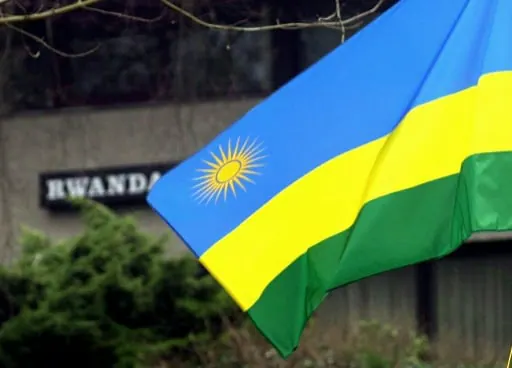
Belgium and Rwanda have restored diplomatic relations, ending an 18-month rift that weakened Brussels' influence in Africa and caused troubles for Rwandans at home and abroad. The relationship frayed after Belgium criticized Rwanda for supporting the M23 armed group in the neighboring Democratic Republic of Congo (DRC) during a lightning offensive last year. This led to Rwanda expelling Belgian diplomats and closing its embassy in Belgium, home to a large Rwandan diaspora.
The rift caused significant challenges for Rwandans, particularly those living abroad. Without an embassy in Belgium, Rwandans faced bureaucratic headaches, and a local NGO working on sensitive sexual issues had to return about $120,000 earmarked for health awareness programs. Additionally, Belgium's Enabel development agency fired dozens of employees and terminated health, agriculture, and other development programs worth more than 112 million euros ($128 million).
Analysts noted that the rift weakened Brussels' diplomatic influence in Africa, particularly in the DRC, a significant loss of clout for the region's former colonial power. The DRC, Rwanda, and Burundi were Belgian colonies until their independence in the early 1960s, and Brussels' influence on the world stage "rests heavily on central Africa." Experts emphasized that it was imperative for Belgium to mend fences with Kigali to be present in international talks to resolve the DRC conflict.
The rapprochement, which calls for the reopening of diplomatic missions, was announced by the two countries' foreign ministers on the sidelines of the UN General Assembly in New York. In a joint statement, Belgium and Rwanda emphasized their commitment to maintaining "an open, candid and transparent dialogue" to address "bilateral differences" and "outstanding disagreements on international issues."
Experts attributed the reconciliation to a mutual interest in resuming dialogue, with Rwanda looking at Europe as a counterweight to US influence in the region. Qatar, which mediated between Belgium and Rwanda, also played a significant role in the reconciliation. In 2025, the Gulf state hosted talks between Kinshasa and the M23 militia, which has seized large swathes of territory in eastern DRC with Rwanda's help since 2021.
Belgian Foreign Minister Maxime Prevot emphasized that restoring relations does not mean that Belgium is renouncing its position or choosing to remain silent on the DRC conflict. He stated that he will continue to defend the integrity and sovereignty of the DRC and demand the withdrawal of Rwandan troops. The reconciliation is seen as a victory for Qatar and a significant development in the region.
The restoration of diplomatic relations between Belgium and Rwanda is expected to have a positive impact on the region, particularly in the DRC. The two countries have emphasized their commitment to maintaining an open and transparent dialogue to address bilateral differences and outstanding disagreements on international issues. This development is seen as a significant step towards resolving the conflict in the eastern DRC and promoting stability in the region.
Key points
- The rift between Belgium and Rwanda was caused by disagreements over Rwanda's support for the M23 armed group in the DRC.
- The reconciliation was facilitated by Qatar, which mediated between Belgium and Rwanda.
- The restoration of diplomatic relations is expected to have a positive impact on the region, particularly in the DRC.