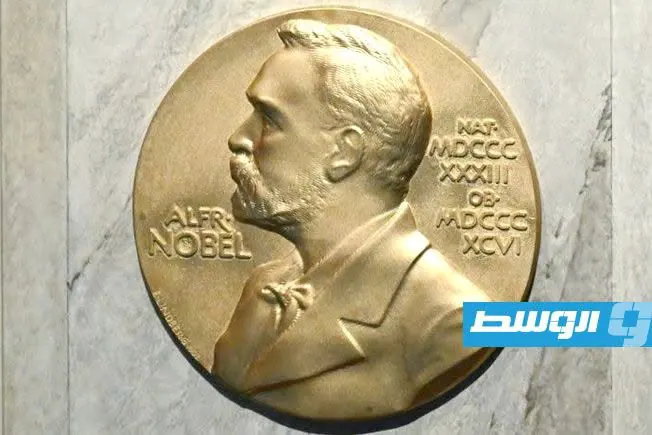
The Nobel Committee announced on Tuesday, October 6, 2026, that Belgian physicist Francis Halzen has been awarded the Nobel Prize in Physics. This prestigious honor is in recognition of his groundbreaking work on subatomic particles conducted at the South Pole. Halzen's research, which has significantly advanced our understanding of the universe, was carried out using the IceCube Neutrino Observatory.
The Nobel Committee specifically cited Halzen's "decisive contributions to the IceCube Neutrino Observatory and the discovery of high-energy astrophysical neutrinos." This discovery has opened new avenues for understanding the universe, particularly in the field of astrophysics. The IceCube Neutrino Observatory, located at the South Pole, is a unique facility that allows scientists to detect and study neutrinos from distant astrophysical sources.
On the same day, the Nobel Prize in Medicine for 2026 was awarded to American Carl Daiserooth and Germans Peter Hegemann and Jörg Nagel. Their research focused on optogenetics, a technique that enables scientists to control and study the behavior of neurons using light. This innovative field has greatly enhanced our understanding of the brain and its functions.
The optogenetics technique, developed by the Nobel laureates, allows researchers to activate or inhibit specific neurons using light, thereby enabling them to study the neural circuits that underlie various physiological and psychological processes. This breakthrough has far-reaching implications for the treatment of neurological disorders and our understanding of human behavior.
Francis Halzen's Nobel Prize in Physics is a testament to the significance of his research on subatomic particles and its potential to transform our understanding of the universe. His work at the IceCube Neutrino Observatory has paved the way for further research in astrophysics and cosmology. The discovery of high-energy astrophysical neutrinos has provided new insights into the most violent and energetic processes in the universe.
The Nobel Prizes, established by Alfred Nobel, are widely regarded as the most prestigious awards in their respective fields. The prizes are awarded annually to recognize outstanding contributions in physics, medicine, chemistry, literature, peace, and economics. This year's prizes have highlighted the groundbreaking work of scientists and researchers who are pushing the boundaries of human knowledge and understanding.
Francis Halzen's award is a significant recognition of his contributions to the field of physics, and his research will continue to inspire and influence scientists in the years to come. The Nobel Committee's decision to award him the prize is a testament to the impact of his work on our understanding of the universe and the advancement of astrophysics.
Key points
- Francis Halzen was awarded the Nobel Prize in Physics for his research on subatomic particles at the South Pole.
- The Nobel Prize in Medicine for 2026 was awarded to Carl Daiserooth, Peter Hegemann, and Jörg Nagel for their work on optogenetics.
- The Nobel Prizes recognize outstanding contributions in physics, medicine, chemistry, literature, peace, and economics.