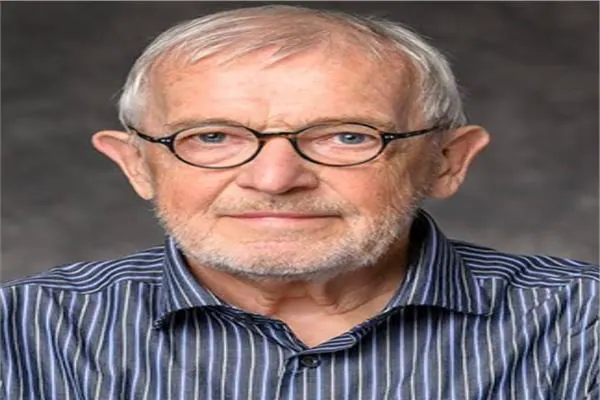
The Royal Swedish Academy of Sciences announced on Tuesday that Belgian physicist Francis Halzen has won the 2026 Nobel Prize in Physics. Halzen was recognized for his work on the IceCube Neutrino Observatory and his role in discovering high-energy neutrinos of astrophysical origin. The prize this year focuses on neutrinos, which are nearly massless particles that can travel vast distances through space with minimal interaction with matter.
According to Eva Olson, a member of the Nobel Committee, Halzen realized that ice in the South Pole could be used as a massive tool to detect these particles coming from space. Through this concept, Halzen and his colleagues developed the IceCube Observatory, which allows scientists to track neutrinos and study their sources. These particles carry information from distant regions of the universe and can help scientists understand various astrophysical phenomena.
The discovery of high-energy neutrinos of astrophysical origin has opened up new avenues for studying the universe. By detecting these particles, scientists can gain insights into processes related to star explosions and study galaxies and cosmic events in ways that traditional observation methods do not provide. The IceCube Observatory has played a crucial role in this discovery, and Halzen's contributions have been instrumental in its development.
The Nobel Prize in Physics is awarded by the Royal Swedish Academy of Sciences and is considered one of the most prestigious awards in the field. It was the first category mentioned in Alfred Nobel's will in 1895, and it has been awarded 119 times to 230 winners since its inception in 1901. The prize has been awarded to five women, and the age of winners has ranged from 25 to 96 years old.
Last year, the Nobel Prize in Physics was awarded to Michel Devoret, John Martinis, and John Clarke for their contributions to quantum tunneling and the quantization of energy in a macroscopic system. This year's prize is the second to be announced this week, following the Nobel Prize in Physiology or Medicine, which was awarded on Monday to Carl Dzierossroth, Peter Hegemann, and George Nagel.
The Nobel Foundation has identified three groundbreaking discoveries that have changed the field of physics. These include the invention of blue light-emitting diodes (LEDs), which provide a new, energy-efficient, and environmentally friendly light source; the development of charge-coupled devices (CCDs), which are used in video cameras; and the discovery of X-rays by Wilhelm Conrad Roentgen, which led to the first Nobel Prize in Physics in 1901.
Halzen's win marks a significant achievement in the field of physics, and his contributions to the IceCube Neutrino Observatory have paved the way for further research into the universe. The discovery of high-energy neutrinos has opened up new avenues for understanding the universe, and Halzen's work has played a crucial role in this discovery.
Key points
- Francis Halzen wins Nobel Prize in Physics for contributions to IceCube Neutrino Observatory
- The prize focuses on neutrinos, which are nearly massless particles that can travel vast distances through space
- Halzen's work has paved the way for further research into the universe and the discovery of high-energy neutrinos


