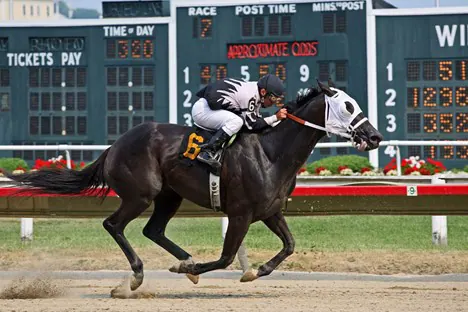
Nigeria's horse racing industry is experiencing a resurgence, with numerous races returning to historic centers and horses and jockeys traveling across West African borders. The Horse Racing Federation of Nigeria (HRFN) has introduced new equipment, prompting the government to discuss creating a formal sports industry. This revival is built on a foundation of existing equestrian culture, particularly in northern Nigeria, where horse breeding, training, and racing have long been part of the tradition.
The Durbar tradition in northern Nigeria, recognized by UNESCO in 2024, showcases the country's rich equestrian heritage. This celebration features mounted processions, horse preparation, and traditional craftsmanship, demonstrating a deep-rooted connection between Nigerians and horses. Additionally, Nigeria has a history of formal racecourses, including the former Racecourse on Lagos Island, which hosted races before being replaced by Tafawa Balewa Square.
The HRFN, established in 2019, aims to create a national platform for organizing, hosting, and regulating horse racing. According to its life patron, Etsu Nupe Yahaya Abubakar, the federation seeks to bring together Nigeria's active racing culture, currently concentrated in the north, and create a national season. Recent federation-backed meetings have taken place in various locations, including Bida, Hadejia, Katsina, Kaduna, Zaria, and Kano.
A significant development in the revival is the return of the International Horse Racing Derby in Zaria, which took place in June 2026, marking the second consecutive year of racing after a 14-year absence. The event drew competitors from Nigeria, Niger, Cameroon, Chad, and Burkina Faso, showcasing the growing regional interest in horse racing. The federation described Zaria as a historic center being restored to prominence.
The introduction of a starting gate in Kano in June is a symbol of the modernization effort. The HRFN coordinator, Mustapha Abubakar-Bida, noted that this was the first use of starting stalls in Nigerian racing, aiming to make starts fairer and bring competition closer to international standards. This development is a step towards Nigeria's goal of competing globally.
Nigeria's geographic location provides an advantage, with recent races attracting entrants from neighboring countries. The 2026 Zaria meeting and the Kaduna West African Derby, promoted as a regional championship, demonstrate the potential for Nigerian racing to become a West African story. The revival of horse racing in Nigeria has made progress in the past two years, but there is still work to be done, particularly in establishing a global presence.
The revival of horse racing in Nigeria has the potential to become a significant sporting attraction, not only domestically but also regionally. With government support, new equipment, and international participation, the industry is poised for growth. As Nigeria continues to build on its equestrian heritage, it may soon become a force to be reckoned with in the world of horse racing.
Key points
- The Horse Racing Federation of Nigeria (HRFN) is driving the revival of horse racing in Nigeria.
- Nigeria's equestrian culture, particularly in northern Nigeria, provides a strong foundation for the revival.
- The introduction of new equipment, such as starting gates, is modernizing Nigerian horse racing.