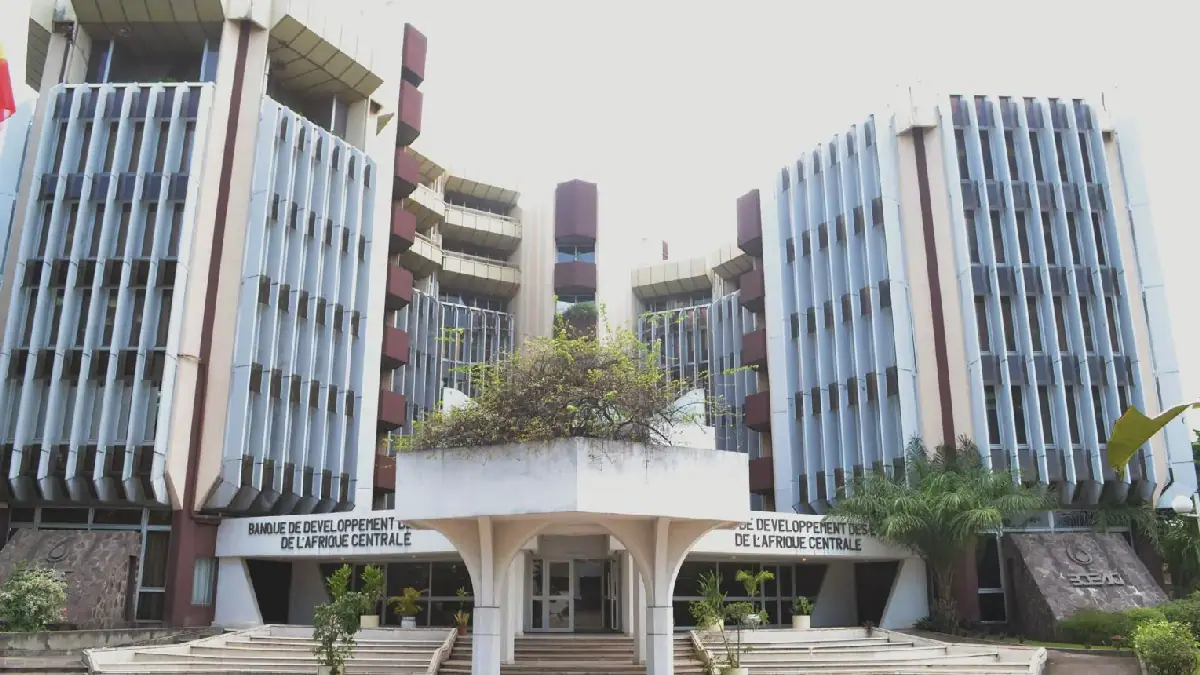
The Development Bank of Central African States (BDEAC) is seeking to mobilise an additional CFAF298.3 billion from regional and international partners to support development projects across Central Africa. This move is part of efforts by regional financial institutions to diversify their funding sources and mobilise more capital for economic transformation. The decision was made during an extraordinary board meeting held by videoconference and chaired by Hervé Ndoba, the Central African Republic’s Minister of Finance and Budget and acting chairman of the bank’s board.
BDEAC’s Board of Directors authorised the finalisation of new financing facilities totalling CFAF298.3 billion on 18 November 2026. This comes after the institution completed its first international bond issue, known as the Eurobond AYOP, which raised US$222 million, equivalent to approximately CFAF124.3 billion, on 13 October 2026. The bond issue represents an important step in diversifying the bank’s funding sources and expanding its access to international capital markets.
The CFAF298.3 billion financing initiative is aimed at supporting infrastructure, industrial development, agriculture, energy, private-sector investment and other projects that contribute to regional economic growth. BDEAC serves the six countries of the Central African Economic and Monetary Community: Cameroon, the Central African Republic, Chad, the Republic of the Congo, Equatorial Guinea and Gabon. The bank’s ability to mobilise additional resources is crucial, as many development priorities in the region require long-term financing.
The institution’s recent fundraising activity highlights the importance of stronger regional development finance. Its international bond issue, alongside its financing partnerships, demonstrates an effort to reach beyond traditional funding channels. However, the challenge now is to translate that access to capital into effective lending and measurable development outcomes. The bank must also maintain financial discipline, as its 2025 financial statements describe liquidity-recovery measures adopted by regional authorities.
Mobilising capital is only one part of development finance; timely disbursement, sound project selection, repayment capacity and transparent oversight are equally necessary. For businesses and governments across Central Africa, stronger BDEAC financing could support projects that improve connectivity, expand productive capacity and create employment. The impact will depend on which projects receive funding, how quickly resources reach beneficiaries and whether investments generate sustainable economic returns.
The success of the CFAF298.3 billion financing initiative will not be determined by the amount announced alone, but by the quality of projects financed, the transparency of implementation and the benefits delivered to communities and businesses across the six member states. The bank has not yet disclosed the full list of financing partners, terms or mobilisation timetable.
The bank’s efforts to strengthen its financing capacity are crucial for the region’s development priorities. With the right implementation, this financing initiative could have a significant impact on the region’s economic growth and development. Key stakeholders will be watching closely to ensure that the funds are used effectively and efficiently.
Key points
- BDEAC aims to mobilise CFAF298.3 billion to support development projects across Central Africa.
- The financing initiative is part of efforts to diversify funding sources and mobilise more capital for economic transformation.
- The success of the initiative will depend on the quality of projects financed, transparency of implementation and benefits delivered to communities and businesses.
Reporting sources
- BDEAC’s CFAF298.3 Billion Financing Drive: Expanding Development Investment Across Central Africa · African Leadership Magazine