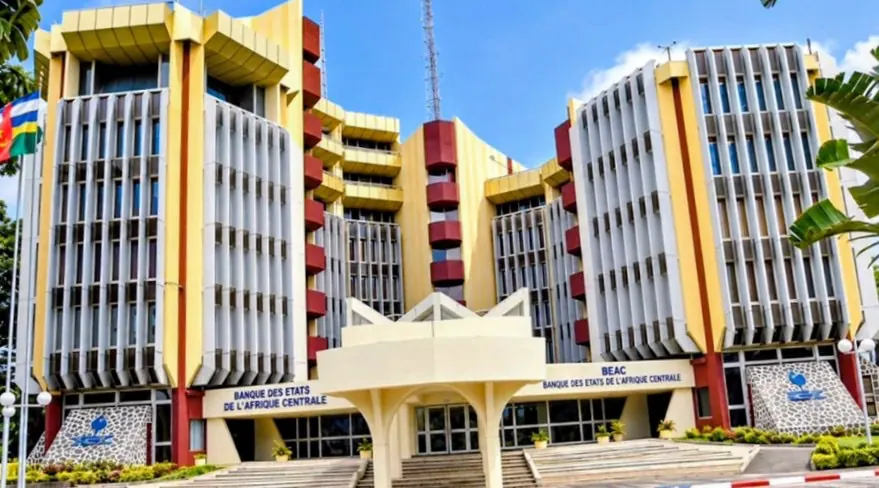
The Central African Development Bank (BDEAC) is experiencing financial turbulence, despite its ambitious goals. According to its 2025 financial report released on September 25, 2026, the bank faces significant challenges in recovering loans, particularly from public partners. The report reveals a recovery rate of only 21%, with 39.645 billion FCFA recovered out of 185.182 billion FCFA in required repayments. This low recovery rate raises concerns among financial analysts.
The public sector accounts for 78% of the outstanding amounts, with 143.754 billion FCFA owed to the bank. The BDEAC attributes the problem to the "tension on the payment capacity" of regional governments. In response, the bank has established an emergency arrangement with the Bank of Central African States (BEAC) to secure future payments and claim outstanding debts. This move aims to address the bank's liquidity challenges and ensure its continued operations.
The BDEAC's investments are heavily concentrated in the transportation sector, which accounts for 50.80% of its total exposure. As of 2025, the bank's gross portfolio stands at 723.516 billion FCFA, distributed across 87 loans. The agriculture and agro-industry sectors receive significantly less funding, with 15.84%, followed by industry (9.44%), and healthcare (7.37%). This concentration of investments in transportation is considered a major vulnerability.
The bank's president, Dieudonné Evou Mekou, plans to rebalance the investment portfolio in 2026, allocating more funds to other productive sectors. In 2025, 79.36% of new financing commitments, amounting to 27 billion FCFA, were directed towards transportation projects. Mekou aims to diversify the bank's investments to minimize risk and maximize returns.
The BDEAC relies heavily on its own funds and international lenders, such as Afreximbank, BADEA, and the China Development Bank. The bank's medium- and long-term loans reach 98.030 billion FCFA. However, there is a significant gap between the bank's ambitions and actual performance. The institution had targeted 1,700 billion FCFA in new commitments over three years but only achieved 498.873 billion FCFA.
The bank's disbursements also fell short of expectations, with only 18.654 billion FCFA disbursed in 2025, compared to a target of 373 billion FCFA. Despite obtaining an encouraging international rating, the BDEAC still faces significant challenges in achieving the coveted "Investment Grade" status. The bank must address its loan recovery and investment diversification challenges to regain momentum.
The BDEAC's financial struggles highlight the complexities of development financing in Central Africa. The bank's ability to recover loans and diversify its investments will be crucial to its long-term sustainability. With a renewed focus on investment allocation and loan recoveries, the BDEAC aims to regain its footing and support regional development initiatives.
Key points
- The BDEAC's low loan recovery rate of 21% in 2025 raises concerns about its financial sustainability.
- The bank's investments are heavily concentrated in the transportation sector, accounting for 50.80% of its total exposure.
- The BDEAC aims to rebalance its investment portfolio in 2026, allocating more funds to other productive sectors.