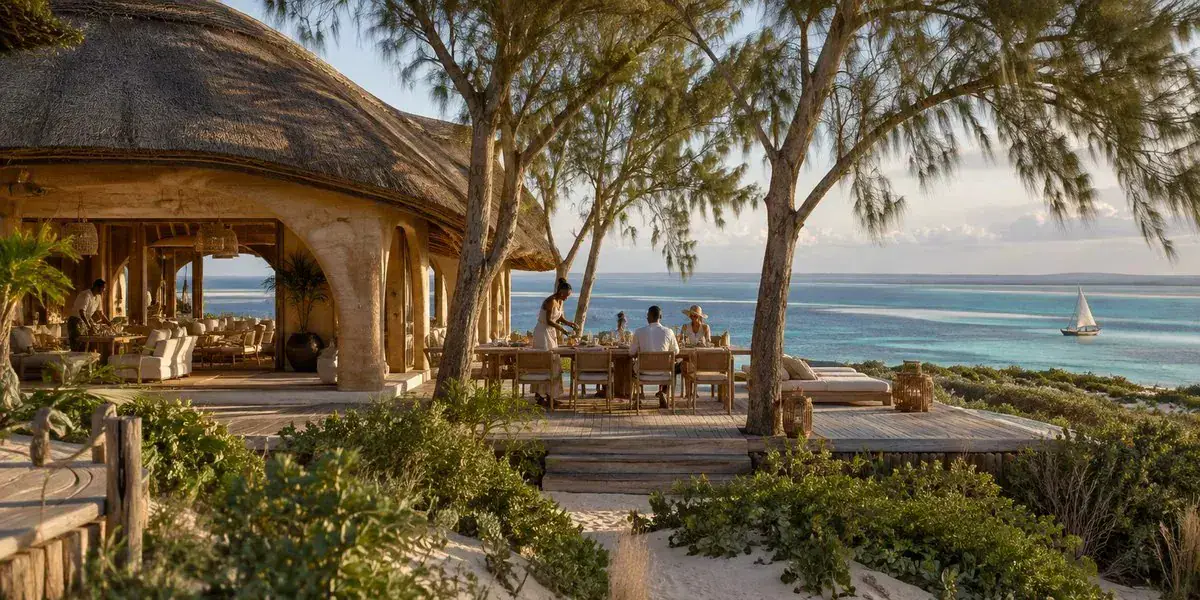
Mozambique's Bazaruto Archipelago is emerging as a flagship destination for conservation-led tourism, attracting discerning travelers and private capital with its unique blend of luxury hospitality and sustainable practices. The archipelago, located along the Southern African coastline, is home to the Bazaruto marine reserve, a celebrated sanctuary for dugongs and a showcase for ecological integrity. With its turquoise sandbanks and pristine waters, Bazaruto has evolved into a model for sustainable tourism, generating long-term yield while preserving its natural beauty.
The luxury hospitality experience in Bazaruto is characterized by deliberate restraint, with properties such as Kisawa Sanctuary on Benguerra Island and &Beyond Bazaruto showcasing hyper-local craftsmanship and sustainable materials. Structural timber is sourced from certified local concessions, while masonry uses hand-pressed, mortarless earth bricks and thatched roofs are woven from indigenous grasses. This approach not only reduces the carbon footprint but also supports local communities and preserves the archipelago's unique cultural heritage.
A key differentiator for Bazaruto's conservation luxury hospitality is its focus on sustainability and environmental stewardship. Modern solar microgrids power reverse-osmosis desalination units on-site, eliminating single-use plastics and reliance on mainland water supply. The carbon footprint is effectively zero at the operational level, making Bazaruto a leader in eco-friendly tourism. This approach not only appeals to environmentally conscious travelers but also sets a new standard for sustainable tourism in Africa.
Marine science plays a vital role in the Bazaruto experience, with dedicated oceanographic research stations integrated directly into the guest experience. Travelers can participate in active coral reef monitoring and marine mammal preservation, combining leisure with meaningful conservation work. This approach not only enhances the guest experience but also contributes to a deeper understanding of the archipelago's marine ecosystem and informs conservation efforts.
The culinary experience in Bazaruto reflects the same philosophy of sustainability and local authenticity. Each morning, local dhow fishermen bring ashore fresh seafood, which is grilled over open coconut-husk embers. The menu features a fusion of Portuguese maritime heritage and indigenous Mozambican fire-cooking, with dishes paced by the tides rather than a kitchen schedule. This approach not only showcases local flavors but also supports local communities and reduces waste.
Bazaruto's model is proving resilient, with discerning global travelers increasingly choosing destinations that offer genuine privacy and verifiable sustainability credentials. The archipelago's focus on conservation-led tourism has attracted private capital, which is now flowing into comparable models in peer destinations such as Botswana's Okavango Delta and Kenya's Lamu Archipelago. This trend signals a broader shift in African high-end tourism, where luxury hospitality is increasingly tied to conservation financing and regional infrastructure development.
As the direction of private capital in African hospitality becomes clear, architectural restraint, local employment, and biodiversity preservation are emerging as durable values. Bazaruto's conservation luxury hospitality model has set a new standard for sustainable tourism in Africa, demonstrating that luxury and sustainability are not mutually exclusive. With its unique blend of natural beauty, cultural heritage, and conservation efforts, Bazaruto Archipelago is redefining the future of African tourism.
Key points
- Bazaruto Archipelago's conservation luxury hospitality model combines sustainable practices, marine science integration, and hyper-local craftsmanship to create a unique tourism experience.
- The archipelago's focus on conservation-led tourism has attracted private capital and set a new standard for sustainable tourism in Africa.
- Bazaruto's model is proving resilient, with discerning global travelers increasingly choosing destinations that offer genuine privacy and verifiable sustainability credentials.