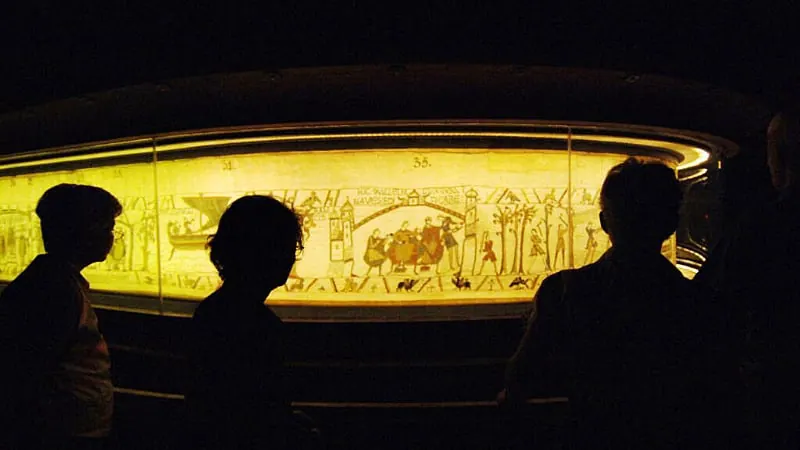
The town of Bayeux is reeling from the loss of its iconic Bayeux Tapestry, which has been loaned to the British Museum for a year-long exhibition. The tapestry, a 70-metre chronicle of the Norman conquest of England, has been a major tourist draw for the town for centuries. Its absence has been deeply felt by locals, who have grown up with the tapestry and rely on it for their livelihood. Mathis Laîné, who works at a restaurant opposite the Bayeux Tapestry Museum, said that the town has noticed a significant drop in footfall since the tapestry's departure.
Local businesses have reported a substantial decline in sales since the tapestry's closure. Laîné said that his restaurant has seen a 20 percent drop in takings at lunchtime and at least 10 percent in the evening. The town's tourism industry is a significant contributor to the local economy, and the loss of the tapestry has had a ripple effect on many businesses. Marie-Laure Lamare, manager of Le Balto, a bar and souvenir shop, said that she has sold almost nothing in the way of tapestry-related souvenirs this year.
The impact of the tapestry's absence is not just financial; it has also had an emotional toll on locals. Estelle Isidor-Leroux, a local tour guide, said that the tapestry's departure feels like losing a member of her family. Born and raised in Bayeux, Isidor-Leroux has always associated the tapestry with her hometown and feels its absence deeply. The tapestry has been a part of Bayeux's identity for so long that its absence has left a void that is difficult to fill.
Despite the challenges, the town's tourism industry is trying to adapt and find new ways to attract visitors. Isidor-Leroux now gives tours of the town, showing visitors the various places the tapestry has been kept throughout the ages. Other local museums are hosting exhibits about the preservation of the tapestry, and the town is planning to launch an immersive experience giving visitors a close-up look at the tapestry.
Local officials are also keen to promote Bayeux's other attractions, which include a medieval town centre, cathedral, and the nearby D-Day beaches. Didier Llorca, director of the tourist office in Bayeux and surrounding towns, said that the town can cope with the closure of the Tapestry Museum, even for as long as two years. According to figures from the town council, the Tapestry Museum accounts for only 20 percent of tourism in Bayeux, with most visitors drawn to the cathedral and landing sites.
The town's resilience in the face of adversity is a testament to its strong sense of community and determination. While the tapestry's absence has undoubtedly had an impact, it has also presented an opportunity for Bayeux to showcase its other attractions and demonstrate its ability to adapt. As Llorca said, Bayeux has not put all its eggs in one basket, and the town is confident that it can continue to thrive even without its famous tapestry.
The Bayeux Tapestry is set to return to Bayeux in October next year, when the museum reopens after renovation. Until then, locals will have to wait patiently for its return. The exhibition at the British Museum, which runs until July 2027, has drawn thousands of visitors and provided a unique opportunity for people to see the tapestry up close. As the town looks to the future, it is clear that the Bayeux Tapestry will continue to be a source of pride and inspiration for generations to come.
Key points
- The Bayeux Tapestry's absence has had a significant impact on local businesses and residents.
- The town's tourism industry is trying to adapt and find new ways to attract visitors.
- Bayeux is promoting its other attractions, including a medieval town centre, cathedral, and D-Day beaches.