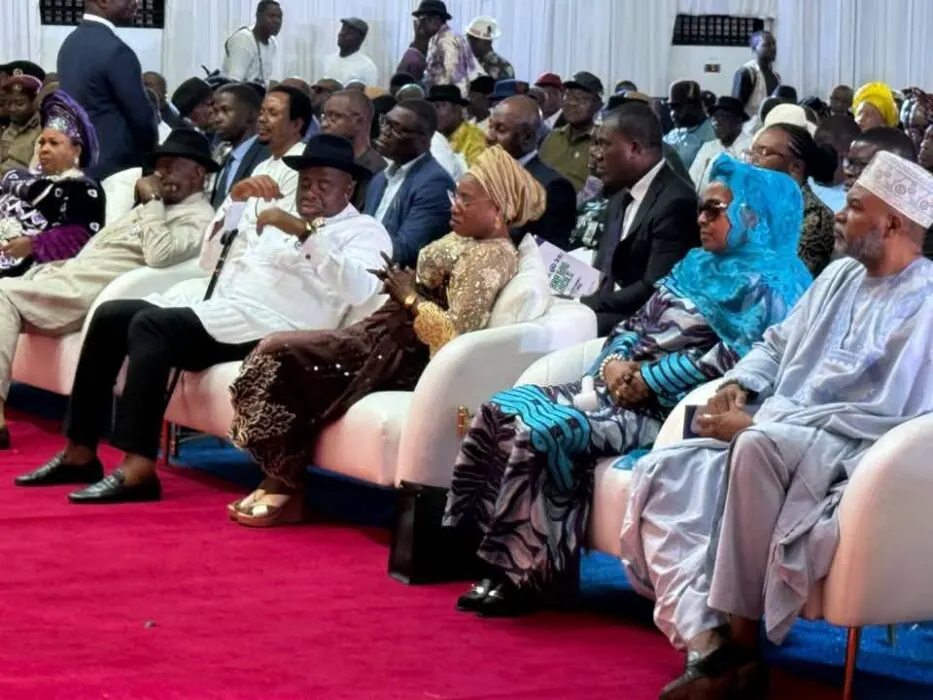
As Bayelsa State marks three decades of its creation, Governor Douye Diri has urged the people to look beyond the state's troubled past and build a future driven by knowledge, education, and innovation. Speaking during the anniversary lecture in Yenagoa, Diri said the milestone provided an opportunity to reflect on the state's journey, acknowledge its progress, and determine what should be achieved in the next 30 years. Bayelsa was created from the old Rivers State on October 1, 1996.
According to Diri, the creation of Bayelsa gave its people an opportunity to take control of their destiny and prove that the difficult terrain of the Niger Delta could be developed. He noted that the state had moved beyond the period when its people were largely associated with militancy and urged them to embrace what he called "intellectual militancy" through education and knowledge. Diri emphasized that his administration had shifted its education policy from an emphasis on certificates to practical learning, with greater attention to science, technical, and vocational education.
Several science, technical, and vocational schools have been built and equipped, with more projects ongoing, to prepare young Bayelsans for the demands of the future. Diri also urged Bayelsans to tell their own story, noting that the state had produced scholars, writers, poets, and other Nigerians who had made contributions to national development. The governor emphasized that the discovery of oil and gas should not prevent Bayelsa from developing other sectors, even as the state continued to demand a fair share of the resources extracted from its territory.
Diri reiterated his position that "13 per cent derivation is 87 per cent deprivation", arguing that Bayelsa's difficult terrain required additional resources to provide infrastructure and basic services. He cited road construction, schools, and other infrastructure as part of efforts to overcome the geographical challenges facing the state. The Nembe-Brass Road, which his administration embarked on after efforts to secure Federal Government support did not produce the desired result, was highlighted as a key project.
According to Diri, the Brass axis remained the only local government headquarters in the state without road access. He said the first phase of the road, involving more than six bridges and culverts, was expected to be completed by the end of the year. Diri stressed that the federal government should not abandon its responsibilities to Bayelsa and other states, saying development should not be left entirely to state governments.
The governor also highlighted the state's monthly financial transparency initiative, under which officials provide information on revenue received and expenditure. This move is aimed at promoting transparency and accountability in the management of state resources. Secretary to the State Government, Prof. Nimibofa Ayawei, said the 30th anniversary was an opportunity to reflect on the state's journey and renew its commitment to a better future.
As Bayelsa looks to the future, the state government is focused on implementing policies and projects that will drive economic growth and development. The emphasis on education, innovation, and infrastructure development is expected to play a key role in shaping the state's future. With a renewed commitment to transparency and accountability, Bayelsa is poised to take a new path beyond its dependence on oil.
Key points
- Bayelsa State is seeking to move beyond its dependence on oil and focus on knowledge, education, and innovation to drive economic growth and development.
- The state government has shifted its education policy to focus on practical learning, with greater attention to science, technical, and vocational education.
- Bayelsa's 30th anniversary is an opportunity for the state to reflect on its journey and renew its commitment to a better future.