As Egypt prepares to commemorate the 53rd anniversary of the October 1973 war, memories of the conflict's pivotal battles are being revisited. One such battle that continues to resonate in Egypt's military history is the Battle of the Chinese Farm, a ferocious clash that took place in the Sinai Peninsula. This engagement was part of a larger series of confrontations as Egyptian forces sought to reclaim territory from Israeli occupation. The battle's significance is rooted in its contribution to the war's outcome and its demonstration of Egyptian military resolve.
The name "Chinese Farm" may evoke images of a Chinese-owned or operated agricultural project, but its origins are more prosaic. The term actually refers to a pre-war agricultural project that was mapped by military forces during the conflict. Over time, the location became synonymous with one of the most intense battles of the October War. The area's transformation into a battleground was marked by fierce fighting as Israeli forces attempted to advance towards the Suez Canal, only to be met with stiff resistance from Egyptian troops.
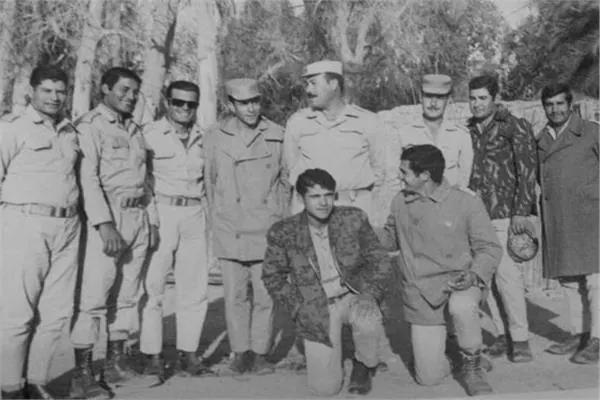
At the heart of the Battle of the Chinese Farm was the Egyptian 16th Infantry Battalion, led by then-Major General Mohamed Hussein Tantawi. The battalion played a crucial role in the crossing and fighting east of the Suez Canal. The Egyptian forces faced significant challenges as they sought to defend their positions against Israeli advances. This period of the war was particularly complex, with rapid developments on the front lines that required swift and decisive action from Egyptian commanders.
The battle's lasting impact on Egypt's military history can be attributed to the intensity of the fighting and its strategic importance within the broader context of the October War. More than five decades after the conflict, the Battle of the Chinese Farm remains a notable chapter in Egypt's military narrative. It serves as a testament to the bravery and resilience of Egyptian soldiers who fought against considerable odds.
The October 1973 war began on October 6, 1973, with Egyptian forces crossing the Suez Canal and breaching the Bar-Lev Line, a heavily fortified Israeli defensive position. The Battle of the Chinese Farm was part of this larger operation, which aimed to retake Egyptian territory occupied by Israel since the 1967 Six-Day War. The battle and others like it have become integral to Egypt's collective memory of the war.
In the years following the war, the locations of key battles, including the Chinese Farm, have become ingrained in Egypt's historical consciousness. These sites symbolize the country's struggle for sovereignty and its military's determination during a critical period in modern Egyptian history. As Egypt continues to reflect on its past, the lessons and stories from these battles remain relevant.
Today, the legacy of the Battle of the Chinese Farm and the October War continues to influence Egyptian national identity and its military's ethos. The bravery and strategic acumen displayed during these conflicts are celebrated as examples of Egypt's resilience in the face of adversity. As the country looks to the future, it does so with a deep appreciation for its past and the heroes who have shaped its history.
Key points
- The Battle of the Chinese Farm was a pivotal confrontation between Egyptian and Israeli forces in the Sinai Peninsula during the 1973 October War.
- The battle is remembered for the intense fighting and strategic importance, marking a significant moment in Egypt's military history.
- Egyptian forces, including the 16th Infantry Battalion led by Major General Mohamed Hussein Tantawi, played a crucial role in defending against Israeli advances.