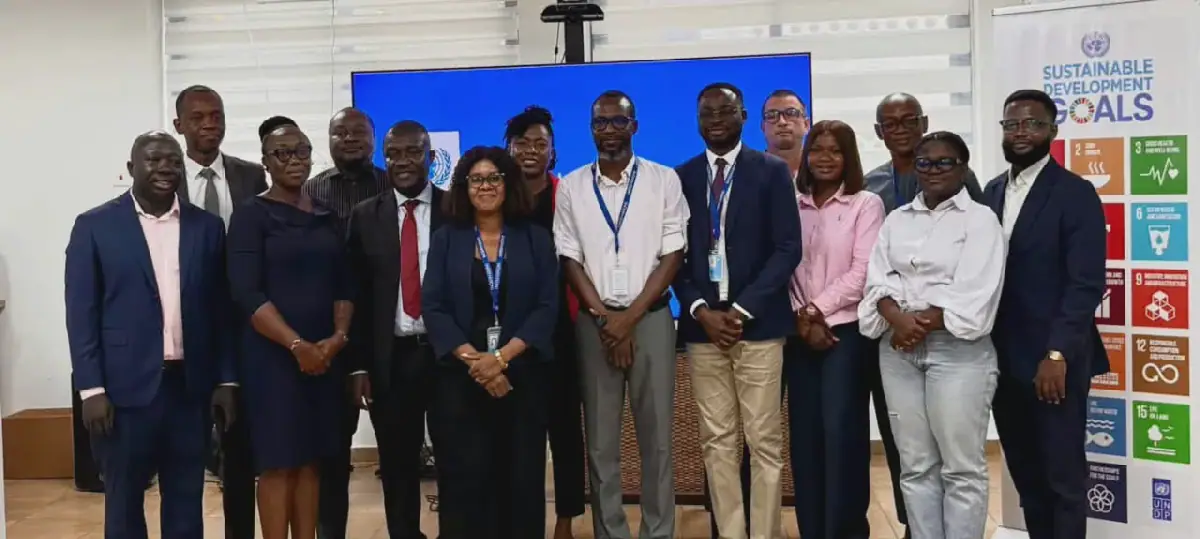
The Bank of Ghana's Sustainable Banking Principles have been put forward as a guiding framework for lending and investment decisions that support biodiversity conservation. Participants at a stakeholder engagement on Ghana's Biodiversity Finance Plan emphasized the need for consistent application of these principles. Increased impact investment and appropriate incentives could unlock funding to protect the country's natural resources while ensuring businesses and banks remain profitable and sustainable. This call to action was made during a workshop organized by the United Nations Development Programme (UNDP) Ghana.
The workshop brought together government officials, sector regulators, banking representatives, and development partners to examine how financial flows could be redirected from activities that drive nature loss towards initiatives that promote environmental restoration. Dr. Saeed Abdul Razak, Environment and Climate Lead at UNDP Ghana, urged the banking sector to increase investments in biodiversity conservation. With almost GH¢647 billion in assets under management, the banking sector's survival is closely linked to nature, as most of the businesses they finance depend on land, forests, water, and other natural resources.
Dr. Razak emphasized that banks need to deliberately scale up investments that protect and restore biodiversity. He suggested that banks should give biodiversity the same attention they give to credit and market risk, screening clients for deforestation, overfishing, pollution, and other nature-related impacts. Additionally, banks should direct part of their Corporate Social Responsibility funding into biodiversity, training, and public awareness. The UNDP is working with the Government to develop a Biodiversity Finance Plan to address the disconnect between Ghana's economic development pathway and nature conservation.
The Biodiversity Finance Plan is not only about mobilizing new funding for biodiversity but also identifying and removing harmful incentives that undermine the environment and threaten livelihoods. The UNDP is working on a Biodiversity Finance Needs Assessment, a Policy and Institutional Review, and a Biodiversity Expenditure Review. These studies will subsequently be validated and shared with government and financial sector stakeholders. The Government is pursuing a unified governance framework to ensure that sector players work towards a common goal of safeguarding nature and the environment.
The Government's policy direction, including the Environmental Protection Authority Act, 2025 (Act 1124), and Ghana's Green Taxonomy, demonstrates its commitment to biodiversity conservation and sustainable finance. Mr. Raymond Ohene Ofori, Deputy Director, Ministry of Environment, Science and Technology, emphasized the importance of a unified governance framework. The banking sector's assets under management account for about 45% of Ghana's Gross Domestic Product (GDP), with almost all of those assets depending on nature in one way or another.
Mr. Kingsley Owusu Anom, Head of Environment, Social and Governance (ESG) at the Agricultural Development Bank (ADB), warned that the degradation of biodiversity poses risks to the survival of banks. He encouraged banks to move beyond general environmental screening by developing specific biodiversity-focused financial products and integrating environmental and social risks into their lending decisions. Banks should use their Corporate Social Responsibility budgets more strategically, directing part of the funds towards biodiversity conservation, capacity building, training, and public awareness.
To encourage increased investment, Mr. Anom called on the Government to introduce additional incentives for institutions financing biodiversity initiatives, including tax rebates and support to access funding from multilateral institutions, the Green Climate Fund, and other development partners. The banking sector can play a crucial role in protecting Ghana's natural resources while ensuring their own sustainability. By working together, the Government, banks, and other stakeholders can help conserve Ghana's biodiversity and promote sustainable development.
Key points
- Banks manage almost GH¢647 billion in assets, with 45% of Ghana's GDP depending on nature.
- The Bank of Ghana's Sustainable Banking Principles provide a guiding framework for lending and investment decisions that support biodiversity conservation.
- The UNDP is working with the Government to develop a Biodiversity Finance Plan to address the disconnect between Ghana's economic development pathway and nature conservation.
Reporting sources
- Banks urged to increase investment in biodiversity protection · Ghana News Agency