Kenya's commercial banks have increased their lending to the agricultural sector, with agricultural credit rising by Sh53.1 billion in the year to June 2026. This represents a 35.1% increase, more than three times the 10.6% growth recorded across total private-sector credit. According to Central Bank of Kenya data, outstanding loans to the sector now stand at Sh204.2 billion. This growth is notable because farming has traditionally been a difficult sector for banks to finance due to weather risks, fluctuating commodity prices, and seasonal income.
Bank executives attribute part of the increase to stronger agricultural cash flows. KCB Group reported a 67.8% increase in agricultural financing in the year to June, with agriculture accounting for 6.2% of its Sh1.181 trillion loan book. The bank says some farming operations are becoming more predictable as producers move beyond purely rain-fed agriculture. This shift is significant, as agricultural finance is no longer just about giving a farmer money to buy fertiliser before planting.
Banks are increasingly seeing an entire value chain - from production and machinery to processing, transport, and export - as a lending opportunity. Equity Group is targeting agriculture to account for 30% of its loan book by 2030, compared with about 10% currently. Its strategy goes beyond seasonal farm loans to include mechanisation, productivity, agro-processing, value addition, and export-oriented businesses.
A July 2026 CBK agriculture survey found that 34% of sampled farmers had borrowed to finance farming, up from 30% in May. However, the survey also showed that farmers were using credit for immediate production needs, including fertiliser, certified seed, labour, fuel, and irrigation. Commercial banks were the reported source for 21% of borrowing farmers.
Friends and family remained the biggest source of credit at 38%, followed by buyers of farm produce at 19%. SACCOs accounted for 17%, while digital lenders accounted for 16%. The Galana Kulalu Food Security Project is a large-scale agricultural initiative in Kenya's Kilifi and Tana River counties designed to transform arid land into a productive commercial farming hub.
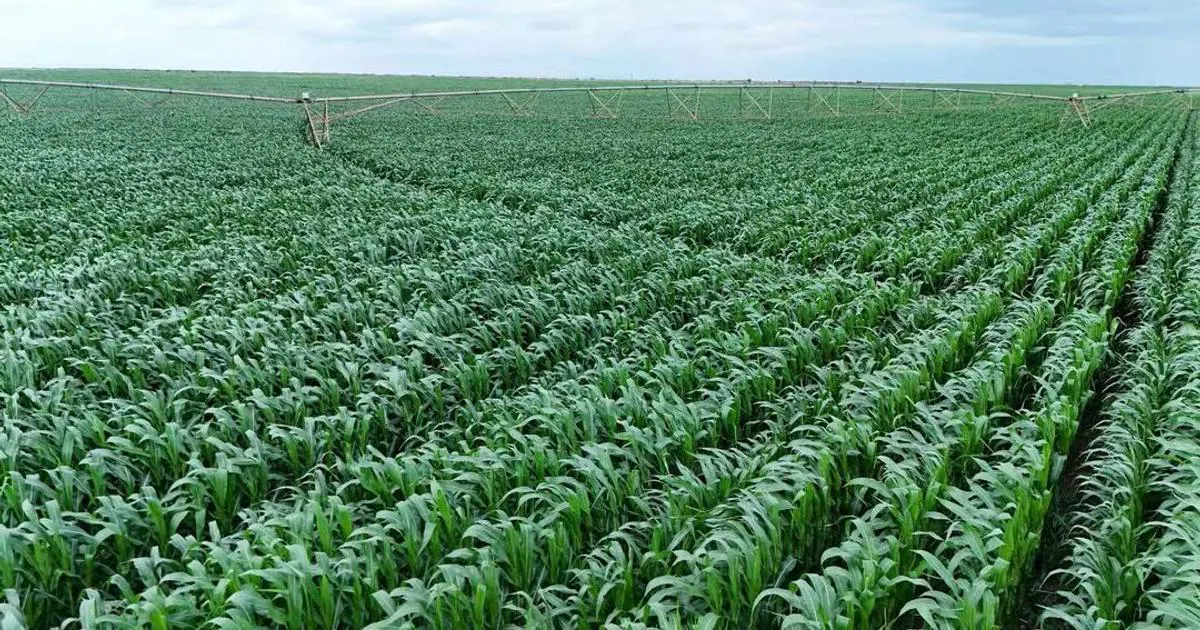
The project leverages the Galana River for large-scale, automated center-pivot irrigation. The Galana Kulalu project was originally launched in 2013 to lower food costs and reduce maize imports. Despite the growth in agricultural lending, risks remain, including weather, commodity prices, input costs, and market disruptions. CBK has already reported an increase in non-performing agricultural loans during the first half of 2026.
The timing is significant as Kenya heads into a period of expected heavy rainfall and heightened climate risk. For farmers, however, greater bank interest could eventually mean more options beyond short-term emergency borrowing - particularly where financing is tied to irrigation, machinery, storage, processing, and reliable markets. The numbers show that agriculture is becoming a much larger part of Kenya’s formal credit market.
Key points
- Agricultural credit in Kenya rose by Sh53.1 billion in the year to June 2026.
- KCB Group reported a 67.8% increase in agricultural financing in the year to June.
- Equity Group aims to have agriculture account for 30% of its loan book by 2030.