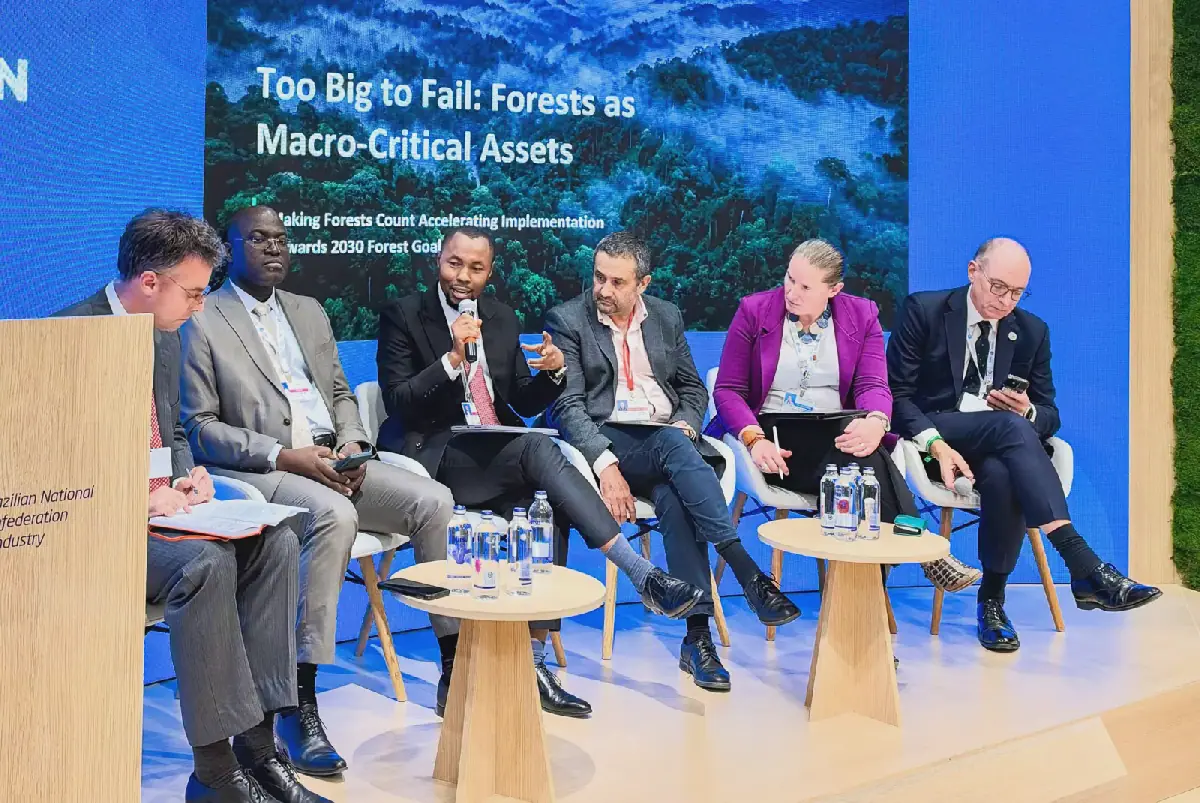
The Bank of Tanzania (BoT) recently participated in a high-level discussion on the sidelines of the 31st Conference of the Parties (COP31) to the United Nations Framework Convention on Climate Change in Antalya, Türkiye. Representing BoT and the Network for Greening the Financial System (NGFS), Financial, Climate Change and Sustainability Analyst Mr Joseph Paul Kenene emphasised the need for central banks to identify and manage economic and financial risks associated with deforestation and biodiversity loss. This call to action aims to address the pressing issue of forest destruction and its far-reaching consequences. The discussion was organised by Global Optimism in collaboration with the United Nations Development Programme (UNDP) and the Forest and Climate Leaders’ Partnership (FCLP).
During the discussion, Mr Kenene highlighted the crucial role of forests in maintaining macroeconomic and financial stability. He stressed that forests provide essential ecosystem services, including climate regulation, water source protection, and soil conservation, which support key economic sectors such as agriculture, energy, and tourism. These services are vital for sustaining economic growth and stability. Furthermore, Mr Kenene warned that forest degradation could have devastating effects on businesses and financial institutions, exposing them to significant economic losses and financial instability.
The BoT's call to action is built on the understanding that financial institutions must assess how environmental degradation could create credit, market, and operational risks. Mr Kenene emphasised the need for financial institutions to comprehend how their activities depend on and affect natural ecosystems. This awareness is crucial for developing effective strategies to mitigate these risks. The BoT is advocating for a proactive approach to addressing the economic and financial implications of forest destruction and biodiversity loss.
To effectively address these risks, Mr Kenene outlined strategic measures that central banks could take within their legal mandates. These measures include strengthening environmental risk assessments, improving access to data, building institutional capacity, and promoting sustainable financing for forest conservation and responsible land use. By implementing these measures, central banks can play a vital role in safeguarding financial stability and promoting sustainable development.
The discussion at COP31 brought together government leaders, the World Bank, central banks, and investors to accelerate efforts towards achieving the global target of halting forest destruction by 2030. The collaboration between these stakeholders is essential for developing and implementing effective strategies to address the pressing issue of forest destruction. The BoT's participation in this discussion underscores its commitment to addressing the economic and financial implications of environmental degradation.
The economic risks associated with forest destruction are significant and far-reaching. Forest degradation can have devastating effects on businesses and financial institutions, exposing them to significant economic losses and financial instability. The BoT's call to action is a timely reminder of the need for central banks and financial institutions to take proactive steps to address these risks. By working together, these stakeholders can promote sustainable development and safeguard financial stability.
The BoT's efforts to highlight the economic risks of forest destruction are part of a broader initiative to promote sustainable development and environmental conservation. The bank's commitment to addressing these issues is reflected in its participation in international discussions and collaborations, such as the COP31 and the NGFS. As the global community continues to grapple with the challenges of environmental degradation, the BoT's leadership on this issue is a welcome development.
Key points
- The Bank of Tanzania is calling on central banks to recognise forest destruction as a major economic risk requiring urgent attention.
- Forests provide essential ecosystem services that support key economic sectors such as agriculture, energy, and tourism.
- The Bank of Tanzania is promoting strategic measures to address the economic and financial implications of forest destruction, including strengthening environmental risk assessments and promoting sustainable financing.