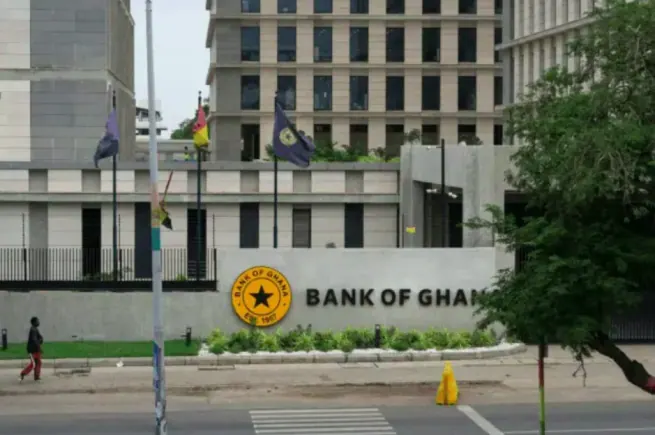
The Bank of Ghana has issued a comprehensive advisory to the public, highlighting the risks of digital financial fraud and the importance of financial literacy. In a press release dated October 7, 2026, the central bank emphasized that financial inclusion without financial literacy can expose consumers to increased vulnerability as more Ghanaians transact online. The advisory provides practical safeguards for customers of banks, mobile money operators, and payment service providers.
The Bank of Ghana cautioned customers against sharing confidential financial information with unknown persons, even if they claim to represent a financial institution or telecommunications operator. Legitimate financial institutions will not request personal identification numbers, passwords, or one-time passwords through phone calls, text messages, emails, or social media. Customers are advised to safeguard their personal and financial information, including mobile money PINs, ATM PINs, and internet banking passwords.
The central bank also warned against investment-related fraud, advising customers to verify investment opportunities before making payments or transfers. Schemes promising unusually high returns with little or no risk should be treated with extreme caution. The Bank specifically warned against "double-your-money" schemes, online Ponzi schemes, and suspicious digital investment platforms, which may lead to financial loss.
To protect themselves, customers are encouraged to regularly monitor transaction alerts, bank statements, and mobile money notifications to detect unauthorized transactions promptly. They are also advised to use strong passwords, activate available security features such as transaction alerts and biometric verification, and report any suspected fraud or unauthorized transactions to their financial institutions.
The Bank of Ghana noted that financial institutions and electronic money issuers are required to maintain fraud monitoring systems, cybersecurity controls, and customer protection mechanisms under the Payment Systems and Services Act, 2019 (Act 987). These institutions must also provide clear complaint resolution procedures and consumer protection measures for users of digital financial services.
The advisory also emphasizes the importance of comprehension and accessibility, advising customers to seek clarification if they do not fully understand a digital financial product, transaction, or communication. The central bank stressed that public awareness and financial literacy are crucial in combating digital financial fraud and called on stakeholders to support continuous financial education and digital security awareness.
The Bank of Ghana urged the public to take collective responsibility in the fight against digital financial fraud through awareness, education, responsible financial behavior, and adherence to cybersecurity practices. The public can contact the Bank's Complaints Office on 0593974486 or by email for assistance.
Key points
- The Bank of Ghana has issued a 20-point advisory to protect the public from digital financial fraud.
- Customers are advised to safeguard their personal and financial information and be cautious of unsolicited requests for financial or personal information.
- The central bank emphasizes the importance of public awareness and financial literacy in combating digital financial fraud.