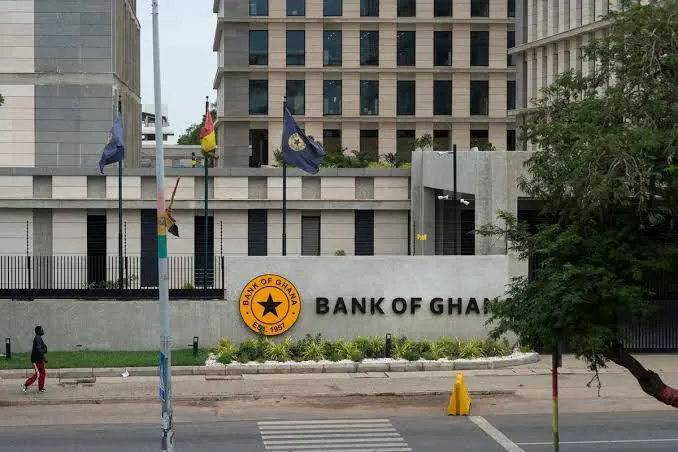
The Bank of Ghana's personnel costs have experienced a significant surge, rising from GH¢1.62 billion in 2022 to GH¢3.29 billion in 2025, representing a growth of about 103 per cent. This increase is substantially higher than the growth in the bank's workforce, which rose from 2,206 to 2,691 during the same period, an increase of approximately 22 per cent. The widening gap between workforce growth and personnel costs has raised questions about the drivers of this trend.
A closer examination of the bank's personnel expenditure reveals that the sharpest increase occurred in 2025, when personnel costs jumped by 44.4 per cent to GH¢3.29 billion. During the same year, the bank's workforce increased from 2,368 to 2,691, representing a 13.6 per cent increase. The bank recruited 395 employees and 72 staff members exited during the year, resulting in a net increase of 323 employees. This suggests that the expansion in the workforce accounts for only part of the increase in personnel expenditure.
The cost per reported employee has also increased significantly, rising from approximately GH¢735,000 in 2022 to about GH¢1.22 million in 2025, representing an increase of roughly 66 per cent. However, this figure should not be treated as the average salary of a Bank of Ghana employee, as personnel costs cover employee-related expenditure, including salaries, pensions, allowances, and other related costs.
Bank of Ghana Governor Dr Johnson Asiama has attributed the increase in personnel costs partly to changes in the bank's responsibilities and the need to recruit specialised personnel. The bank has expanded into areas such as virtual asset monitoring, data analytics, artificial intelligence, and cyber monitoring, which require additional personnel and specialised skills.
Dr Asiama also pointed to the cost of attracting and retaining employees with specialised skills, saying the bank needs to remain competitive in its remuneration to prevent professionals with expertise in technology, data, and fintech from moving to other employers. This provides another explanation for the faster growth in personnel expenditure compared with staff numbers.
The Governor has indicated that the pace of recruitment could moderate following the significant intake in 2025, with future recruitment increasingly aligned with the number of employees retiring each year. He argued that personnel expenditure should be assessed in relation to the bank's overall operational costs rather than by looking only at the absolute figure.
The bank's internal benchmark is for personnel costs to remain below 40 per cent of operational costs, and the Governor maintained that the current level is below that threshold. The bank's subsequent financial statements will show whether the expected slowdown in recruitment is accompanied by a moderation in the growth of personnel costs.
Key points
- The Bank of Ghana's personnel costs have more than doubled to GH¢3.29bn in three years, driven by recruitment of specialised personnel and replacement of retirees.
- The bank's workforce grew by 22 per cent between 2022 and 2025, while personnel costs increased by approximately 103 per cent.
- The bank's Governor expects the growth in personnel costs to slow from 2026, with future recruitment aligned with the number of employees retiring each year.