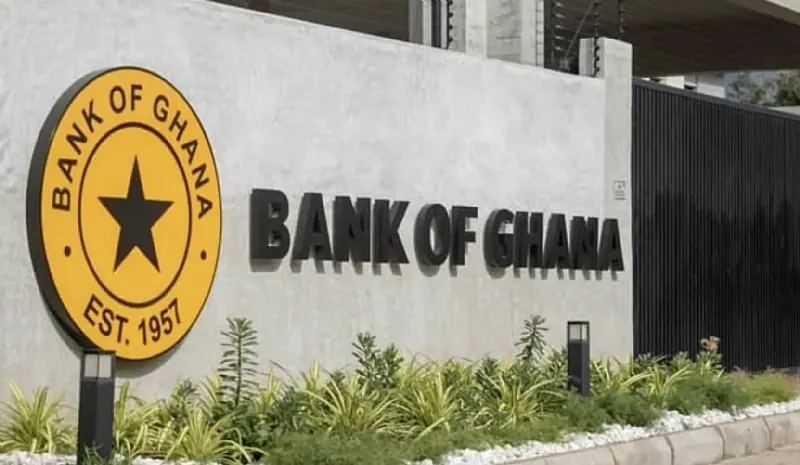
The Bank of Ghana (BoG) is currently reviewing license applications from two commercial banks to operate non-interest banking services. This development indicates a growing interest in alternative banking models and progress in the government's efforts to increase access to finance for Small and Medium-sized Enterprises (SMEs) and promote social inclusion. The BoG's review process aims to ensure that the new banking models align with the country's regulatory framework.
According to Dr. Johnson Pandit Asiama, Governor of the Bank of Ghana, one application is for the establishment of a fully-fledged non-interest bank, while the second application is from a local bank already in operation that wishes to introduce non-interest banking instruments alongside its conventional services. The Governor emphasized that the consultations are thorough and that the bank is committed to building consensus around a regulatory framework that all parties find acceptable.
The non-interest banking initiative is fundamentally for economic inclusion, with the objective of broadening the spectrum of financial service providers to accommodate different segments of society. Dr. Asiama noted that the government's initiative is purely business-focused and carries no religious dimension, despite potential misconceptions associating such models with specific faith traditions. The BoG has convened multiple committees to engage with diverse perspectives and work towards building consensus.
The introduction of non-interest banking in Ghana aligns with broader regional efforts across Africa to expand financial services access for underserved communities and small businesses. In many sub-Saharan African countries, including Ghana, several populations continue to be unbanked or underbanked. Experiences from Malaysia, the United Arab Emirates, and Indonesia show that well-designed non-interest banking frameworks can coexist with conventional banking.
Professor John Gartchie Gatsi, Advisor to the Governor on non-interest banking, previously stated that the regulator was fully prepared to roll out operations for the sector, following the completion of all structural and guideline requirements. He emphasized that non-interest banking provides a system where lending and borrowing occur without interest, and proceeds are shared based on agreed profit and loss sharing agreements.
The Bank of Ghana's Governor, Dr. Asiama, stated that the license applications do not have a specific timeline for approval, adding that what's important is that the consultations are thorough and that all parties come into agreement. He emphasized that the consultative approach reflects the government's commitment to building consensus around a regulatory framework that all parties find acceptable.
The exploration of innovative digital banking models in Ghana is part of a larger effort to promote social inclusion and increase access to finance for SMEs. The BoG's review of the license applications is expected to contribute to the growth of the country's financial sector and provide alternative funding options for businesses and individuals.
Key points
- The Bank of Ghana is reviewing license applications from two commercial banks to operate non-interest banking services.
- The non-interest banking initiative aims to increase access to finance for SMEs and promote social inclusion.
- The introduction of non-interest banking in Ghana aligns with broader regional efforts across Africa to expand financial services access for underserved communities and small businesses.