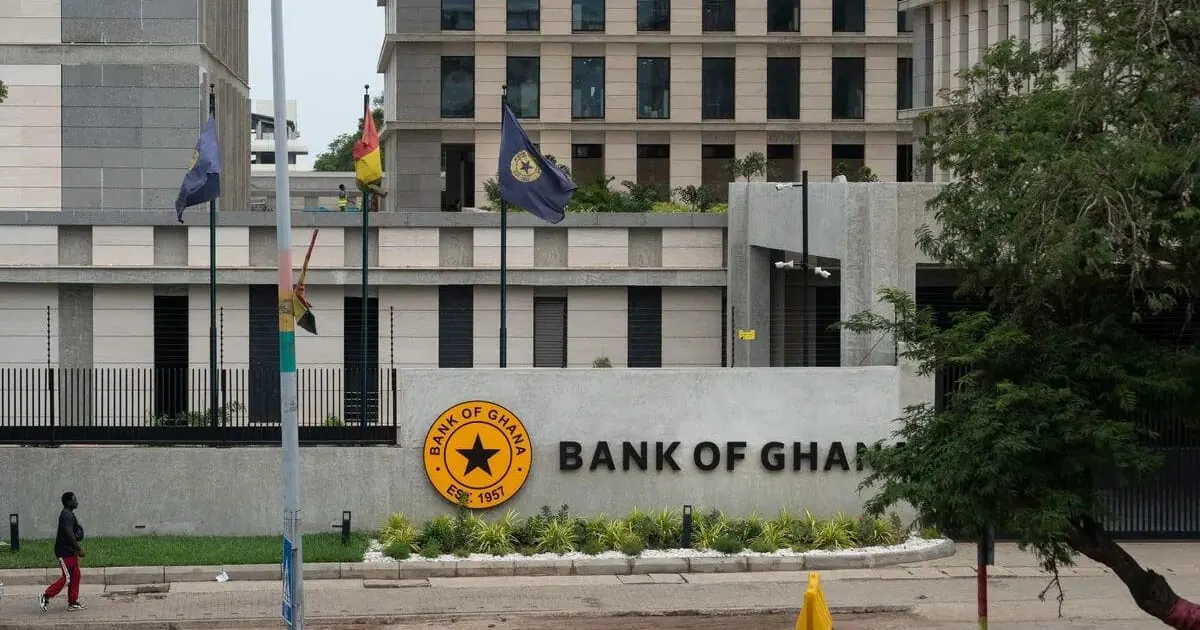
The Governor of the Bank of Ghana, Dr. Johnson Asiama, has provided justification for the central bank's heavy recruitment efforts last year. According to him, the bank had been lagging in several areas, including monitoring the virtual asset space, data analytics, and artificial intelligence. This necessitated the recruitment of additional staff to address these gaps. Dr. Asiama made these remarks at the 132nd Monetary Policy Committee (MPC) press conference in Accra on September 24.
Dr. Asiama revealed that the Bank of Ghana experiences significant staff turnover, with between 50 and 60 employees retiring every year. To maintain its workforce and keep up with evolving trends in technology, the bank needs to replace these retiring staff members. This has contributed to the bank's decision to undertake substantial recruitment drives. The governor emphasized that the bank must be competitive in attracting and retaining highly skilled personnel.
The Bank of Ghana's recruitment efforts are also driven by the need to adapt to emerging trends in technology, particularly in the FinTech space. Dr. Asiama noted that the bank must be prepared to respond to rapid changes in this area. To achieve this, the bank needs to bring in new skills and expertise. This has resulted in increased staff costs, which the governor believes will taper down over time.
Dr. Asiama addressed concerns about the sustainability of the bank's recruitment funding. He explained that staff costs must be considered in the context of the bank's overall operational costs. The governor stated that the bank's staff costs are currently below the 40% threshold of operational costs, which is considered a benchmark. This suggests that the bank can manage its current staffing expenses.
The governor provided further insight into the bank's recruitment plans, stating that the heavy recruitment done last year was necessary to address gaps in the bank's operations. He indicated that recruitment efforts will continue, albeit at a lower level, and will be matched to the number of retirements on a yearly basis. This approach aims to ensure that the bank's workforce remains stable and aligned with its operational needs.
Dr. Asiama identified two key areas of cost pressure for the bank: the OMO (Open Market Operations) cost, which is related to maintaining stability, and staff costs. While staff costs are significant, the governor believes they are manageable within the bank's overall operational costs. The bank's focus on monitoring emerging trends in technology and adapting to changing circumstances will likely continue to drive recruitment and staff costs.
The Bank of Ghana's recruitment efforts are part of a broader strategy to enhance its operations and stay abreast of developments in the financial sector. By investing in new skills and expertise, the bank aims to maintain its effectiveness in regulating the financial industry and promoting economic stability in Ghana. The governor's comments provide insight into the bank's strategic priorities and its approach to managing its workforce.
Key points
- The Bank of Ghana recruits heavily to replace retiring staff and address gaps in its operations, particularly in areas like data analytics and artificial intelligence.
- The bank experiences significant staff turnover, with 50-60 employees retiring every year, necessitating ongoing recruitment efforts.
- The governor believes that staff costs, although significant, are manageable within the bank's overall operational costs and will taper down over time.