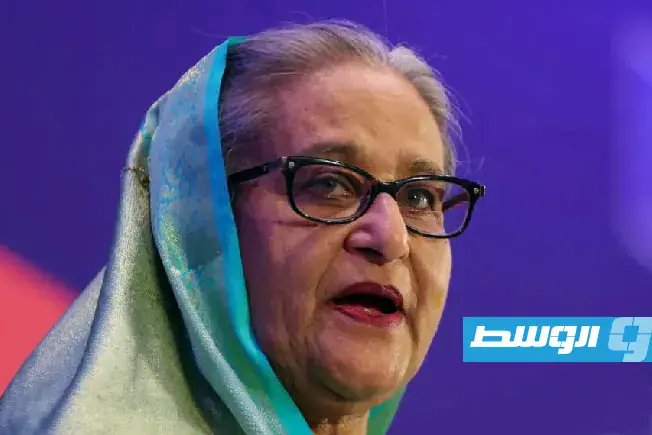
Former Bangladesh Prime Minister Sheikh Hasina has announced her intention to return to the country in December, despite a death sentence issued against her for crimes against humanity. In an interview with French news agency AFP, Hasina stated that she was aware of the risks involved but would not be deterred by the threat of death. Her return is expected to spark significant controversy and attention.
The 79-year-old Hasina fled to neighboring India in August 2024 and has since remained out of public view, making only rare appearances via phone calls at press conferences. Her decision to return to Bangladesh comes after a prolonged period of exile, during which she has been critical of the current government. The Bangladeshi government has confirmed that she will face execution if she returns.
The death sentence against Hasina was issued in relation to her role in a 15-year rule that was marked by violent suppression of opposition and human rights abuses. The prosecution in Bangladesh has stated that Hasina will be executed if she returns, as she has missed the deadline for appealing the conviction. According to Bangladeshi law, an appeal must be lodged within 30 days of the verdict being delivered.
Hasina's decision to return has significant implications for Bangladeshi politics, which has been marked by turmoil and controversy in recent years. Her supporters view her as a champion of development and stability, while her critics accuse her of authoritarianism and human rights abuses. The current government has struggled to maintain stability and legitimacy in the face of opposition from various groups.
The international community has been closely watching developments in Bangladesh, with many countries expressing concern about the human rights situation and the rule of law. Hasina's return could potentially spark further unrest and instability, as well as raise questions about the fairness and transparency of the justice system. India, where Hasina has been living in exile, has maintained a delicate balance in its relations with Bangladesh.
Bangladesh has been experiencing a period of significant change and upheaval, with the country struggling to come to terms with its complex history and ongoing challenges. The legacy of Hasina's rule and the current government's policies will likely continue to shape the country's trajectory in the years to come. Her return could be a significant turning point in this process.
The Bangladeshi government and various stakeholders will be closely monitoring the situation as it unfolds, with many questions about the potential consequences of Hasina's return. The country's future will depend on its ability to navigate complex challenges and find a path towards stability, accountability, and justice.
Key points
- Exiled Bangladesh PM Sheikh Hasina plans to return in December despite a death sentence.