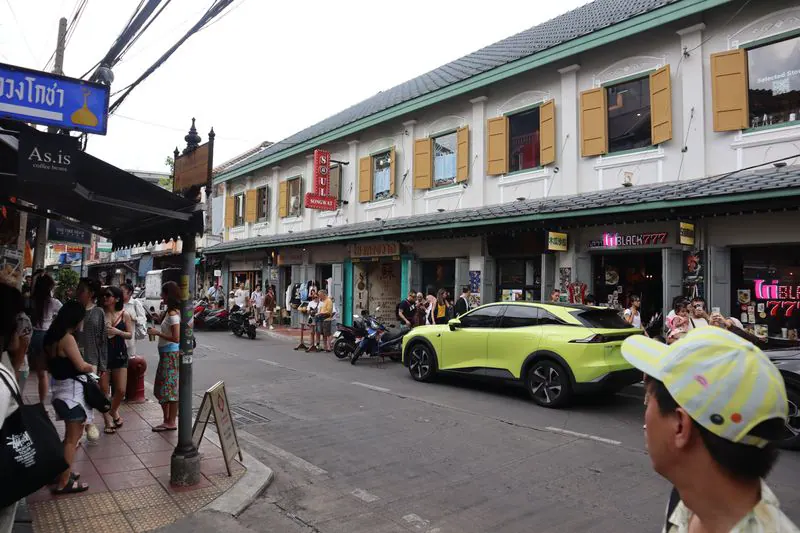
Bangkok, Thailand's capital, is a city of stark contrasts, where monks in saffron robes rest in the shade of towering malls, and heritage-inspired meals are served in former family shophouses. The city is a melting pot of cultures, with a mix of grit and grace, solemnity and secularism. Visitors can experience the city's rich history and spirituality at the Grand Palace, where queues of Thai people waited to prostrate themselves and pay their respects to the late Queen Mother.
The city is still in mourning, following the loss of Queen Sirikit in October 2025, and Princess Bha in June. Reminders of the nation's fidelity to the royals are everywhere, with shrine-like tribute stations in hotels, museums, and malls. Thai people, such as the guide Nattapong Jongboonsab, show great respect and devotion to the monarchy, with many waiting in line to bid farewell to their former queen.
Bangkok's evolution has been rapid, with the city's last wild tiger killed in 1910. The neighbourhood of Bang Na, where it was shot, is now a concrete jungle of glitzy malls. Sukhumvit, Bangkok's answer to London's Oxford Street or New York's Fifth Avenue, was once an unpaved track trundled by elephants. The city's proliferation of high-rises has earned it comparisons with the megalopolis depicted in Blade Runner.
Despite its modernity, Bangkok still has a rich cultural heritage. The city's ancient alleyways and historic floating quarters offer a glimpse into its past. The canal-riddled Khlong Bang Luang neighbourhood has been transformed into a crowded, quirky tourist attraction, with cafés, souvenir shops, and the famous "artist's house", Baan Silapin.
A boat ride along the Chao Phraya River and the city's 1,600 remaining canals offers a unique perspective on Bangkok. Perched along the banks of the canals is a fascinating world of derelict rice mills, hidden temples, and wooden houses precariously balanced on stilts. Some of these old dwellings have been given a second lease as guesthouses for visitors eager to experience authentic Bangkok.
Thais believe that material objects, such as old buildings, become infested by spirits. To ward off these spirits, miniature ghost houses are built outside every building, supplied with offerings to keep the ghosts happy. However, a new generation of young creatives is pioneering rejuvenation, repurposing nostalgia and revitalising entire neighbourhoods, such as Chinatown.
The revitalisation of Chinatown has transformed the area, which was previously plagued by traffic jams. An extension of the subway system has loosened things up, and a string of old enclaves have become objects of reclamation and revitalisation. The area is now full of eye-catching spaces, including pop-up stores, art galleries, and restaurants in former family homes.
Key points
- Bangkok is a city of contrasts, blending tradition and modernity.
- The city is still in mourning, following the loss of Queen Sirikit and Princess Bha.
- A new generation of young creatives is pioneering rejuvenation, repurposing nostalgia and revitalising entire neighbourhoods.