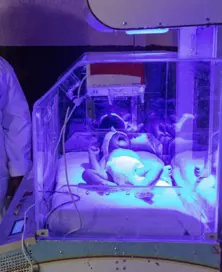
A recent study conducted in Brazzaville, Republic of the Congo, has revealed substantial bacterial contamination of inanimate surfaces in neonatal units of two major hospitals. The study, which took place from April to July 2026, focused on the neonatal units of the University Hospital Center of Brazzaville (CHU-B) and Blanche Gomes Specialist Mother and Child Hospital (HSMEBG). Researchers collected 108 environmental swabs from various surfaces, including incubators, cradles, phototherapy tables, and door handles. The findings indicate a significant risk of healthcare-associated infections in these settings.
The study found that 44 out of 108 samples, or 40.7%, were positive for bacterial growth. Enterobacteriaceae was the predominant family of bacteria, accounting for 30 isolates, or 68.2%, followed by Staphylococcaceae with 14 isolates, or 31.8%. Klebsiella spp. was the most common genus among Enterobacteriaceae, making up 33.3% of the isolates, while Staphylococcus aureus was the most prevalent species among Staphylococcaceae at CHU-B, accounting for 62.5% of the isolates.
The study also assessed the antimicrobial resistance profiles of the isolated bacteria. The results showed high resistance rates among Enterobacteriaceae to several antibiotics, including pefloxacin (100%), chloramphenicol (93.3%), nitrofurantoin (93.3%), and ceftazidime (90.0%). Among Staphylococcaceae, resistance rates were highest to ciprofloxacin (100%), gentamicin (100%), and amoxicillin (92.9%), with vancomycin resistance reaching 50.0%.
The researchers emphasize that the high levels of bacterial contamination and antimicrobial resistance in neonatal units pose a significant threat to the health and well-being of newborns. They stress the importance of strengthening cleaning, disinfection, and routine microbiological surveillance to limit cross-transmission and prevent healthcare-associated infections in Congolese neonatal units.
The study's findings are consistent with previous research on bacterial contamination in neonatal intensive care units (NICUs) in other parts of the world. For example, a 2021 study published in Antimicrobial Resistance & Infection Control found that bacterial contamination of NICUs was a significant concern in various healthcare settings. Similarly, a study in Sudan found a high prevalence of bacterial contamination in newborn infants with possible community-acquired neonatal sepsis.
The researchers used standard methods to isolate and identify bacteria, including selective media such as Hektoen agar and Mannitol Salt Agar. They also employed the Kirby-Bauer disk diffusion method to assess antimicrobial susceptibility, testing 12 antibiotics and interpreting results according to 2025 CA-SFM/EUCAST recommendations.
The study's authors conclude that the findings highlight the need for improved infection control practices in neonatal units, including enhanced cleaning and disinfection protocols, as well as regular microbiological surveillance. By taking these measures, healthcare providers can reduce the risk of healthcare-associated infections and improve outcomes for newborns in Brazzaville and beyond.
Key points
- Neonatal unit surfaces in Brazzaville are substantially contaminated with potentially pathogenic, multidrug-resistant bacteria.
- Enterobacteriaceae and Staphylococcaceae were the predominant families of bacteria isolated from inanimate surfaces in neonatal units.
- Strengthening cleaning, disinfection, and routine microbiological surveillance is essential to limit cross-transmission and prevent healthcare-associated infections in Congolese neonatal units.