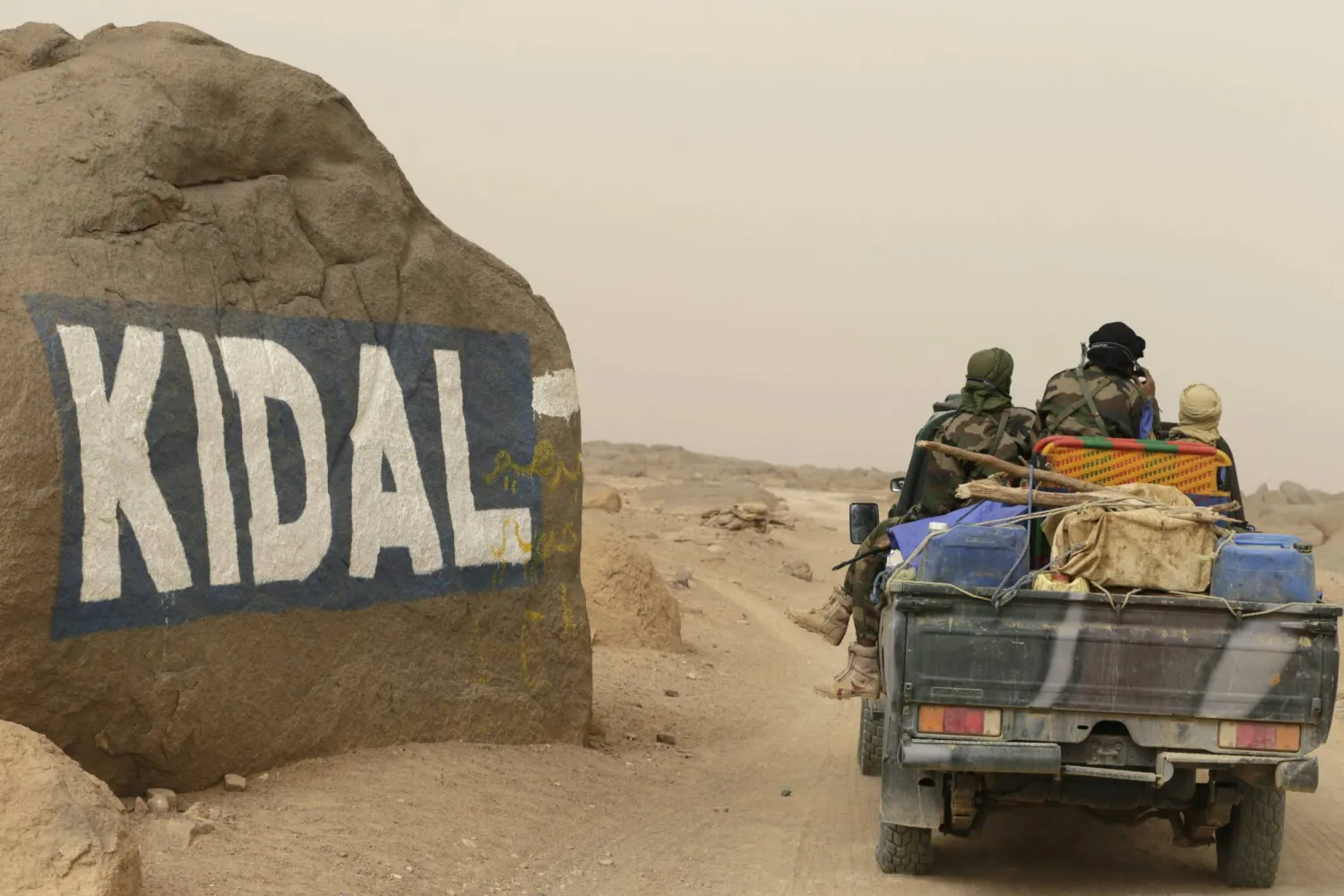
The Azawad Liberation Front announced a strategic withdrawal of its forces from Kidal, a city in northern Mali, citing increasing risks to civilians from aerial attacks. The group stated that the decision was made after a thorough evaluation of the operational and tactical situation. The withdrawal aims to preserve the lives of civilians in the face of an enemy that avoids direct ground confrontation. The Azawad Liberation Front had controlled Kidal since a coordinated operation on April 25, with support from the Islamist group Nusrat al-Islam wal Muslimeen, affiliated with Al-Qaeda.
The Azawad Liberation Front accused Russian mercenaries from the African Corps and Malian forces of using excessive aerial means, resulting in the destruction of most public and civilian infrastructure. The group claimed that this has put innocent civilians at risk, who are being systematically targeted by the Bamako regime. The front's withdrawal from Kidal was carried out in an organized manner, without engaging in direct confrontation with opposing forces. The group emphasized that this move is a temporary operational measure aimed at preserving its human and logistical capabilities.
The Azawad Liberation Front reaffirmed its commitment to its struggle, stating that it will continue with determination and resilience. The group warned that Russian mercenaries will face the resolve of the Azawad people, who remain prepared to defend their land, dignity, rights, and future. The front's withdrawal has created a power vacuum in Kidal, which the Malian military has sought to capitalize on. The army announced the launch of a large-scale operation in the entire Kidal region on Tuesday.
The situation in Kidal remains volatile, with concerns about the humanitarian impact of the conflict on civilians. The Azawad Liberation Front's withdrawal has raised questions about the future of the region and the potential for further violence. The group's accusations against Russian mercenaries and Malian forces have also sparked international concern about the involvement of external actors in the conflict.
The Azawad Liberation Front's decision to withdraw from Kidal highlights the complexities of the conflict in northern Mali. The region has been plagued by instability and violence, with various armed groups vying for control. The front's actions have been seen as a strategic move to protect civilians and regroup its forces. However, the situation remains fluid, and the impact of the withdrawal on the region's security and humanitarian situation is uncertain.
The Malian military's response to the Azawad Liberation Front's withdrawal has been cautious, with a focus on securing the region. The army's operation in Kidal aims to establish stability and restore order. However, concerns remain about the military's ability to protect civilians and prevent further violence. The involvement of Russian mercenaries has added a new layer of complexity to the conflict, with implications for regional and international security.
The Azawad Liberation Front's withdrawal from Kidal marks a significant development in the conflict in northern Mali. The group's commitment to its struggle and its warnings to Russian mercenaries and Malian forces underscore the ongoing tensions in the region. As the situation continues to evolve, concerns about the humanitarian impact and the potential for further violence remain.
Key points
- Azawad Liberation Front withdraws from Kidal due to rising civilian risks from aerial attacks.
- Malian military launches large-scale operation in Kidal region.
- Conflict in northern Mali remains volatile, with concerns about humanitarian impact and external involvement.