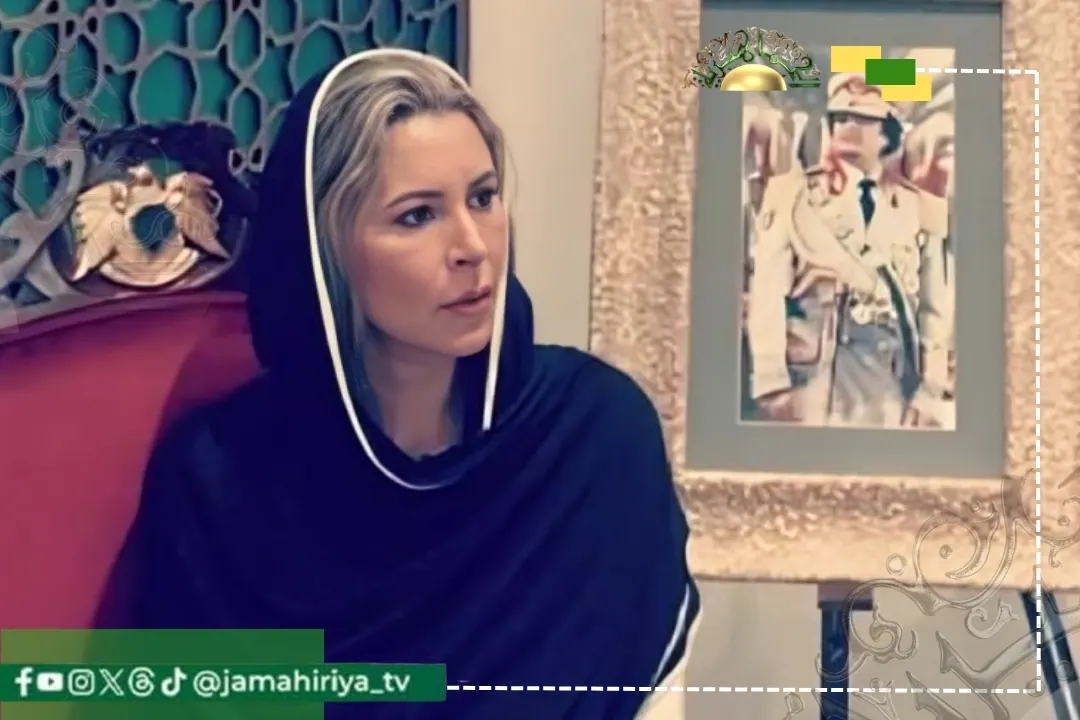
Ayesha Gaddafi, a doctor by profession, has emerged as the leading candidate in a poll conducted to determine Libya's preferred leader. The poll, which was conducted in September 2026, saw Ayesha Gaddafi garner 141,502 votes, out of a total of 549,954 votes cast. This significant lead of 30,227 votes over her closest competitor has brought her to the forefront of Libya's political landscape.
The poll results have been seen as a significant development in Libya's politics, with many viewing it as a resurgence of the Gaddafi family's influence. Ayesha Gaddafi's rise to the top of the poll has been met with widespread attention, particularly given her family's complex history in Libyan politics. Her father, Muammar Gaddafi, was the country's leader for over four decades until his overthrow and death in 2011.
Ayesha Gaddafi has attributed her success in the poll to the trust and confidence reposed in her by the Libyan people. She emphasized that her lead in the poll is not just about numbers, but about the responsibility that comes with it. Ayesha Gaddafi has called on Libyans to look beyond the divisions that have characterized the country's politics since 2011 and work towards unity.
The poll results have sparked mixed reactions, with some viewing Ayesha Gaddafi's rise as a nostalgic longing for the Gaddafi era. Others see her as a unifying figure who can help bridge the divisions that have plagued Libya since the ousting of her father. Ayesha Gaddafi has urged Libyans to move beyond the labels of "September" and "February," referring to the two rival political currents that have defined Libya's post-Gaddafi era.
Ayesha Gaddafi's vision for Libya's future is centered on unity and stability. She has expressed concern about the impact of prolonged conflict and division on Libya's youth, who have grown up amidst violence and instability. Ayesha Gaddafi has emphasized the need for Libyans to come together and work towards a common goal of rebuilding and stabilizing their country.
The poll results have also sparked debate about the role of the Gaddafi family in Libya's future. While some have expressed reservations about the family's legacy, others see Ayesha Gaddafi as a symbol of continuity and stability. As Libya continues to navigate its complex politics, Ayesha Gaddafi's rise to the top of the poll has added a new dimension to the country's leadership dynamics.
Ayesha Gaddafi's next steps are being closely watched, both within Libya and internationally. As she seeks to build on her success in the poll, she will likely face significant challenges in navigating Libya's complex web of alliances and rivalries. Nevertheless, her emergence as a leading figure in Libyan politics has opened up new possibilities for the country's future.
Key points
- Ayesha Gaddafi has topped a poll to determine Libya's preferred leader, garnering 141,502 votes out of over 549,000.
- Ayesha Gaddafi's rise to the top of the poll has sparked debate about the role of the Gaddafi family in Libya's future.
- Ayesha Gaddafi has called on Libyans to look beyond the divisions that have characterized the country's politics since 2011 and work towards unity.