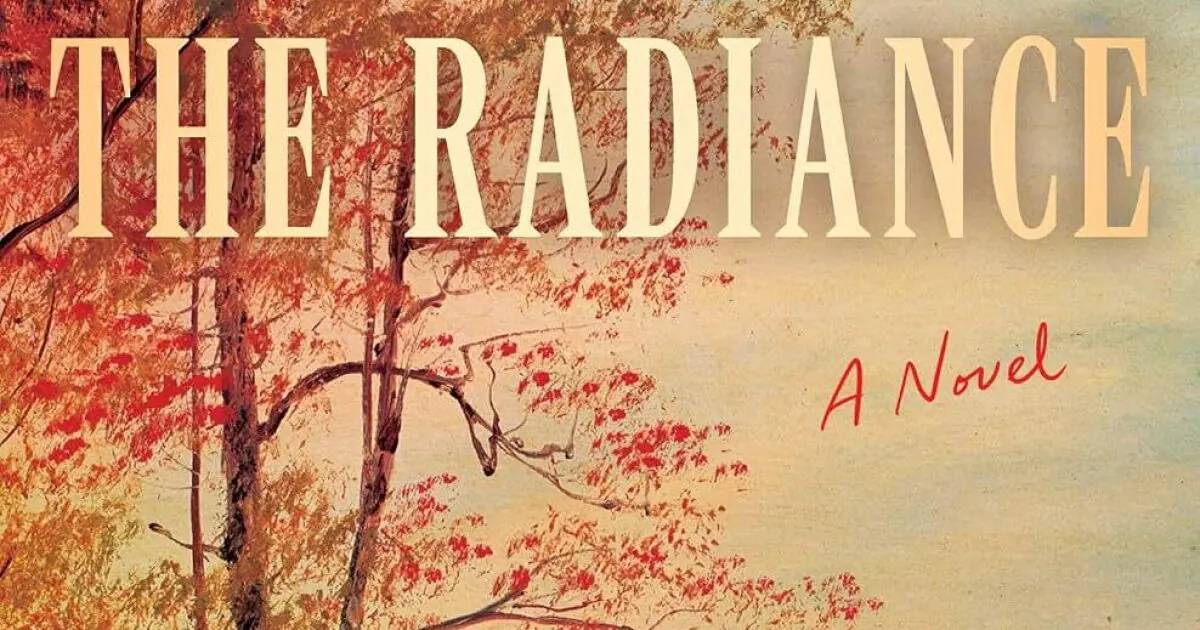
Ayad Akhtar, a writer known for tackling provocative subjects, has released his third novel, 'The Radiance'. The book is set in a predominantly white upstate New York town during the Covid pandemic. The story follows the narrator, Ayad, who shares many biographical details with the author, as he navigates a newfound sense of harmony and beauty after being knocked off his bicycle by a hit-and-run driver. This experience profoundly changes his perceptions, leaving him moved to tears by everyday occurrences.
The narrator's newfound emotions are likened to those felt by Dostoyevsky after his epileptic seizures. However, as a cerebral and hyperarticulate writer, Ayad struggles to find the words to convey his heightened sensations. He discusses his experiences with doctors and local friends, including Lucie Neroponte, a professor of Comparative Literature, and her husband Stanford Lewis, a black doctor and poet. The narrator becomes enamored with Lucie, who visits him with soup and shares her concerns about her students' lack of critical acuity and mental resilience.
Lucie is particularly frustrated with her students' inability to concentrate and their tendency to moralize about perceived breaches of their pronouns or politics. She cites a diligent young woman from Idaho, Susan Yi, as an exception. The novel explores problems in higher education, including the erosion of attention spans and the impact of misinformation on the internet. These themes are woven throughout the narrative, which also examines the changes in attitudes toward sexual harassment, abuse, and rape in the wake of the #MeToo movement.
The story takes a significant turn when Lucie urges Ayad to teach a course in autofiction, which leads to controversy when his writing prompts result in sexualized content. This incident highlights the challenges of navigating complex issues in academic settings. The novel is told in a discursive, multi-layered style, with commentary from the narrator's notes. This structure adds depth to the narrative, but also makes it a head-scratcher at times.
Throughout the novel, Akhtar reflects on the writing life and the self-shaped knot it ties writers into. He also draws on the work of Allan Bloom, a classicist and political philosopher, and Plato's Phaedrus. One of the most powerful episodes in the novel reveals the root cause of the narrator's father's lifelong aberrant behavior: multiple acts of brutality he and his brother suffered as young boys in Peshawar. This revelation adds depth to the narrative and highlights the long tail of trauma that figures in The Radiance.
Akhtar's exploration of trauma and its impact on individuals and communities is a significant aspect of the novel. The story also examines the challenges of creating convincing fiction and the importance of linked actions in narrative. As Ayad tells his students, convincing fiction is a chain of linked actions that must be believable and felt as necessary. This approach to storytelling is reflected in the novel's complex, multi-layered structure.
Overall, 'The Radiance' is a thought-provoking novel that explores a range of complex themes and issues. While not all of the chains of thought Akhtar rattles may pass the test, enough do to add up to a profound reading experience. The novel is a significant contribution to contemporary literature, offering insights into the human condition and the challenges of navigating complex social and cultural issues.
Key points
- Ayad Akhtar's 'The Radiance' explores themes of identity, trauma, and the challenges of higher education.