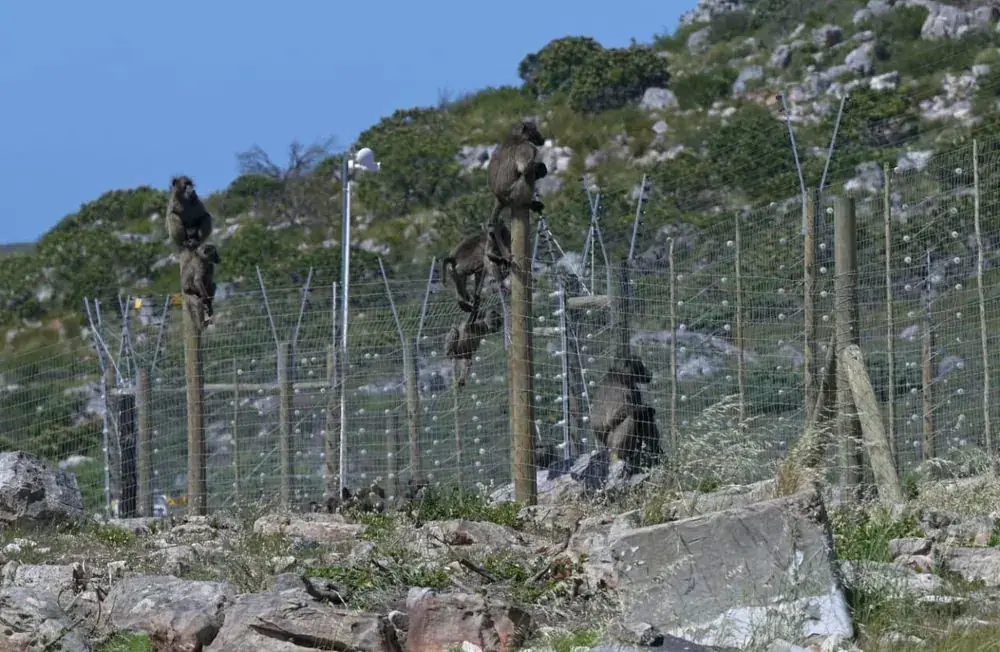
The Cape Peninsula Baboon Management Joint Task Team (CPBMJTT) has reassured the public and activists that the contraception method used on the relocated Waterfall baboon troop is safe, with no reported long-term effects on fertility. The team, comprising SANParks, CapeNature, and the City of Cape Town, relocated 44 baboons to the Urban Wildlife Centre at Kogelfontein. The relocation prompted protests and outrage on social media platforms.
The concerns about the contraception method were raised by Lynda Silk, chairperson of the Cape Peninsula Civil Conservation (CPCC). Silk expressed concerns about the impact of the relocation on the reproductive patterns and social behavior of the baboons. The CPBMJTT confirmed that none of the males were vasectomised, and the females received contraceptive implants.
The CPBMJTT stated that the contraception method aligns with recommendations by the European Association of Zoos and Aquaria Reproductive Management Group. The implants used for the sexually mature female baboons are safe, with time to reversibility to a fertile state varying by baboon.
The relocated baboons underwent health examinations conducted by wildlife veterinarians. An elderly female baboon was euthanised after veterinarians determined she was in a deteriorating state of health. The Waterfall troop occupies a 2.31-hectare enclosure, exceeding the minimum Global Federation of Animal Sanctuaries standards for Old World primates by approximately 5.5 times.
The CPBMJTT confirmed that the troop's social bonds were preserved during the relocation. The team stated that capturing an entire troop and effectively preserving the social hierarchy, social bonds, and relatedness structures was a fortunate outcome. This preservation of social bonds is expected to have a positive impact on the troop's welfare and well-being.
The relocation aims to reduce human-baboon conflict. In urban areas, baboons are incentivised to fight over unpredictable high-reward food items, resulting in high levels of stress and anxiety for all troop members. The sanctuary provides adequate, healthier foods in a manner that reduces competition and aggression, leading to improved social networks and bonds.
There are currently around 530 free-ranging baboons across the Cape Peninsula. The CPBMJTT and other stakeholders, including the Cape of Good Hope SPCA, are working to manage the baboon population and mitigate conflicts between humans and baboons.
Key points
- The CPBMJTT used a contraception method recommended by the European Association of Zoos and Aquaria Reproductive Management Group.
- The relocated baboons' social bonds were preserved during the relocation.
- The relocation aims to reduce human-baboon conflict by providing a safer and healthier environment for the baboons.