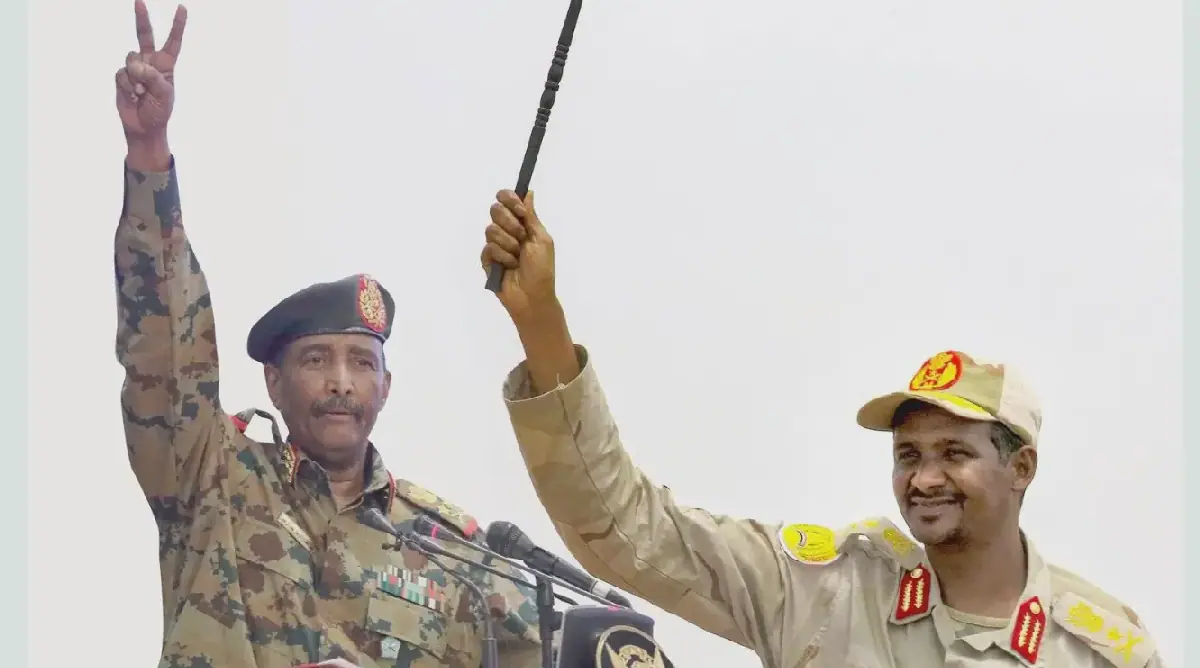
The Australian government has imposed targeted financial sanctions and travel bans on four Sudanese individuals, including top military leaders, over serious human rights violations and abuses linked to the country's ongoing conflict. The measures target General Abdel Fattah Abdelrahman al-Burhan, commander-in-chief of the Sudanese Armed Forces (SAF), and Mohamed Hamdan Dagalo Mousa, commander of the paramilitary Rapid Support Forces (RSF). The other two individuals are West Darfur governor Al-Tijani Al-Tahir Karshoum and RSF field commander Hussein Barsham.
The sanctions were imposed under Australia's Autonomous Sanctions Regulations 2011, which allow the foreign minister to designate individuals and entities involved in serious violations or abuses of human rights. The Australian government said both the SAF and RSF had committed serious human rights violations and abuses during the conflict, including attacks on civilians, torture, sexual and gender-based violence, and extrajudicial killings. The measures build on previous sanctions imposed on 13 individuals under the United Nations Security Council's Sudan sanctions framework.
The four individuals have been designated for targeted financial sanctions and declared subject to travel bans, while the Al-Baraa Bin Malik Brigade, an unofficial but powerful Islamist paramilitary group aligned with the SAF, has been designated for targeted financial sanctions. The individuals and entity, including their known aliases, have been added to the Australian Department of Foreign Affairs and Trade's Consolidated List. Anyone holding assets owned or controlled by a designated individual or entity commits an offence if they use, deal with, or facilitate dealings in those assets without authorisation.
Sudan has been engulfed in war since April 15, 2023, when fighting broke out between the SAF and RSF following a power struggle between the rival military leaders. The conflict has killed hundreds of thousands of people and displaced more than 14 million, according to figures cited by the Australian government. Nearly 34 million people, representing more than 70% of Sudan's population, need humanitarian assistance.
Australia has provided more than A$67 million in humanitarian assistance to organisations supporting people affected by the conflict. The assistance includes food, clean water, shelter, healthcare, protection services, and support for survivors of gender-based violence. Canberra has also issued a class-based humanitarian permit for Sudan to facilitate certain humanitarian activities that might otherwise be restricted under its autonomous sanctions framework.
The Australian government condemned attacks against civilians and humanitarian personnel and called on all parties to agree to an immediate and permanent ceasefire. It also urged the warring parties to protect civilians and humanitarian workers and allow and facilitate full, safe, rapid, and unhindered humanitarian access in accordance with international humanitarian law. Australia stands with the people of Sudan and Sudanese communities in Australia affected by this devastating conflict.
Under Australia's sanctions regulations, listed individuals or their authorised representatives may apply in writing to the foreign minister to have their designations revoked. Applicants must set out the circumstances and grounds on which they believe the listing should be withdrawn. The Australian government said the latest measures underscored its commitment to addressing serious human rights violations and holding those responsible accountable.
Key points
- Australia imposes targeted sanctions on four Sudanese individuals and an Islamist group over human rights abuses linked to the country's ongoing conflict.
- The sanctions target top military leaders, including General Abdel Fattah Abdelrahman al-Burhan and Mohamed Hamdan Dagalo Mousa.
- Australia has provided more than A$67 million in humanitarian assistance to organisations supporting people affected by the conflict.