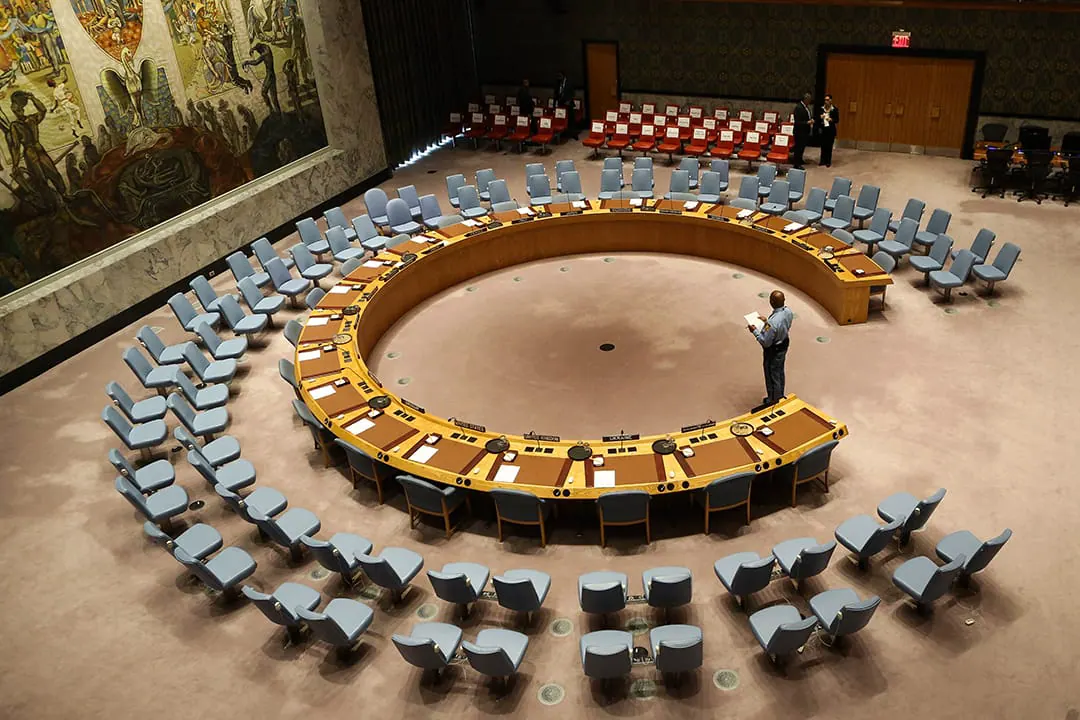
Australia has initiated its campaign for a non-permanent seat on the United Nations Security Council for the 2029-2030 term. The campaign focuses on conflict prevention, protecting civilians, and upholding international rules. Prime Minister Anthony Albanese emphasized Australia's commitment to listening to countries with respect, partnering as equals, and protecting shared interests. Albanese highlighted Australia's founding role in the UN and its dedication to amplifying the voices of small and mid-sized nations.
Foreign Affairs Minister Penny Wong underscored the importance of a rules-based international order. Wong stated that a safer world is one governed by rules, not power and force. As an active and ambitious middle power, Australia aims to make a practical contribution to international peace and security. The Australian government recognizes that global conflicts can impact its security, economy, and way of life.
Australia plans to collaborate with countries across different regions on key issues such as ocean and climate security, as well as peaceful, resilient, and inclusive digital futures. A seat on the Security Council will provide Australia with a stronger voice in decisions affecting the country and the wider region. Australia has a history with the UN, having served as the first President of the Security Council and last serving on the Council in 2013-2014.
The Australian government has noted that if elected, it will support reforms to the United Nations to help it continue maintaining international peace and security. Australia is not the only country vying for a non-permanent seat; Finland and Indonesia have also declared their bids. Finland is seeking a seat representing the Western European and Others Group, while Indonesia is pursuing a seat through the Asia-Pacific Group.
The elections for the non-permanent members of the Security Council are scheduled for June 2028, when the UN General Assembly will choose the members for the 2029-2030 term. Australia's campaign approach has been outlined, emphasizing its commitment to working with countries across different regions. The Australian government is optimistic about its chances, given its experience and dedication to international peace and security.
Prime Minister Anthony Albanese reflected on Australia's history with the UN, stating that the country has always understood the importance of small and mid-sized nations having their voices heard. The Australian government is confident that its bid will be successful, given its strong track record and commitment to international cooperation.
The campaign by Australia and other countries for non-permanent seats on the UN Security Council highlights the ongoing efforts to strengthen international cooperation and peace. With the elections scheduled for June 2028, the international community will be watching closely to see which countries will be elected to the Security Council for the 2029-2030 term.
Key points
- Australia's campaign for a non-permanent seat on the UN Security Council focuses on conflict prevention, protecting civilians, and upholding international rules.
- The Australian government aims to work with countries across different regions on key issues such as ocean and climate security.
- Finland and Indonesia are also seeking non-permanent seats on the UN Security Council, with elections scheduled for June 2028.