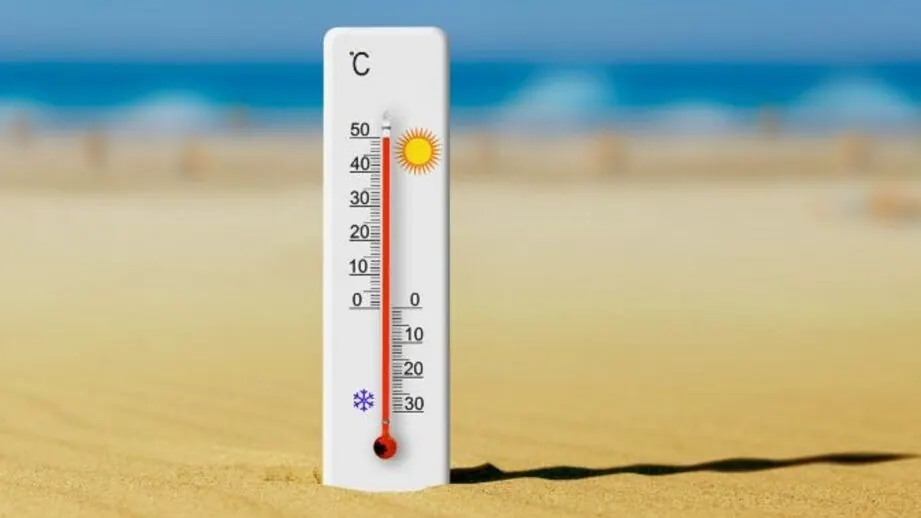
The National Institute of Meteorological Observation in Tunisia has released its monthly climate bulletin for August 2026, revealing that the country experienced its hottest August since 1950. The average daily temperature for the month was 32.3°C, which is 3.4% higher than the normal average of 28.9°C. This extreme weather condition is part of a prolonged heatwave that affected most regions of the country.
According to the institute, the heatwave that started in the third week of August continued until the end of the month, impacting most areas of Tunisia. The heatwaves were characterized by their geographical extent, persistence, and high thermal intensity. The bulletin highlighted that the average maximum temperatures ranged from 32.9°C in Mahdia to 43.5°C in Tozeur, with a national average of 39°C, which is 3.7°C higher than the reference average.
The minimum temperatures also recorded high levels, ranging from 20.6°C in Kef to 30.5°C in Tozeur, with a national average of 25.5°C, which is 3°C higher than the reference average. The institute's data showed that the country's rainfall was significantly below average, with a total of 168.7 mm recorded across 26 main stations, compared to a normal average of 320.4 mm, representing a deficit of 47.3%.
The spatial distribution of rainfall showed significant variations, with the highest amounts recorded in Tala (42 mm), Kasserine (39.8 mm), and Siliana (29.3 mm), which were above their monthly averages. In contrast, several areas in the north, Tunis, and the south recorded little to no rainfall, including Bizerte, Tunis, Gafsa, and Mahdia. The wind speed varied across regions, with Tala recording the highest speed at 136.8 km/h, followed by Jendouba, Siliana, and Kairouan.
The institute noted that several stations recorded wind speeds exceeding 60 km/h, with high frequencies in the central and western regions. Tala recorded the highest number of days with strong winds (9 days), followed by Siliana (7 days), Kairouan (6 days), and Jendouba (4 days). Other areas, including Kef, Monastir, and Bizerte, recorded 3 days of strong winds.
The extreme weather conditions in August 2026 are part of a larger trend of rising temperatures and changing climate patterns in Tunisia. The country's climate is becoming increasingly hot and dry, with significant implications for agriculture, water resources, and public health. The National Institute of Meteorological Observation will continue to monitor the climate and provide updates on weather conditions.
The bulletin also mentioned that the country's universities are taking steps to address climate change, with the University of Carthage ranking first nationally in the global ranking of universities in 2026 for sustainable development and building a green university.
Key points
- Tunisia experienced its hottest August since 1950, with an average daily temperature of 32.3°C.
- The country's rainfall was significantly below average, with a deficit of 47.3%.
- The extreme weather conditions are part of a larger trend of rising temperatures and changing climate patterns in Tunisia.