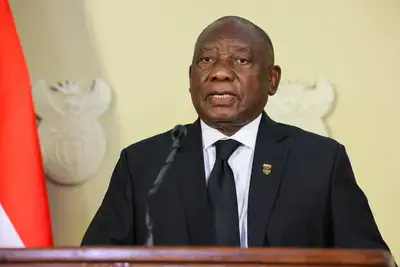
Dr. Pamela Graham, Ghana's first female Auditor-General, has vowed to fully exercise her constitutional powers of disallowance and surcharge against persons found to have incurred unlawful expenditure. Speaking at the launch of the 2026 financial year audit in Accra, Dr. Graham emphasized that every cedi lost through financial irregularities represents resources that could otherwise be invested in education, healthcare, infrastructure, and social protection. The Auditor-General's move aims to strengthen accountability in public institutions and build trust through collaboration and action.
As of February 2026, about GH¢280.5 million in surcharges remained outstanding, while approximately GH¢57.2 million had been collected through the Auditor-General's recovery account since 2022. Dr. Graham announced that the Ghana Audit Service would deploy an Audit Recommendations Tracker on its website from October 2026 to publicly monitor implementation of audit recommendations and provide visibility on recoveries. The tracker will show implemented and outstanding recommendations, amounts identified, pursued and recovered, as well as systemic weaknesses that continue to expose public resources to risk.
The Auditor-General emphasized that her office would not impose surcharges arbitrarily, explaining that persons affected would first be issued notices to respond within 14 days. Where the response is deemed unsatisfactory, a certificate would be served, with a 60-day period within which an appeal could be lodged. Dr. Graham also highlighted the importance of technology in auditing, announcing that the Audit Service would expand the use of data analytics, data-driven auditing, and appropriately governed artificial intelligence to move progressively beyond limited samples to whole-population analysis.
Dr. Graham said the Audit Service had developed an in-house Correspondence Management System to receive and manage official communications from audited entities. The system will improve efficiency and traceability while reducing reliance on paper, in line with environmental, social, and governance requirements. The 2026 audit will be anchored on five pillars: continuous engagement, timeliness, technology, people, and impact. The approach aims to ensure that the accountability chain does not end after audit reports are tabled in Parliament.
Madam Abena Osei-Asare, Chairperson of the Public Accounts Committee, expressed concern about the GH¢280.5 million in outstanding surcharges. She urged a shift from episodic to continuous accountability, with technology-enabled systems linking procurement records, payroll data, tax reports, and asset registers to detect anomalies early. The PAC Chairperson emphasized that accountability is ultimately about public trust, and when it fails repeatedly, the nation loses more than money – it loses public trust, which is far more difficult to recover than money.
Professor Francis Dodoo, Presidential Advisor on the National Anti-Corruption Programme, urged the Audit Service to fully enforce its punitive powers to deter misappropriation. He suggested that surcharge rates should be set above prevailing Treasury bill market rates to strengthen their deterrent effect and ensure stricter enforcement of recoveries. Dr. David Ofosu-Dorte, Legal and Business Strategist, supported the exercise of disallowance and surcharge powers but cautioned that some audit reports had been successfully challenged in court over quality-related lapses.
The Auditor-General's mandate covers more than 7,000 institutions annually, including over 5,000 Ministries, Departments and Agencies, and Metropolitan, Municipal and District Assemblies. The mandate also covers thousands of pre-tertiary educational institutions, 116 state-owned enterprises, 79 public boards and corporations, 60 traditional councils, as well as donor-funded and other special audit entities nationwide. Dr. Graham urged all covered entities to prepare and submit their records on time to facilitate the audit process.
Key points
- The Auditor-General has pledged to exercise constitutional powers to impose surcharges on unlawful expenditure.
- The Ghana Audit Service will deploy an Audit Recommendations Tracker to publicly monitor implementation of audit recommendations.
- The Auditor-General's office will expand the use of data analytics, data-driven auditing, and artificial intelligence in auditing.